


Why India Will Soon Outpace China
on May 4, 2014
India’s decentralized, often chaotic economic model has been seen as inferior to China’s authoritarian, top-down model. A reappraisal of that view may soon be in order.
India’s decentralized, often chaotic economic model has been seen as inferior to China’s authoritarian, top-down model. A reappraisal of that view may soon be in order.
Incremental steps promise to reach enough critical mass to sustain reform momentum and help the world's second-largest economy shift down fairly smoothly after decades of red-hot growth.
This week on Sinica, Jeremy Goldkorn is pleased to be joined by two people navigating the English-language publishing industry as it involves China: Alice Xin Liu, Editor of Pathlight magazine, and Karen Ma, first-time author of the well-received book Excess Baggage.
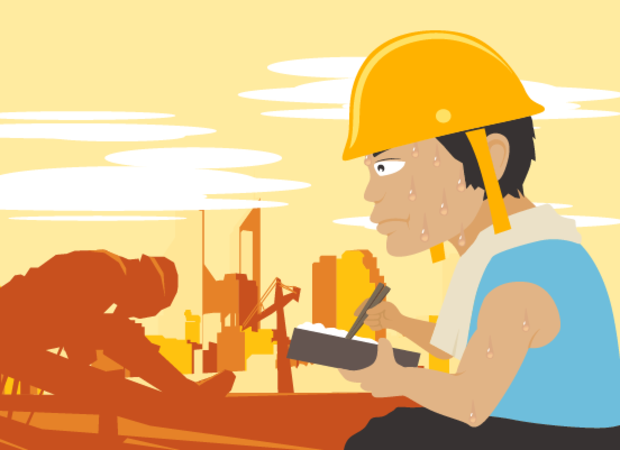
A uniquely Chinese social identity, the category of “rural migrant worker” is a product of China’s urban/rural dichotomy. It refers to a class of citizens no longer employed in the agricultural sector who nevertheless retain their legal status as nongmin (“peasants”).
Derek M. Scissors is a resident scholar at the American Enterprise Institute (AEI), where he studies Asian economic issues and trends. In particular, he focuses on the Chinese and Indian economies and U.S. economic relations with China and India. Scissors is also an adjunct professor at George Washington University, where he teaches a course on the Chinese economy.
Before joining AEI, Scissors was a senior research fellow in the Asian Studies Center at the Heritage Foundation. He has also worked in London for Intelligence Research Ltd., taught economics at Lingnan University in Hong Kong, and served as an action officer in international economics and energy for the U.S. Department of Defense.
Scissors has a bachelor’s degree in economics from the University of Michigan, a master’s degree in economics from the University of Chicago, and a doctorate in international political economy from Stanford University.
It’s a feature of the landscape one sees throughout China. On the sides of roads, at the edges of construction sites, on the steep banks of rivers, and in pastures that wrap around the fat pylons of future highways, Chinese people are farming, tilling tiny jewel-like plots that may only last a season, or rushing a herd of goats or a flock of ducks through traffic.
