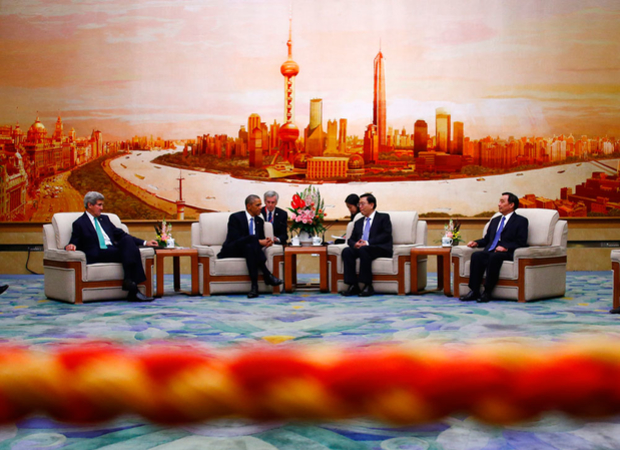
China: The Best and the Worst Place to Be a Muslim Woman

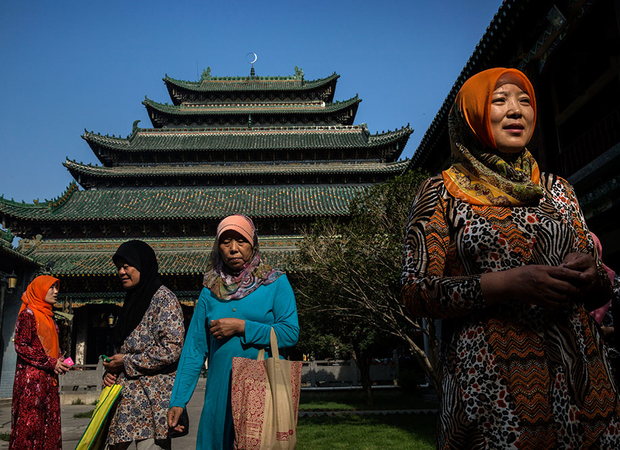
A woman’s solitary voice, earthy and low, rises above the seated worshipers. More than 100 women stand, bow, and touch their foreheads to the floor as a female imam leads evening prayers at a women-only mosque during the first week of Islam’s holy month of Ramadan in the northeastern Chinese city of Jinan. Reclining beggars line the gates, asking alms from the women who casually come and go. Though the women of Jinan have enjoyed a mosque of their own for much of their lives, such spaces are extraordinary in a global religion still largely dominated by men.
Is China’s Reform Era Over and, If So, What’s Next?

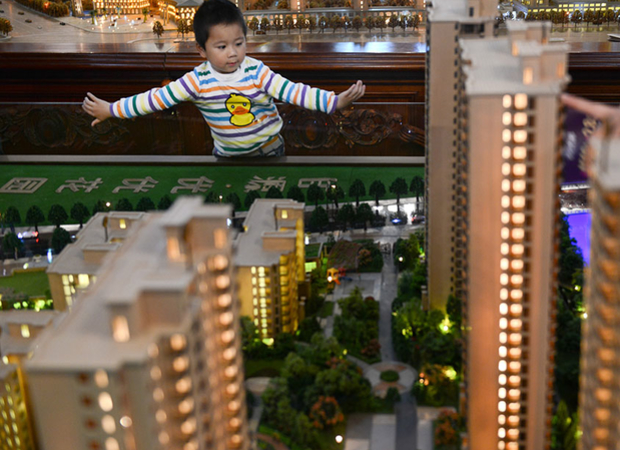
Fordham Law School professor and regular ChinaFile contributor Carl Minzner says we've arrived at “China After the Reform Era,” a development that’s “not entirely bad” but also has a “dark side.” Minzner’s conclusions, excerpted below, come from a recent essay in the Journal of Democracy

Jeremy L. Wallace

Jeremy L. Wallace is Associate Professor of Government at Cornell University. Previously, he was an Assistant Professor of Political Science at Ohio State University. He studies urbanization, regime stability, and data quality in non-democracies, with a particular emphasis on China. He is the author of the book Cities and Stability: Urbanization, Redistribution, and Regime Survival in China (Oxford, 2014). Wallace received his Ph.D. in Political Science from Stanford University.

How China and the U.S. Will Manage Competition for Influence

Washington refuses to accept that though the United States is not in decline, its international influence is not what it was. It is unlikely to regain the leverage it once wielded, because China and so many others now have more than enough economic muscle and political self-confidence to resist U.S. plans and demands, even if they can’t directly challenge U.S. pre-eminence. Until U.S. officials develop a strategy that accepts and adapts to this reality, Washington will continue the costly foreign policy improvisations of recent years—and its deepest wounds will be self-inflicted.