


Is New Transformers a Sign of China’s Hollywood Fatigue?
on July 17, 2017
Like a high-flying space robot shot out of the sky, the Transformers film franchise has crash-landed in China—singeing a promising Hollywood business model in the process.
Like a high-flying space robot shot out of the sky, the Transformers film franchise has crash-landed in China—singeing a promising Hollywood business model in the process.
Nick Admussen is an Assistant Professor of Chinese Literature and Culture at Cornell University, an essayist, translator, and poet. He holds a Ph.D. in East Asian Studies from Princeton University and a Master of Fine Arts in poetry writing from Washington University in St. Louis. His first scholarly monograph is called Recite and Refuse: Contemporary Chinese Prose Poetry (University of Hawaii Press, 2016), and he is the author of essays including “The Poetics of Hinting in Lu Xun’s ‘Wild Grass’,” “Six Proposals for the Reform of Literature in the Age of Climate Change,” and “The Language of Violence.” He has translated poetry and prose by Liu Xiaobo, Lu Xun, and Genzi, and his translations of contemporary poetry were awarded a 2017 PEN-Heim translation grant.
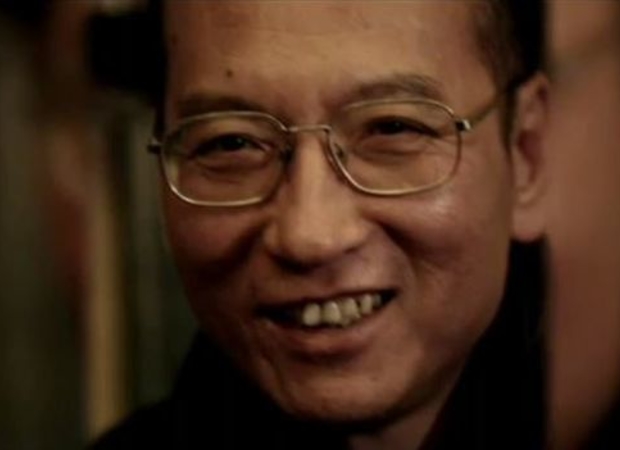
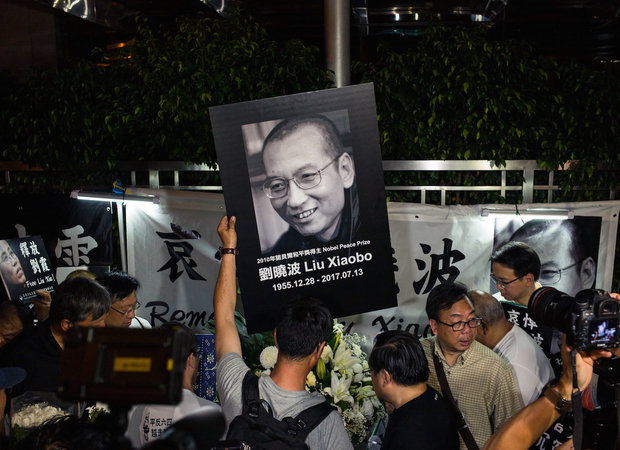
When news this morning reached us that Nobel Peace Prize winner Liu Xiaobo had died, we invited all past contributors to the ChinaFile Conversation to reflect on his life and on his death. Liu died, still in state-custody, eight years into his 11-year sentence for “inciting subversion of state power” through his writing. He was suffering from late-stage liver cancer, and had requested the opportunity to travel overseas to receive treatment. Chinese authorities denied that request.
In 1898, some of China’s most brilliant minds allied themselves with the Emperor Guangxu, a young ruler who was trying to assert himself by forcing through reforms to open up China’s political, economic, and educational systems. But opponents quickly struck back, deposing the emperor and causing his advisors to flee for their lives. One, however, stayed put. He was Tan Sitong, a young scholar from a far-off corner of the empire. Tan knew that remaining in Beijing meant death, but hoped that his execution might shock his fellow citizens awake.
China dispatched troops to set up its first military base overseas on Tuesday. After a ceremony in the southern port city of Zhanjiang, military personnel embarked on a voyage to the East African country of Djibouti to establish an outpost “conducive to China’s performance of international obligations,” state-run media report.
Apple said Wednesday that it would open its first data center in China, joining a parade of technology companies responding to growing global demands to build facilities that store online data closer to customers.
At an ocean research center on Hainan Island off China’s southern coast, officials routinely usher visitors into a darkened screening room to watch a lavishly produced People’s Liberation Army video about China’s ambitions to reassert itself as a great maritime power.
Nobel Peace laureate Liu Xiaobo, who embodied the hopes of China’s 1989 Tiananmen Square democracy movement long after the protests were crushed, died in detention on Thursday after a battle with liver cancer, according to a government statement. He was 61 years old.
A Chinese government official said Thursday that China-North Korea trade was worth $2.6 billion in the first half of 2017, up about 10% over the same period last year.
U.S. President Donald Trump arrived in Paris on Thursday morning in a diplomatic move to soften divergence with France over climate change and trade liberalization by seeking common ground on security and fight against terrorism.