Banning Chinese Students is Not in the U.S. National Interest

President Donald Trump has made no secret of his desire to radically revamp America’s immigration policies. Indeed, his family separation policies, which sparked nationwide protests and public revulsion after they were rolled out in May 2018, were merely the latest in a series of efforts to close America’s doors to immigrants and refugees.

Chang Chiu

Chang Chiu is a co-founder of Chinese American Progressive Action, an initiative to provide Chinese-Americans a platform to support progressive policies in the U.S. As Deputy Policy Director for Tom Perriello for Virginia in 2017, he developed proposals for a gubernatorial campaign praised for its bold, inclusive, and forward-looking ideas. In the international arena, Chang worked as a Legal Advisor for the International Center for Not-for-Profit Law to strengthen protections for civil society and managed programs providing technical assistance in Asia. Chang led the China, Indonesia, and Timor-Leste grantmaking as a Senior Program Officer at the National Endowment for Democracy, and also oversaw several regional projects in Asia. Chang’s work on China at the National Endowment for Democracy focused on a wide range of issues, including human rights, labor rights, access to justice, civic participation, freedom of information, anti-discrimination, and Uighur issues.

Chang has worked in several other non-profit and private sector fields. As part of the response to the 2004 South Asian tsunami, Chang coordinated international humanitarian and development assistance as a Program Officer for Indonesia in the Tsunami Recovery Program at the American Red Cross. Chang began his career as a lawyer in the corporate sector in Washington, D.C.

Chang is a graduate of the University of Virginia School of Law and has a Master’s degree in International Relations from the Johns Hopkins School of Advanced International Studies, where he received the A. Doak Barnett award for excellence in China Studies. Chang obtained his Bachelor’s degree from Princeton University, where he majored in Politics and minored in East Asian Studies.

The Anti-Corruption Campaign Takes on the War on Pollution

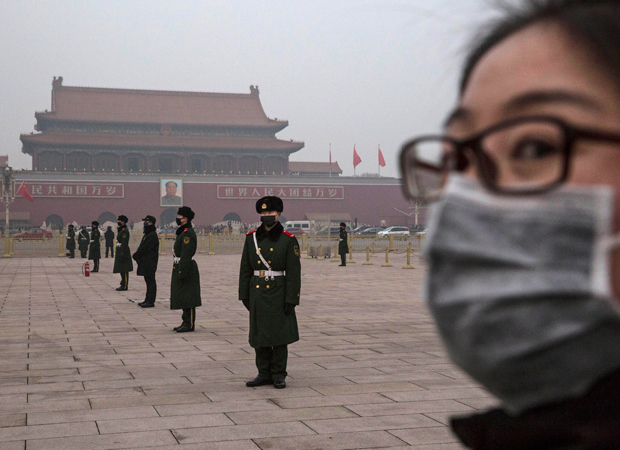
At last year’s 19th Party Congress, Xi Jinping vowed to confront the “principal contradiction” facing Chinese society: “the contradiction between unbalanced and inadequate development and the people’s ever-growing needs for a better life.” While the legitimacy of the Chinese Communist Party (C.C.P.) once rested in its ability to deliver prosperity to the developing nation, Xi Jinping’s statement bluntly acknowledged the Party’s responsibility to deliver more than just material gains. China’s pollution crisis is, of course, the quintessence of this contradiction. The C.C.P. cannot continue to pursue economic growth at the expense of its environment without running a major risk to its legitimacy.

Julia Bowie

Julia Bowie is Editor of the Party Watch Initiative at the Center for Advanced China Research, and an M.A. candidate in Asian Studies at Georgetown University. She has previously worked at the Congressional-Executive Commission on China, the Project 2049 Institute, and the National Defense University’s Institute for National Strategic Studies. She lived in China for four years and holds a graduate certificate from the Hopkins-Nanjing Center.

Here Are the Fortune 500 Companies Doing Business in Xinjiang

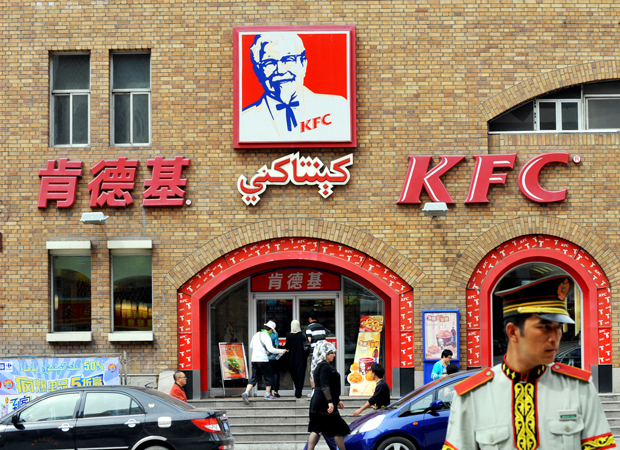
News reports from the western Chinese region of Xinjiang have described alarming, widespread, and worsening violations of the human rights of its predominantly Muslim, ethnically Turkic inhabitants, primarily the region’s approximately 11 million ethnic Uighurs. These include stifling surveillance measures on Xinjiang streets and in Uighur homes, and the arbitrary detention of perhaps over one million Uighurs in hastily built camps for the purpose of “transformation through education.” How do American businesses fit into this picture? The companies listed here comprise those Fortune 500 companies (the highest-revenue U.S.-based corporations) for which ChinaFile found documentary evidence of operations, investments, or partnerships in Xinjiang.

China Is ‘Doing Okay’ in Terms of Philanthropy and Private Social Investment, Says Report

The Doing Good Index 2018, a benchmark study by the Centre for Asian Philanthropy and Society (CAPS), collected data from more than 1,500 non-profit organizations across 15 Asian economies and mapped the environment for philanthropy and private social investment in each. The Index looks specifically at groups it calls “Social Delivery Organizations,” which refers to “organizations that are engaged in delivering a product or service that addresses a societal need.”