


Books
10.01.10
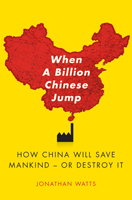
When a Billion Chinese Jump
As a young child, Jonathan Watts believed if everyone in China jumped at the same time, the earth would be shaken off its axis, annihilating mankind. Now, more than thirty years later, as a correspondent for The Guardian in Beijing, he has discovered it is not only foolish little boys who dread a planet-shaking leap by the world's most populous nation. When a Billion Chinese Jump is a road journey into the future of our species. Traveling from the mountains of Tibet to the deserts of Inner Mongolia via the Silk Road, tiger farms, cancer villages, weather-modifying bases, and eco-cities, Watts chronicles the environmental impact of economic growth with a series of gripping stories from the country on the front line of global development. He talks to nomads and philosophers, entrepreneurs and scientists, rural farmers and urban consumers, examining how individuals are trying to adapt to one of the most spectacular bursts of change in human history, then poses a question that will affect all of our lives: Can China find a new way forward or is this giant nation doomed to magnify the mistakes that have already taken humanity to the brink of disaster? —Simon & Schuster
Reports
09.08.10
Winds From the East: How the People’s Republic of China Seeks to Influence the Media in Africa, Latin America, and Southeast Asia
Center for International Media Assistance
The People’s Republic of China (P.R.C.) is using various components of public diplomacy to influence the media in Latin America, Africa, and Southeast Asia. China’s primary purposes appear to be to present China as a reliable friend and partner, as...
Sinica Podcast
05.28.10
Critical Media, Foreign and Domestic
from Sinica Podcast
Is the “Western media” biased in its reporting about China? What are the frames and narratives that inform the Anglophone media’s understanding of the county, and what are the misunderstandings about the “Western media” that lead Chinese people into...
Reports
01.31.10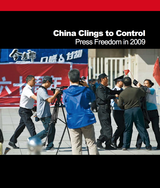
China Clings to Control: Press Freedom in 2009
International Federation of Journalists
It has been a tough year for press freedom in China, as the fading international spotlight on the 2008 Olympic Games in Beijing emboldened central and provincial authorities to revert to clamping down on journalists and media that seek to present a...
Reports
07.01.08
China’s Forbidden Zones: Shutting the Media out of Tibet and Other “Sensitive” Stories
Human Rights Watch
This report focuses on the treatment of foreign journalists by the Chinese government. In the buildup to the Beijing 2008 Olympics, the authors contend, the Chinese government has tried to force foreign journalists to avoid sensitive issues. As a...
The NYRB China Archive
06.09.94The Prodigal Sons
from New York Review of Books
What do Xi Yang, Wei Jingsheng, and Wang Juntao have in common? Yes, they are all “counter-revolutionary elements, subversives, splittists, black hands”—whatever Peking cares to call them—and all three are familiar with the Party’s prison...
The NYRB China Archive
05.30.91The Myth of Mao’s China
from New York Review of Books
In China Misperceived Steven Mosher strikes back at the profession, clan, or family of China watchers that cast him out. The official reasons have never been made public, although his university, Stanford, hinted at academic misconduct when it...
The NYRB China Archive
01.19.89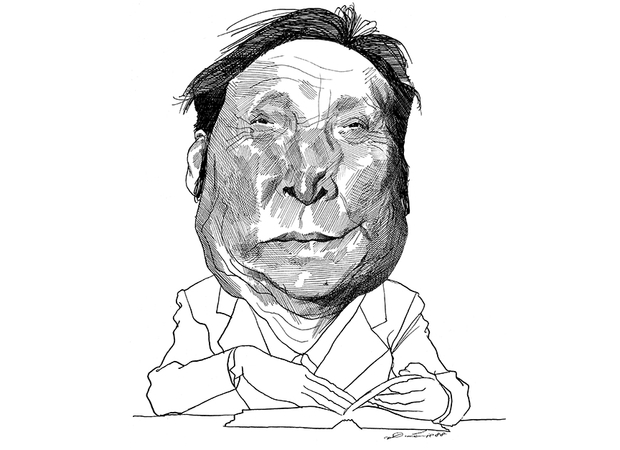
The Price China Has Paid: An Interview with Liu Binyan
from New York Review of Books
Liu Binyan is a sixty-two-year-old writer and journalist who is regarded as the preeminent intellectual advocating reform in China today. During the mid-1950s and again throughout the post-Mao period, he has strongly criticized Communist party...
- « first
- ‹ previous
- 1
- 2
- 3
- 4