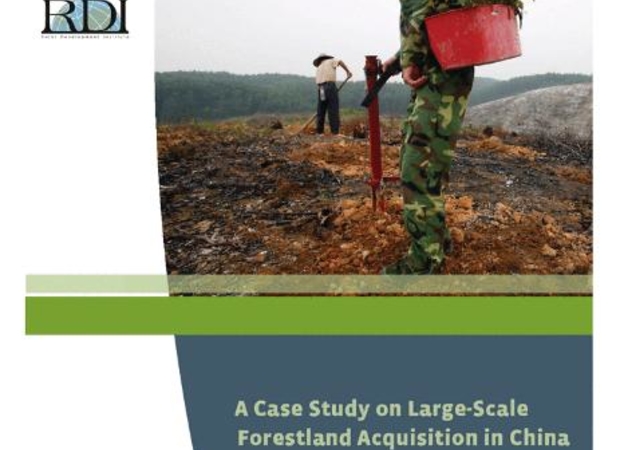
A Case Study on Large-Scale Forestland Acquisition in China

Rural development and forest restoration have been key priorities for the Chinese government over the last decade, and indeed many countries in the world. To address these priorities, the Chinese government has aggressively promoted new investment—public and private, including foreign direct investment (FDI)—together with tenure and related institutional reforms. Over the same period, Corporate Social Responsibility (CSR) has become a highly touted approach that aims to ensure minimal social, economic, as well as environmental protections, and to promote social and economic development. This study examines the case of one FDI made by Stora Enso with International Finance Corporation support in forestland plantations in Guangxi, China. In brief, the study finds that despite Stora Enso’s good intentions as revealed by its establishment of the “Principles for Sustainable Wood and Fibre Procurement and Land Management” in March 2005 among other CSR principles, there are major limits to their legal due diligence. In effect, this is raising risks for local people to both their rights to land and livelihoods.
Embed Code: 
He Jianan
Organization: 
Landesa

Measuring Health Workforce Inequalities

Methods and Application to China and India

Measuring health workforce inequalities: methods and application to China and India is for users and producers of quantitative data in support of decision-making for health policy and practice, including statistical analysts, researchers, health workforce planners and policy-makers, and development partners. With the aim of strengthening the global evidence base across countries and regions, it is intended to encourage a greater number of countries to monitor and report on health workforce inequalities using standardized methods and measures.

Inequality indices based on three statistical measures adapted from economics – the Theil L measure, the Theil T index and the Gini coefficient – are elaborated so as to assess the distribution of the health workforce within and between geographical units in a country and to identify inequalities. A large part of this publication is devoted to presenting the application of these methods to an analysis of health workforce data from China and India, followed by a comparison of the distribution of human resources for health in the two countries.

Embed Code: 
Luo Xiaoyuan
Topics: 
Health
Organization: 
World Health Organization

Racism in China

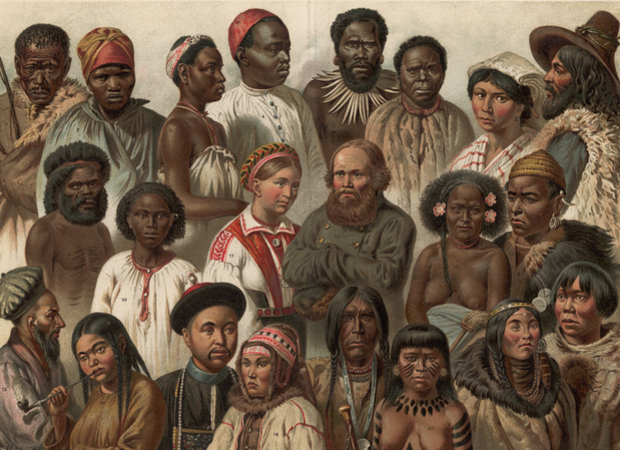
Racism isn’t a problem in China. That’s the official story you’ll read in the papers and hear on the streets, at least, and maybe there’s even a kernel of truth to it. Without a legacy of colonial activities abroad, the Chinese people are in many ways immune from attacks of historic racial discrimination. As China flexes its muscles internationally though, an increasing number of commenters are calling mainland behavior not only racist, but even representative of a new type of jianghu mentality. Is there any truth to this?

When a Billion Chinese Jump

As a young child, Jonathan Watts believed if everyone in China jumped at the same time, the earth would be shaken off its axis, annihilating mankind. Now, more than thirty years later, as a correspondent for The Guardian in Beijing, he has discovered it is not only foolish little boys who dread a planet-shaking leap by the world's most populous nation. When a Billion Chinese Jump is a road journey into the future of our species. Traveling from the mountains of Tibet to the deserts of Inner Mongolia via the Silk Road, tiger farms, cancer villages, weather-modifying bases, and eco-cities, Watts chronicles the environmental impact of economic growth with a series of gripping stories from the country on the front line of global development. He talks to nomads and philosophers, entrepreneurs and scientists, rural farmers and urban consumers, examining how individuals are trying to adapt to one of the most spectacular bursts of change in human history, then poses a question that will affect all of our lives: Can China find a new way forward or is this giant nation doomed to magnify the mistakes that have already taken humanity to the brink of disaster?  —Simon & Schuster