Los Angeles Review of Books

Publication Logo Vertical: 
Publication Logo Header: 

From their website:

The Los Angeles Review of Books is a nonprofit literary and cultural arts organization that combines the great tradition of the book review with the evolving technologies of the web. We are a community of writers, critics, journalists, artists, filmmakers, and scholars dedicated to promoting and disseminating the best that is thought and written, with an enduring commitment to the intellectual rigor, the incisiveness, and the power of the written word.

The Los Angeles Review of Books magazine was created in part as a response to the disappearance of the traditional newspaper book review supplement, and, with it, the art of fun, intelligent long-form writing on everything from fiction to politics, architecture to young adult fiction, academic monographs to genre fiction. In our swiftly changing world of books and publishing, the Los Angeles Review of Books stands for curated, edited, expert opinion written by the best writers and thinkers of our time. We seek to revive, and reinvent, the book review for a new generation.

LARB publishes every day online and quarterly in print (learn about our signature print edition, the LARB Quarterly Journal). We also publish a collection of wholly independent sister magazines, the LARB Channels, covering genres as diverse as sports and philosophy to plant thinking and experimental literature.

Our civic arts programs are designed to advance the next generation of editors and publishers, including the LARB / USC Publishing Workshop, an immersive, collaborative publishing program designed for students and innovators interested in playing a role in the future of publishing. Internships are available for college credit year-round.

LARB is a center for events and public arts programs that connect writers and artists to everyday readers both locally and nationwide. Tom’s Book Club, a level of our membership program, meets on a quarterly basis and includes live readings with selected authors; the LARB Luminary Dinner series features writers in conversation with readers in homes around Los Angeles.
Leap

Publication Logo Vertical: 
Publication Logo Header: 

From their website:

LEAP is the bilingual art magazine of contemporary China. Published six times a year in Chinese and English, it presents a winning mix of contemporary art coverage and cultural commentary from the cutting edge of the Chinese art scene.

Indiewire

Publication Logo Vertical: 
Publication Logo Header: 

From their website:

Since launching on July 15, 1996, IndieWire has grown into the leading news, information and networking site for independent-minded filmmakers, the industry and moviegoers alike. Originally conceived as an online forum and newsletter for filmmakers and festivals, IndieWire has grown over the last two decades into a preeminent source for film and television news, reviews, interviews, global festival coverage and more. Our mission has always been to create a platform to deliver news, information and other resources to creators and movie lovers, while facilitating a greater appreciation of independent filmmaking to the masses.

Sex and Marriage

We hurriedly cleaned up the studio and tried to set a bit more of a romantic tone this week, a feat accomplished mostly by positioning small candles and trays of potpourri by the microphones. And why else than because our subject today is sex and marriage, and perhaps more of the former than the latter. So join us for a show about who wants it, who gets it, and exactly how far some researchers will go when doing work on the Chinese sex industry.

Chinese Industrial Policy and the Automotive Market

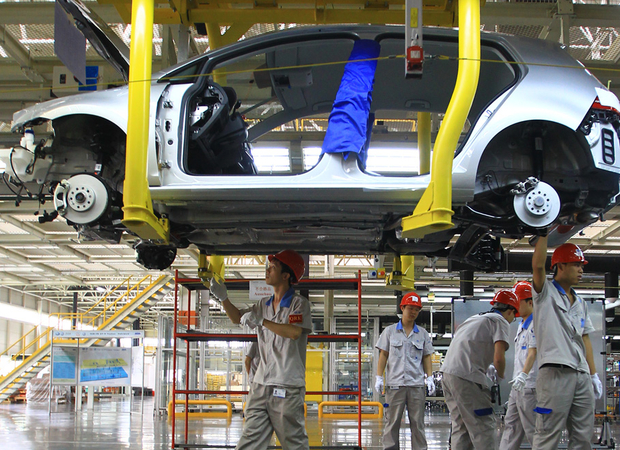
Even as the Beijing Auto Show prepares to toast the Chinese market with its typical mixture of sex and tech, industry insiders have been stunned by recent news showing the market share of domestic Chinese manufacturers falling relative to their foreign counterparts, a trend that has persisted even in the face of strongly preferential government policies and even overt efforts to push the industry into Chinese hands.

The Tree That Bleeds

In 1997 a small town in a remote part of China was shaken by violent protests that led to the imposition of martial law. Some said it was a peaceful demonstration that was brutally suppressed by the government; others that it was an act of terrorism. When Nick Holdstock arrived in 2001, the town was still bitterly divided. The main resentment was between the Uighurs (an ethnic minority in the region) and the Han (the ethnic majority in China). While living in Xinjiang, Holdstock was confronted with the political, economic and religious sources of conflict between these different communities, which would later result in the terrible violence of July 2009, when hundreds died in further riots in the region. The Tree that Bleeds is a book about what happens when people stop believing their government will listen. —Luath Press Limited

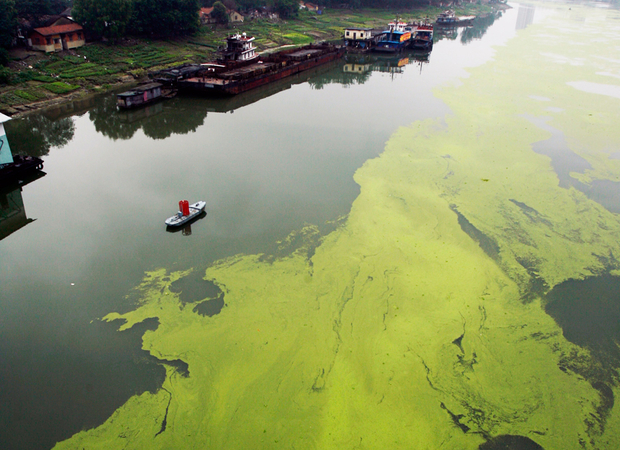
Watery Grave for Yangtze River Fish

(Beijing)—Fishermen along the banks of the mighty Yangtze River have long spoken of emptier nets and longer waits for a catch.

On April 2, an unusual auction held in a downstream city in Jiangsu Province added weight to their bleak reports: A single, 325-gram saury fish, a graceful species once common in the river, was sold to the highest bidder for a shocking 59,000 yuan.

Popularly known as the “knife fish” in China, the saury used to be a dinner staple up and down the Yangtze. Today, the breed is so rare that only the wealthiest of diners can afford a single fish.

Changing Media, Changing China

Thirty years ago, the Chinese Communist Party (CCP) made a fateful decision: to allow newspapers, magazines, television, and radio stations to compete in the marketplace instead of being financed exclusively by the government. The political and social implications of that decision are still unfolding as the Chinese government, media, and public adapt to the new information environment.

Edited by Susan Shirk, one of America's leading experts on contemporary China, this collection of essays brings together a who's who of experts—Chinese and American—writing about all aspects of the changing media landscape in China. In detailed case studies, the authors describe how the media is reshaping itself from a propaganda mouthpiece into an agent of watchdog journalism, how politicians are reacting to increased scrutiny from the media, and how television, newspapers, magazines, and Web-based news sites navigate the cross-currents between the open marketplace and the CCP censors. China has over 360 million Internet users, more than any other country, and an astounding 162 million bloggers. The growth of Internet access has dramatically increased the information available, the variety and timeliness of the news, and its national and international reach. But China is still far from having a free press. As of 2008, the international NGO Freedom House ranked China 181 worst out of 195 countries in terms of press restrictions, and Chinese journalists have been aptly described as "dancing in shackles." The recent controversy over China's censorship of Google highlights the CCP's deep ambivalence toward information freedom.

Covering everything from the rise of business media and online public opinion polling to environmental journalism and the effect of media on foreign policy, Changing Media, Changing China reveals how the most populous nation on the planet is reacting to demands for real news. —Oxford University Press

China: Fragile Superpower

Once a sleeping giant, China today is the world's fastest growing economy—the leading manufacturer of cell phones, laptop computers, and digital cameras—a dramatic turn-around that alarms many Westerners. But in China: Fragile Superpower, Susan L. Shirk opens up the black box of Chinese politics and finds that the real danger lies elsewhere—not in China's astonishing growth, but in the deep insecurity of its leaders. China's leaders face a troubling paradox: the more developed and prosperous the country becomes, the more insecure and threatened they feel.

Shirk, a former Deputy Assistant Secretary of State responsible for China, knows many of today's Chinese rulers personally and has studied them for three decades. She offers invaluable insight into how they think—and what they fear. In this revealing book, readers see the world through the eyes of men like President Hu Jintao and former President Jiang Zemin. We discover a fragile communist regime desperate to survive in a society turned upside down by miraculous economic growth and a stunning new openness to the greater world. Indeed, ever since the 1989 pro-democracy protests in Tiananmen Square and the fall of communism in the Soviet Union, Chinese leaders have been afraid of its own citizens, and this fear motivates many of their decisions when dealing with the U.S. and other nations. In particular, the fervent nationalism of the Chinese people, combined with their passionate resentment of Japan and attachment to Taiwan, have made relations with this country a minefield. —Oxford University Press