Sustainable Low Carbon City Development in China

By embarking on a low-carbon growth path, China’s cities can help reach the country’s targets for reducing the energy and carbon intensity of its economy, and become more livable, efficient, competitive, and ultimately sustainable. Cities contribute an estimated 70% of energy-related greenhouse gases. With China set to add an estimated 350 million residents to its cities over the next 20 years, the case for urgent action is strong. This report aims to provide central government policymakers and those of municipalities, cities, and townships in China with practical lessons on sustainable low-carbon development, based on the World Bank’s experience and its long-term relationship with many Chinese provinces and cities. In the 12th Five-Year Plan period and beyond, China has an opportunity to implement low-carbon strategies and approaches, ranging from innovations in new technology, to increased efficiency in existing industries, and to better management of the growth of cities. This will also make its future cities more sustainable, more efficient, more competitive, and more livable.


Embed Code: 
Topics: 
Organization: 
World Bank

Yearning for the Yuan

London is forging ahead with plans for yuan-based financial services by developing an infrastructure and banking services that match its ambitions for the Chinese currency.

On April 18, the city welcomed the first yuan-denominated bond issuance outside China’s sovereign territory: HSBC Holdings Plc issued about 2 billion yuan worth of bonds at a 3 percent interest rate. The placement was significantly oversubscribed.

Garish Flowers of War

The Flowers of War begins December 13, 1937, with young convent girls fleeing for their lives through a besieged Nanjing shrouded in mist. The first words heard are those of the lead girl Shujuan: “Everybody was running that day but no one could escape the thick fog.”

It feels odd to have such a young actress reflect on events that occurred long before her lifetime, yet the opening monologue succeeds with immediate tension.

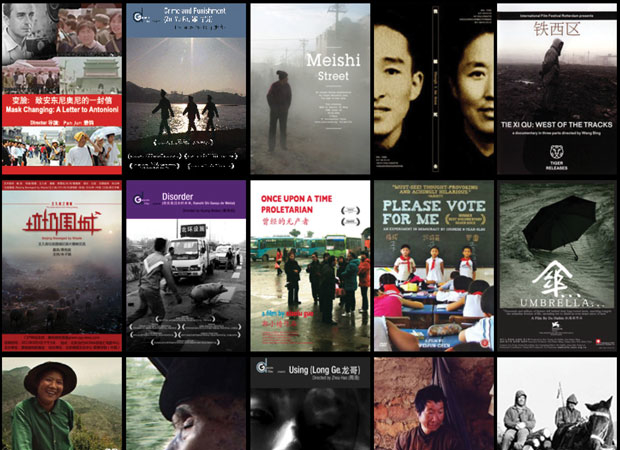
China Through An Independent Lens

Six Experts Recommend Their Favorite Chinese Documentary Films

Chinese documentaries have gained global attention in the past decade or so, thanks partly to the creative originality of young filmmakers and partly to a rapidly changing China that fascinates viewers from around the world. Wang Bing’s nine-hour epic West of the Tracks (2003), which chronicles the decline of state-owned industries in the city of Shenyang, garnered multiple international awards.

RMB Internationalization: Onshore/Offshore Links

Among emerging market currencies, the RMB holds the most potential to become widely used internationally, due to China‘s large economic size, diversified trade structure and network, macroeconomic stability, and high growth rates - both current and expected. Yet, foreign access to RMB-denominated assets that could act as global stores of value remains limited due to extensive restrictions on capitals flows. At the same time, the rapid expansion of RMB trade settlement and issuance of RMB-denominated bonds by the Chinese government and corporates in Hong Kong, SAR have created some feedback channels across onshore (CNY) and offshore (CNH) RMB markets. We employed a bivariate GARCH model to understand the inter-linkages between onshore and offshore markets and found that, while developments in the onshore spot market exert an influence on the offshore spot market, offshore forward rates have a predictive impact on onshore forward rates. We also find evidence of volatility spillovers between two markets. Overtime, those spillover channels would be expected to grow as the offshore market further develops.

Embed Code: 
Luo Xiaoyuan
Topics: 
Economy

China’s Impact on World Commodity Markets

Shocks to aggregate activity in China have a significant and persistent short-run impact on the price of oil and some base metals. In contrast, shocks to apparent commodity-specific consumption (in part reflecting inventory demand) have no effect on commodity prices. China’s impact on world commodity markets is rising but, perhaps surprisingly, remains smaller than that of the United States. This is mainly due to the dynamics of real activity growth shocks in the U.S, which tend to be more persistent and have larger effects on the rest of the world.

Embed Code: 
Luo Xiaoyuan
Topics: