Aibai

Publication Logo Vertical: 
Publication Logo Header: 

Established in 1999, the Aibai Culture & Education Center is a non-profit organization based in China. Its mission is to promote equal rights for lesbian, gay, bisexual, and transgender (LGBT) communities through three key strategies: strengthening community alliance; public advocacy; and medical services and care to people living with HIV. Currently, Aibai has branches in Beijing, Chengdu and Shanghai and has volunteers throughout China and overseas.
China Investigating More Top PetroChina Executives Over Corruption

A high-level government probe into corruption at China's leading oil and gas firm widened on Tuesday, with three additional senior officials at the state-run giant being investigated over alleged wrongdoing, which is C.C.P. shorthand for graft.


30-Year Throwback: What Fodor’s Was Saying About China Three Decades Ago

When asked to give examples of China's transformation over the last three decades, you may first be tempted to cite year-to-year G.D.P. growth figures. Yet in 2013, we may also find some of these answers tucked inside a Fodor's People's Republic of China guidebook from 1984.


China’s “Seven Base Lines” for a Clean Internet

Run down the list of the “Seven Base Lines” and it is painfully obvious that this is part of a new government initiative to assert stronger control over online speech. This is yet another internet tightening in China ostensibly carried out to combat online “rumors.”


China’s Higher Education Bubble

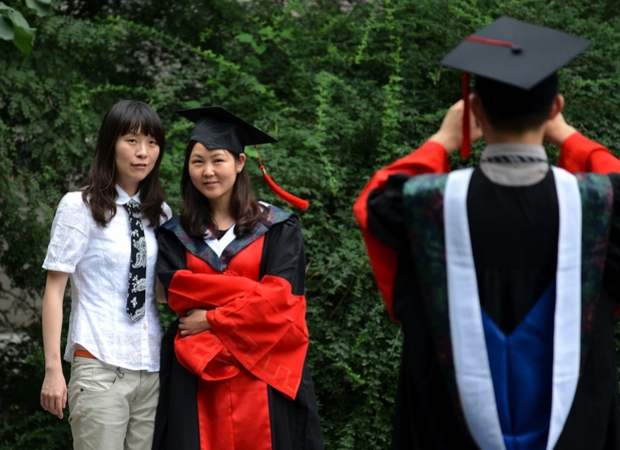
The number of university graduates in China has exploded.

In 1997, 400,000 students graduated from four-year university programs. Today, Chinese schools produce more than 3 million per year. But employment rates at graduation have plunged. And remote suburbs of Beijing and Shanghai teem with underemployed graduates, crammed four to a room in substandard housing and eking out an existence, often financially supported by their parents, as sidewalk vendors.

The country faces a higher education bubble fueled by state investment.