China is Building the Most Extensive Global Commercial-Military Empire in History
on June 9, 2015
China's new strategy is to project naval power broadly in the open seas.
Uber Spends Heavily to Establish Itself in China
on June 9, 2015
Fat with almost $6 billion in venture capital, San Francisco-based Uber is doling out bonuses up to three times its fares.
China Issues White Paper on Human Rights
on June 8, 2015
China has made "tremendous achievements" on the "the correct path of human rights development that suits its national conditions."
Americans Buy a Fifth of China’s Exports
on June 8, 2015
Americans bought almost $1 out of every $5 worth of goods that China exported in May, the highest share since August 2010.
Liu Luying, 74, Huangmen Village
on June 8, 2015
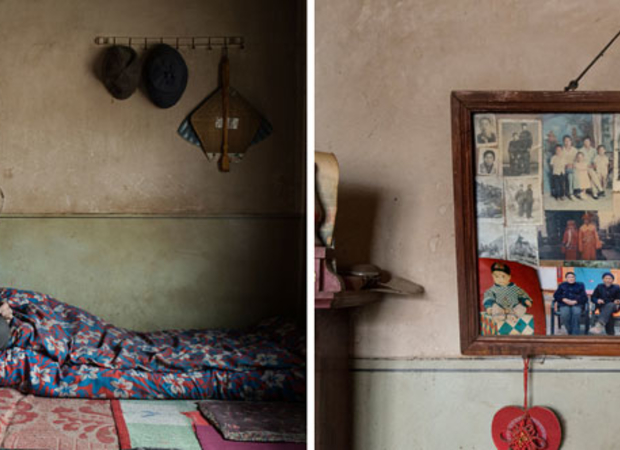
Liu Luying, 74, Huangmen Village.
Liu comes from a village three miles away, but moved here at 18 when she had an arranged marriage. “Whether you like your husband or not it doesn’t matter,” she says. Her husband died nine years ago and she has 10 grandchildren, from her four children. One of her grandsons is a baker in Shanghai. She says she has never had one of his cakes. At right is a washing basin, a fixture in most rural houses that don’t have running water.
Fu Decang, 50, Fu Wenbin, 15, Xincheng Village
on June 8, 2015
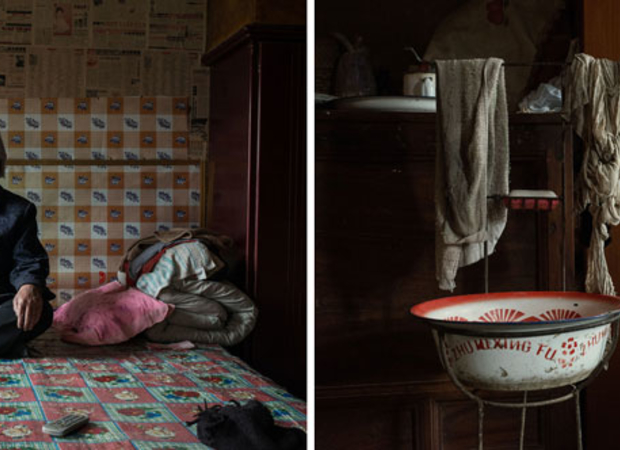
Fu Decang, 50, and Fu Wenbin, 15, Xincheng Village.
For five years, while his father was away, Fu Wenbin was brought up by his grandmother. She passed away two years ago. Fu will be entering middle school next year and would like to go on to high school if he can, but his father wants him to find a job.
Ma Xiyang, 12, Jin Fen’er, 63, Shanmen Village
on June 8, 2015
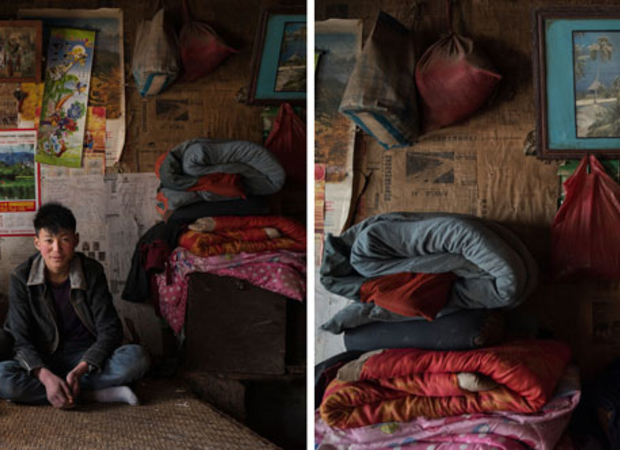
Ma Xiyang, 12, and Jin Fen’er, 63, Shanmen Village.
Jin’s son, Xiyang’s father, is mentally ill and recently cracked his skull open in a bad fall. He has been bedridden for a month. Jin has to look after both of them with barely any income. Her husband farms and was away spraying pesticides in their fields, half an hour outside of the village. They also produce honey, which they sell for 60 RMB per kilogram. At right are stacks of firewood and straw for the family to sell.
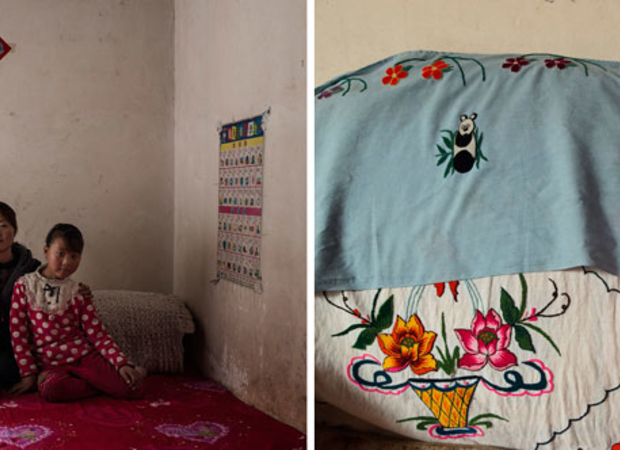
He Guanghui, 6, Chen Xiuling, 32, He Yawen, 9, Jinshan Village
on June 8, 2015
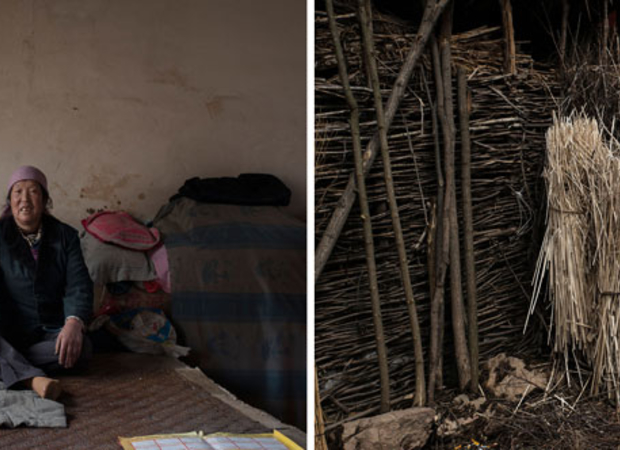
He Guanghui, 6, Chen Xiuling, 32, and He Yawen, 9, Jinshan Village.
Li Shutao, 90, Dashi Village
on June 8, 2015
Li Shutao, 90, Dashi Village.
Li has 20 grandchildren, most of them migrant workers. In his youth, Li traveled by rail on train car roofs from county to county, following the harvest season and working on farms. He traveled all the way to the neighboring province of Shaanxi, the farthest he has ever traveled. During the Great Leap Famine (1959-1961), Li urged his sons to leave the village and go and beg for food in Shaanxi. He told them to pretend to be mute in hopes that would make it easier for them to board trains for free.