Is Romance Dead? France Seeks New Image in China
on September 16, 2015
France's finance minister wants to persuade Chinese officials to set aside their romantic image.
France's finance minister wants to persuade Chinese officials to set aside their romantic image.
It would be a sad end to an amazing story. An economic miracle—one that lifted 300 million people from poverty and shifted the world's economic center of gravity—collapsing under the weight of risky investments and a financial crisis.
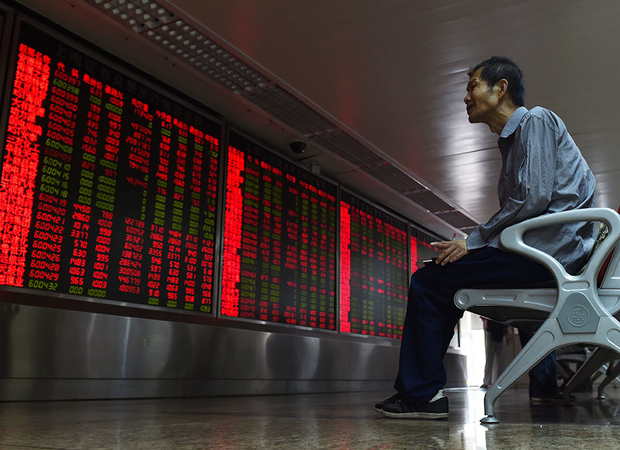
This seems to be the theme about the Chinese economy of many commentaries in the international media following the recent stock market turbulence and changes in the exchange rate mechanism. Growth collapse to as low as 1 to 2 percent has been suggested. The volatility in the stock market seems to have confirmed the most pessimistic claims.
U.S. and Chinese officials plan to unveil more ambitious carbon-emission rules for several Chinese cities and provinces.
As of Sept. 12,Monster Hunthad grossed a whopping RMB 2.428 billion (US$380.95 million).
China has been active in pushing both the United states and Iran to reach agreement on Iran's nuclear program.
Senior U.S. and Chinese officials reached “substantial agreement” on several cybersecurity issues.
Guo Yushan, founder of a think-tank that did research on business regulations, reform and civil society is released recently.
China appears to building a third airstrip in disputed waters in the South China Sea.
Traditional Chinese medicine—popular throughout Asia—long has prized the supposed medicinal value of tiger bones. Now, though, as the world’s wild tiger population is disappearing fast, even facing extinction, the Chinese medicine industry may have found an alternative with lion bones. A new study reveals demand for lion bones has surged since 2008, with the bones largely going to Asia for use in traditional medicine.

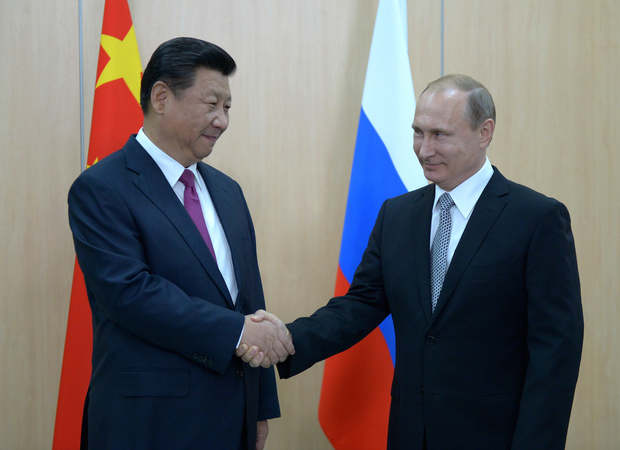
After a year of intense flirtation, the Sino-Russian relationship is beginning to look like a one-sided love affair. Indeed, Russian President Vladimir Putin’s visit to China last week—his first since the United States and European Union enacted sectoral sanctions against Russia after Malaysian Airline Flight 17 was shot down in eastern Ukraine in July of 2014—marked a year of frustrated ambitions in China for the Kremlin.