Muyi Xiao

Muyi Xiao is a ChinaFile Senior Fellow. From 2020 to 2025, she worked as a reporter on The New York Times’ Visual Investigations team, where she used emerging techniques to analyze open-source material, such as satellite images, ship and plane tracking data, government documents, and corporate records. At The Times, she covered a wide range of topics regarding China, including tech, geopolitics, and security.

Xiao began her journalism career in 2012 in Beijing. She has worked for Chinese- and English-language publications as a reporter, photojournalist, and videographer. In 2017, she relocated to New York to work as the Visuals Editor for ChinaFile, a position she held until joining The Times in early 2020.

Xiao is a four-time Society of Publishers in Asia Awards winner and a Gerald Loeb Award recipient. She was also part of a team that was named a Pulitzer finalist in 2020. She is consistently at the forefront of media innovation, particularly in the field of multimedia journalism. In 2021, she chaired the World Press Photo Digital Storytelling Contest.


Sea Level Rise In Pictures, Cancer Villages Near Beijing

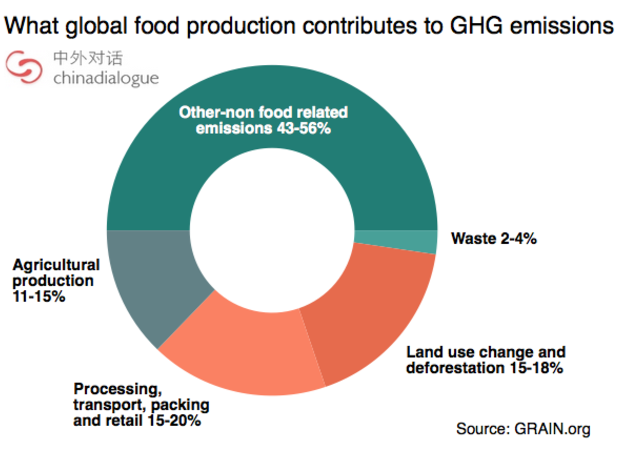
I think a big part of the reason why citizens of the world have not rallied to deal with climate change is the lack of a certain deadline that would warrant our immediate response to the grave consequences of our warming planet. There is no discussion of a specific hurricane or other specific imminent event. As a species we are very good at procrastinating.

China Economic Review

Publication Logo Vertical: 
Publication Logo Header: 

From their website:

China Economic Review (CER) has been a dependably independent voice on trends and developments in the greater Chinese economy for a quarter century. Our coverage has won recognition from the Society of Publishers in Asia and is widely read by economists, business leaders, academics and students with an interest in one of the world's most vibrant and complex developing markets. 

‘My Personal Vendetta’

An Interview with Hong Kong Publisher Bao Pu

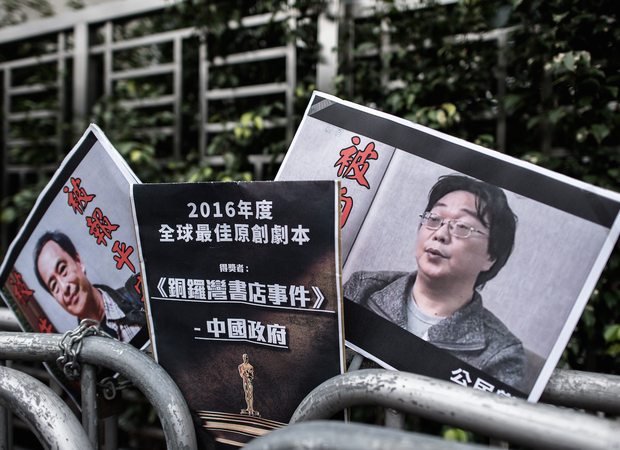
The presumed kidnapping of the Hong Kong bookseller and British citizen Lee Bo late last year has brought international attention to the challenges faced by the Hong Kong publishing business. During a break from The New York Review’s conference on the “Governance of China,” which took place in Hong Kong earlier this month, just weeks after Lee’s disappearance, I spoke to Bao Pu, one of the Chinese-language world’s best-known publishers of books about the Chinese government.

Jonas Parello-Plesner

Jonas Parello-Plesner is the head of the foreign and security policy team at the Danish embassy in Washington, D.C. He was previously a Senior Policy Fellow at the independent think tank European Council on Foreign Relations (ECFR). He was also Director of a development NGO with activities in Asia and served as Denmark’s Senior Advisor on China and North East Asia from 2005-2009. He has appeared on panels at the U.S. Congress and at the European Parliament’s Foreign Affairs and international trade Committees on Chinese investments in Europe.

Parello-Plesner co-authored the book China’s Strong Arm: Protecting Citizens and Assets Abroad. He writes a weekly blog on Carnegie Europe on European questions set by Judy Dempsey from the International Herald Tribune. He has written op-eds for or has been quoted in Financial Times, Le Monde, El Pais, International Herald Tribune, European Voice, Frankfurter Rundschau, Foreign Policy (Spanish edition), EUobserver, E!Sharp, Asia Times, and East Asia Forum, and he has made on-screen appearances on CNN, Al Jazeera, Bloomberg, FRANCE 24, Channel 4, and Danish Broadcast.

At ECFR, Parello-Plesner co-authored the briefs “China and Germany: A New Special Relationship?”; “The Scramble for Europe,” about the Chinese economic presence in the E.U.; the China sections of The European Foreign Policy Scorecard from 2010-2012, and “China’s Janus-Faced Response to Arab Revolutions.” He is a graduate of the London School of Economics, Copenhagen University, and the Ecole Nationale d’Administration in Paris.

William Kazer

William Kazer has covered Asian politics and economics for more than 30 years, including as a senior correspondent for the Wall Street Journal and Dow Jones News based in Beijing. He also worked as a correspondent and editor for Reuters in Beijing where he covered the Tiananmen pro-democracy protests in 1989 and had postings in Shanghai, Hong Kong, Taipei, and Bangkok, as well as New York. Kazer helped Reuters set up its Chinese-language financial newswire and has worked as a consultant and adviser in the media sector in China. He studied Chinese at the State University of Buffalo and the University of Wisconsin and is currently a freelance writer living in New York.

Why China Doesn’t Publish Fatal Train Crash Data

Infighting Between Two Government Organizations Has Kept the Casualty Report Out of Public Eye

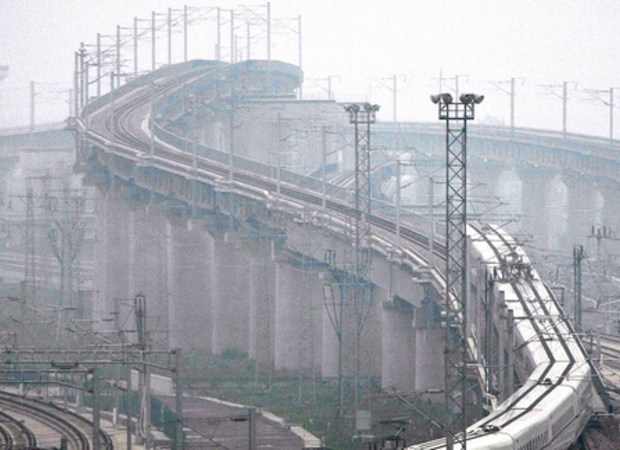
Disputes between the two agencies running the trains in China over how to classify and publish details on fatal railroad incidents has kept reports on some fatal accidents last year from surfacing, people close to the matter say. Several employees of China Railway Corp. (CRC), which builds the country’s railroad networks and manages their commercial operations, said they have received reports about several serious accidents that involved three to 10 deaths last year.