


Grandma
on July 8, 2025
The author’s grandmother.

The author’s grandmother.
How might the battle over succession play out over the coming months? If the Dalai Lama announces a successor, how will Beijing respond? How robust is the institutional framework for maintaining legitimacy without the Chinese government’s recognition, and what are its potential vulnerabilities? What are the ramifications for China’s relationship with India, which hosts the Tibetan government-in-exile? How might other countries respond to Beijing?

Tashi Rabgey is a Research Professor of International Affairs at George Washington University’s Elliott School of International Affairs. Her main research focuses on territorial politics, statehood, and late authoritarianism, based on two decades of field studies in Tibet and China. She now leads a project on legal pluralism and constitutional transitions in regional autonomies and special status arrangements within federal and asymmetric states. A former co-director of the University of Virginia Tibet Center, she holds a PhD from Harvard and law degrees from Oxford and Cambridge. She has served as a visiting professor at the University of Kurdistan Hewlêr (Iraq) and will be based at the University of Toronto Faculty of Law in fall 2025.
The young Uyghur filmmaker Ikram Nurmehmet is now in a Chinese prison for “actively participating in terrorist activities.” He was likely targeted because he had studied in Turkey between 2010 and 2016. It is always difficult for what China calls “ethnic minority” (i.e. non-Han Chinese) filmmakers to make the films they want to make inside China, where review by the state Film Administration is mandatory for all. What may be surprising is that filmmakers from Tibet, Inner Mongolia, and Xinjiang have succeeded in making important and eloquent works of cinema that grapple, at least indirectly, with the particular situations of their communities in China, despite the constraints under which they work.

A promotional poster for Elephant in the Car (2020).

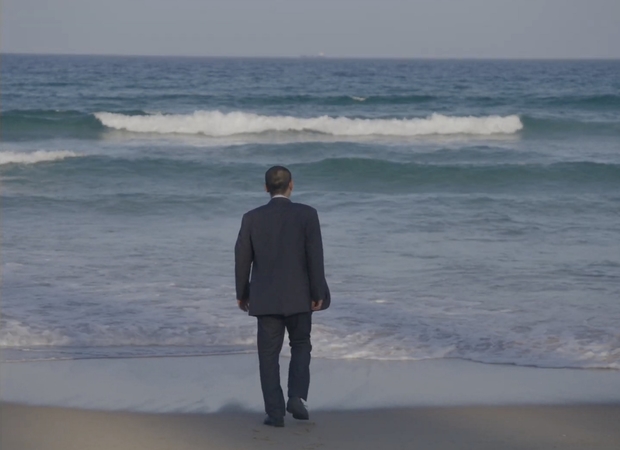
A still from A Day by the Sea (2022).
Wenhao Ma is a U.S.-based reporter covering China-related stories with a focus on social media, disinformation, and technology. A bilingual writer of English and Chinese, he also has experience working in broadcast journalism. Ma graduated from Stony Brook University in New York with a Bachelor’s degree in journalism. He is also an alumnus of American University in Washington, D.C. His past work is available on his Substack page.