Nadine Godehardt

Nadine Godehardt has been Senior Associate of the Research Division Asia at the German Institute for International and Security Affairs (Stiftung Wissenschaft und Politik, SWP) in Berlin since September 2024, based at the SWP Brussels office. In her capacity at SWP, she advizes the German government and Bundestag in questions regarding China’s domestic and foreign policy. Godehardt travels regularly to China for research, expert exchanges, and high-level dialogues with CASS, CICIR, CIIS, SIIS, BFSU, CFAU, and the IDCPC, among others. Academically, she has worked extensively on China’s foreign policy discourses and strategic narratives, and the nexus between global connectivity and geopolitics. She edited (with Paul J. Kohlenberg) The Multidimensionality of Regions in World Politics (Routledge, 2021). Since 2015, she has been co-editor of the Book Series “Routledge Studies on Challenges, Crises and Dissent in World Politics.” She is the author of The Chinese Constitution of Central Asia: Regions and Intertwined Actors in International Relations (Palgrave Macmillan, 2014). Since 2015, Godehardt has further engaged in collaborative research about the relationship between urban space, design, (in)security, and international politics with the Aedes Metropolitan Laboratory (ANCB) in Berlin. In this collaboration, she is mostly interested in questions regarding the relationship between aesthetics, space, and global politics. Godehardt studied Political Science, Philosophy, and Sinology at the University of Jena and the University of Tübingen. She finished her doctoral dissertation in Political Science at the University of Hamburg in 2012.

What Did the EU-China 50th Anniversary Summit Achieve?

A ChinaFile Conversation

A European Union-China Summit took place in Beijing on July 24, 2025, marking the 50th anniversary of EU-China diplomatic relations. European Council President António Costa and European Commission President Ursula von der Leyen met with Chinese President Xi Jinping and Premier Li Qiang. What are the implications for trade and security, and for how Europe has to balance its risks and needs between China, Russia, and the U.S.? Was the summit an inconsequential formality? Or if not, how are its outcomes likely to shape the EU-China relationship going forward?

Justyna Szczudlik

Justyna Szczudlik is the Deputy Head of Research and a China analyst at the Polish Institute of International Affairs (PISM). She was formerly the head of the Asia-Pacific Program (2016–2021). She is a member of the European Think-Tank Network on China (ETNC) and the Global Advisory Board of the European Values Centre (EVC). She holds a Ph.D. in Political Science from the University of Warsaw (2015), an M.A. in Chinese Studies (2008) and an M.A. in Political Science (2002), from the University of Warsaw and University of Wrocław. She studied Chinese language at the College of Advanced Chinese Training at the Beijing Language and Culture University in Beijing (2005-2006) and at National Chengchi University in Taipei (2013). Her research focuses on China’s foreign policy, particularly China-Europe/EU relations and Cross-Strait relations. Her work has been published in The Diplomat, East Asia Forum, 9DASHLINE, Taipei Times, and China Brief, and on the websites of the ECFR, Ifri, CSIS, NBR, and others.

Zichen Wang

Zichen Wang is Research Fellow and Director for International Communications at the Center for China and Globalization (CCG), a leading non-governmental think tank in Beijing, and founder and author of Pekingnology and The East is Read newsletters on China. Before joining CCG in October 2022, he was a senior journalist with China’s state news agency for over 11 years with postings in Harbin, Jinan, Brussels, and Beijing. Wang has a Master’s degree in Public Policy from the Princeton School of Public and International Affairs.

China’s Vulnerability to International Pressure on Human Rights Practices

An Excerpt from ‘Righting Wrongs: Three Decades on the Front Lines Battling Abusive Governments’

The lessons I draw from these efforts is that despite the Chinese government’s economic clout and its willingness to retaliate against those who dare to spotlight its repression, Beijing remains vulnerable to international censure. As governments end their infatuation with the Chinese market and find safety in numbers from Beijing’s retaliation, the prospect of a formal U.N. condemnation of the Chinese government’s repression—Beijing’s nightmare—may come to pass. That Beijing continues to care about its international reputation is perhaps the most important opportunity that the human rights community has to mitigate Beijing’s repression.

Kenneth Roth

Kenneth Roth is the Charles and Marie Robertson Visiting Professor at the Princeton School of Public and International Affairs. Until August 2022, he served for nearly three decades as the Executive Director of Human Rights Watch, one of the world’s leading international human rights organizations. He built the organization into a global institution operating in some 100 countries, with 550 staff members and an annual budget of $100 million. Before that, Roth was a federal prosecutor in New York and for the Iran-Contra investigation in Washington.

A graduate of Yale Law School and Brown University, Roth has conducted numerous human rights investigative and advocacy missions around the world, meeting with dozens of heads of state and countless ministers. He is quoted widely in the media and has written hundreds of articles on a wide range of human rights issues, devoting special attention to the world’s most dire situations, the conduct of war, the foreign policies of the major powers, the work of the United Nations, and the global contest between autocracy and democracy.

Roth’s first book, “Righting Wrongs: Three Decades on the Front Lines Battling Abusive Governments,” was published by Knopf and Allen Lane in February 2025. It offers an insider’s view of the strategies developed by Human Rights Watch to put pressure on governments to respect human rights, drawing on his years of experience. Debunking the skeptics, it demonstrates with repeated examples how pressure can move even the most powerful and recalcitrant governments.

Trains: A Chinese Family History of Railway Journeys, Exile, and Survival

Part V

China is a powerful nation now. Decades of fast GDP growth. The second largest economy in the world. Yet another “New Era” has been declared by yet another strong and wise leader (Mao Zedong used the phrase “New Era” as early as 1940). The official drumbeat about “the great rejuvenation of the Chinese nation”—Xi Jinping’s version of “Make China Great Again”—has been deafening. The West is declining. The East is rising. The United States is stumbling. China is moving to “center stage,” says Xi. Our national team is winning. Look ahead, be positive, cheer our captain and our team. Greater victory is in sight. History is on our side.

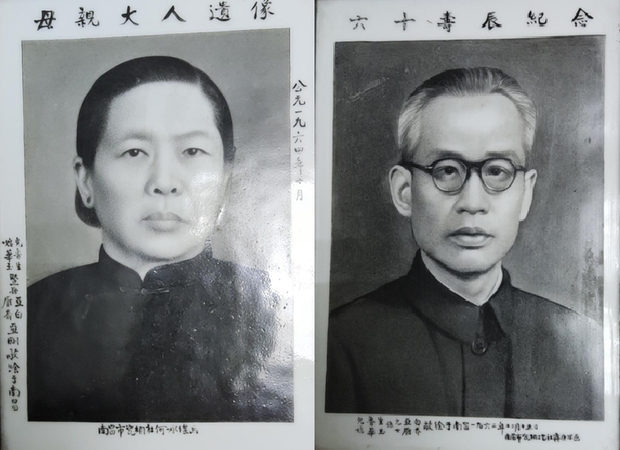
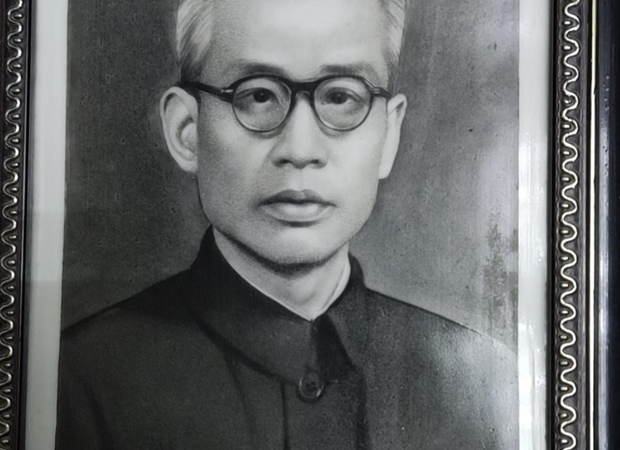
Grandma and Grandpa

Portraits of the author’s grandparents, drawn by two local artists in Nanchang, Jiangxi. Grandfather’s portrait (right) was drawn in 1962, to commemorate his 60th birthday. Grandmother’s portrait was drawn in 1964, based on a photograph taken during her late years. The two framed portraits were hung on the wall at Uncle Lusheng’s home, to which his three children would gather to pay their respects every Lunar New Year’s Eve before the family would sit down for dinner. These photographs of the two portraits were taken by the author’s cousin Congo, Uncle Lusheng’s youngest son, in 2021.