


The NYRB China Archive
02.01.90The Empire Strikes Back
from New York Review of Books
“President Bush still regards you as his friend, a friend forever,” Brent Scowcroft told Deng Xiaoping in Beijing on December 10, six months and seven days after Deng ordered the People’s Liberation Army into Tiananmen Square. In Washington, the...
The NYRB China Archive
12.21.89
Keeping the Faith
from New York Review of Books
I am proud and deeply moved to have this opportunity to speak with you here today; but at the same time, I am also filled with a sense of sorrow and shame. I am moved because you have chosen to honor me with the 1989 Robert F. Kennedy Human Rights...
The NYRB China Archive
11.09.89Vengeance in China
from New York Review of Books
While China’s leaders try to assure the outside world and themselves that “everything is back to normal,” the national problems that existed before the June 4 crackdown have become much worse. China’s students and intellectuals were already...
The NYRB China Archive
10.12.89China Witness, 1989
from New York Review of Books
In response to: China’s Spring from the June 29, 1989 issueTo the Editors:The absolute cynicism displayed by the current Chinese leadership as they present their version of this spring’s events in Beijing and other cities offers a special challenge...
The NYRB China Archive
10.12.89After the Massacres
from New York Review of Books
A historian of contemporary China who is considering the events of three years ago, of ten years ago, of twenty years ago, must feel dizzy: each time, it is the same story, the plot is identical—one needs only to change the names of a few characters...
The NYRB China Archive
09.28.89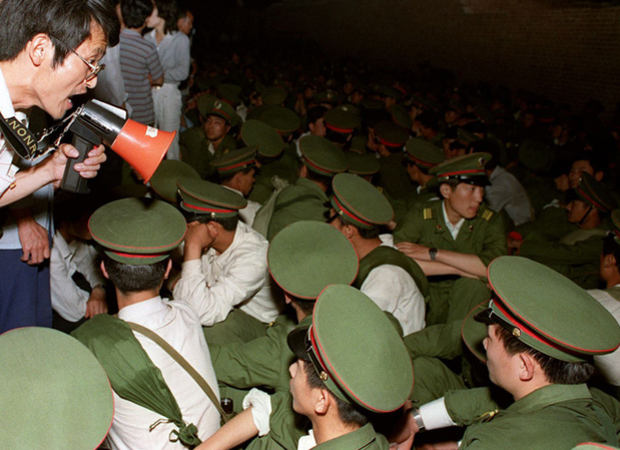
Why China’s Rulers Fear Democracy
from New York Review of Books
To try to understand is not to condone or forgive. Quite the contrary. In this bicentennial year when a euphoria for democratic rights seemed to be sweeping the world, why was it stopped in Tiananmen Square? Why do China’s rulers attack their...
The NYRB China Archive
07.20.89The Curse of the Man Who Could See the Little Fish at the Bottom of the Ocean
from New York Review of Books
Since the Beijing massacres, the question has already been put bluntly to me several times: “Why were most of our pundits so constantly wrong on the subject of China? What enabled you and a tiny minority of critics to see things as they really were...
The NYRB China Archive
07.20.89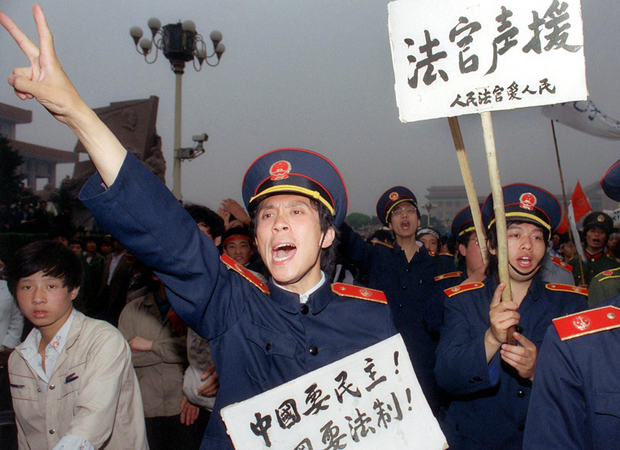
The End of the Chinese Revolution
from New York Review of Books
When Deng Xiaoping suppressed the Beijing Spring last month, he thought he was putting down a new Cultural Revolution. Pirated notes from a Party meeting in late April quoted him as telling his colleagues:This is not an ordinary student movement. It...
The NYRB China Archive
07.20.89Letters from the Other China
from New York Review of Books
During the student demonstrations that swept China toward the end of 1986, the brilliant astrophysicist Fang Lizhi, who was then vice-president of the University of Science and Technology, emerged, through his speeches to student groups, as the...
The NYRB China Archive
06.29.89The Incredible Shrinking Man
from New York Review of Books
Just before the recent demonstrations in Beijing and other cities, which shook the Party to its foundations, a rumor ran through the capital: Mao Zedong’s body, embalmed and mounted in the ugly Memorial Hall which disfigures Tiananmen Square...
The NYRB China Archive
06.29.89China’s Spring
from New York Review of Books
To stand, in early May, atop the Gate of Heavenly Peace, which guards the entrance to the Forbidden City, and look across the vast crowd of people jammed into Tiananmen Square was to have a historically new sense of what Mao called “the broad masses...
The NYRB China Archive
06.29.89The Chinese Intellectuals and the Revolt
from New York Review of Books
The Beijing revolt of 1989 has caught the world’s attention, but the malaise that led to the emergency is broader and deeper than any of its conspicuous slogans can suggest. For foreigners like myself who live in Beijing, it was already clear nine...
The NYRB China Archive
02.02.89China’s Despair and China’s Hope
from New York Review of Books
Nineteen eighty-nine is the Year of the Snake in China. It is not clear whether this snake will bring any great temptations. But this much is predictable: the year will stimulate Chinese into deeper reflection upon the past and a more incisive look...
The NYRB China Archive
01.19.89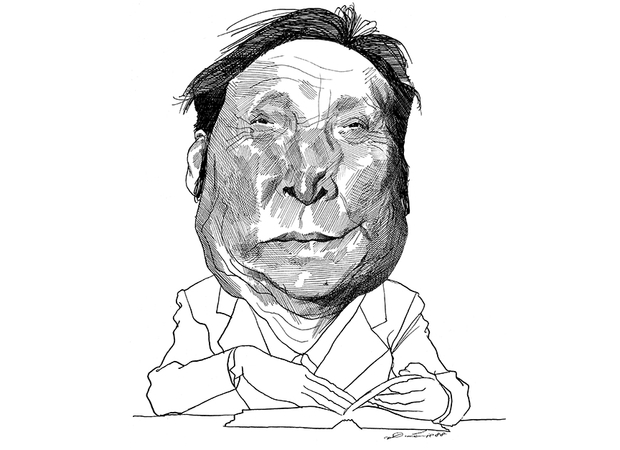
The Price China Has Paid: An Interview with Liu Binyan
from New York Review of Books
Liu Binyan is a sixty-two-year-old writer and journalist who is regarded as the preeminent intellectual advocating reform in China today. During the mid-1950s and again throughout the post-Mao period, he has strongly criticized Communist party...
The NYRB China Archive
02.18.88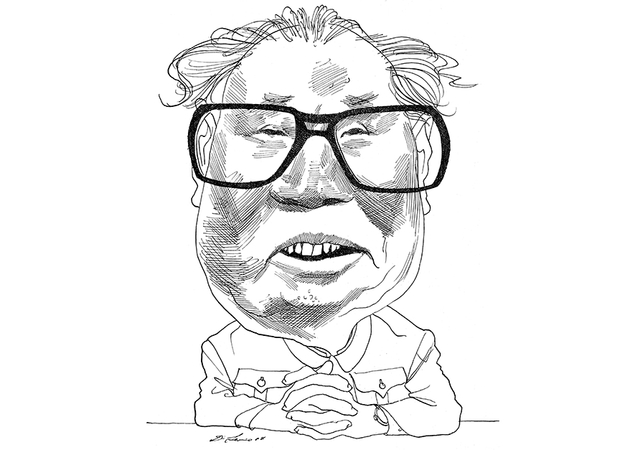
Passing the Baton in Beijing
from New York Review of Books
Succession has become an omnipresent problem not only in China but throughout Asia. Long-lasting regimes under aging rulers are entering their twilight zone in North Korea, Burma, and Indonesia, and face a period of weakness and uncertainty, for the...
Reports
12.01.87
Modernizings Market in Post-Mao China
Cato Institute
Is the post-Mao era truly a transition toward free-market capitalism, or is it yet another nominal “rightward” shift in the swinging pendulum of the Chinese Communist Party, to be offset in the future by more drastic elements of plunder by the...
The NYRB China Archive
07.16.87Surviving the Hurricane
from New York Review of Books
At a time when the new freedoms of the post-Mao years are in jeopardy, many issues of intense concern to Chinese can freely be discussed only abroad. Of these, among the most important is the Cultural Revolution, about which Nien Cheng has written...
The NYRB China Archive
05.12.83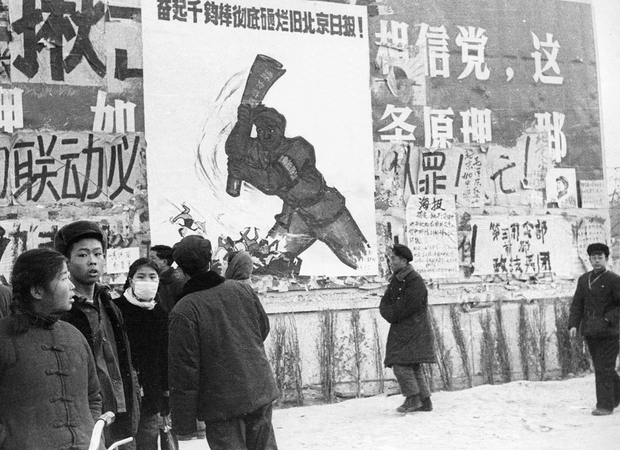
Blind Obedience
from New York Review of Books
Son of the Revolution is actually three stories in one—first, a graphic I-was-there account of what it was like to grow up during the Cultural Revolution; second, a cliffhanger love story with a happy ending; and third, a poignant analysis of how...
The NYRB China Archive
12.02.82‘Red’ or ‘Expert’?
from New York Review of Books
Mao’s last decade was as full of confusion and surprises as the 1790s in France. In size and complexity the Cultural Revolution was of course a much bigger event than the French Revolution. At any rate it will be studied from many angles for a long...
The NYRB China Archive
08.13.81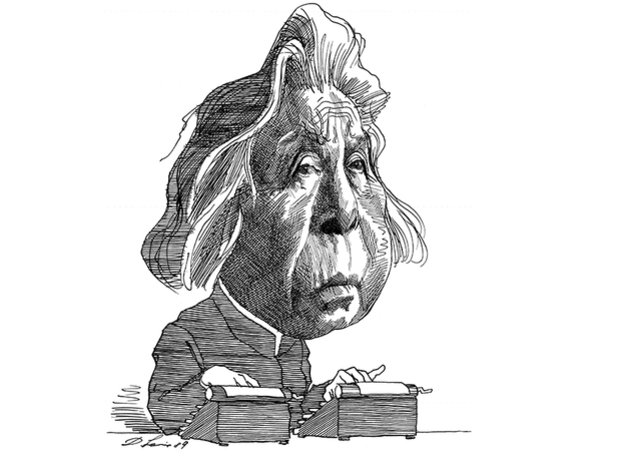
China: How Much Dissent?
from New York Review of Books
In the year 278 BC an aristocrat and poet named Qu Yuan took his own life by throwing himself into the waters of the Milo River. Qu Yuan had once been the powerful adviser to the ruler of the Chu kingdom, specializing in legal affairs and diplomacy...
The NYRB China Archive
05.28.81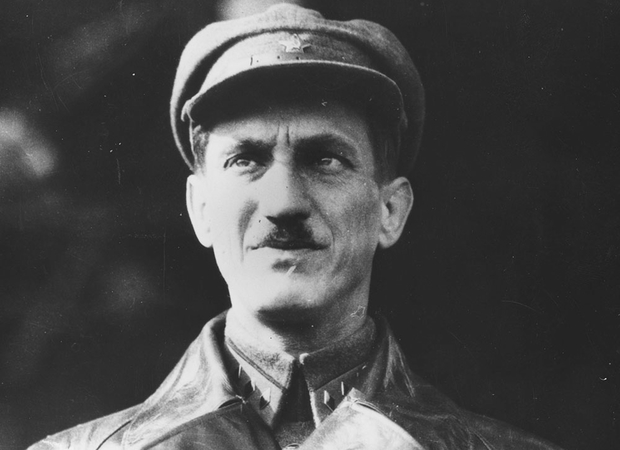
His Man in Canton
from New York Review of Books
In the Chinese united front of the mid-1920s, the Soviet agent Borodin has been a protean figure. Bringing Leninist skills, arms, and advisers to Canton, he seemed to be the priceless ingredient that finally catalyzed Sun Yat-sen’s revolution...
The NYRB China Archive
03.22.79Why Confucius Counts
from New York Review of Books
One would be hard pressed, surveying any of the political cultures in human history, to find a parallel for the continuity, longevity, and vitality of Confucianism. This moral and ethical system was given initial shape in the fifth and fourth...
The NYRB China Archive
06.09.77Chinese Shadows: Bureaucracy, Happiness, History
from New York Review of Books
In the sixth century BC, at the time the Tso Chuan refers to, China’s social hierarchy had only ten degrees. We have progressed since then: the Maoist bureaucracy today has thirty hierarchical classes, each with specific privileges and prerogatives...
The NYRB China Archive
05.26.77Chinese Shadows
from New York Review of Books
In handbooks on Chinese traditional painting, an advice commonly given to the artist who wishes to learn to paint trees is to sketch them in winter, for then, without the seductive yet confused and blurry effect of their leafy masses, through their...
The NYRB China Archive
08.09.73Traveling Light
from New York Review of Books
With the exception of Joseph Kraft’s short work, all the books on China mentioned here have been padded. Barbara Tuchman includes a fascinating historical essay. Galbraith has animadversions on San Francisco, Paris, TWA, and many other matters, and...
The NYRB China Archive
04.19.73Up Against the Wall at Tsinghua U.
from New York Review of Books
Some Chinese refer to their lives before and after the Cultural Revolution as if that storm of the Sixties were a religious conversion. Like John Bunyan writing with enthusiastic horror of his unregenerate days, the cadre or craftsman today says he...
The NYRB China Archive
12.16.71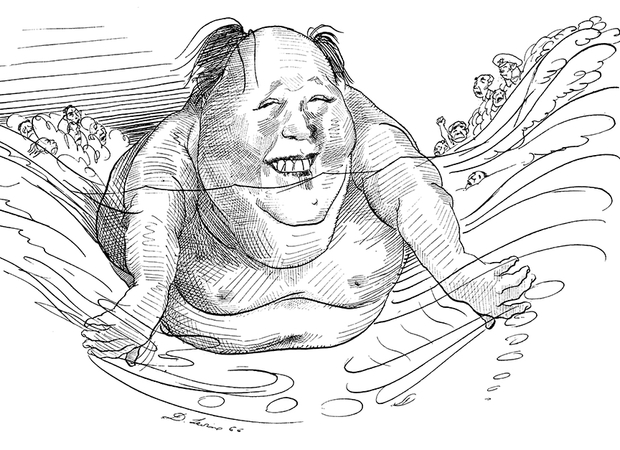
Bringing Up the Red Guards
from New York Review of Books
Everyone who has studied the Chinese Cultural Revolution has his own favorite quotation from the Red Guard press. Those who want to make fun of it can always pick one of Mrs. Mao’s ridiculous pronouncements (“‘P'an T'ien-shou’ is a...
The NYRB China Archive
02.25.71How Mao Won
from New York Review of Books
In response to:Was Chinese Communism Inevitable? from the December 3, 1970 issueTo the Editors:Although pleased by Martin Bernal’s laudatory reference to my piece criticizing Chalmers Johnson’s thesis concerning the reasons for the Communist triumph...
The NYRB China Archive
12.03.70Was Chinese Communism Inevitable?
from New York Review of Books
It is likely that, even now, many people in America and Britain still hold to the simple formula that people are good and communism is evil. And, just as good cannot support evil, people cannot support communism. Therefore any political movement...
The NYRB China Archive
10.23.69Mao and the Writers
from New York Review of Books
By the 1930s the intolerable quality of life and the inefficiency, corruption, and conservatism of the Kuomintang had driven nearly every serious creative writer in China to the Left. Most turned toward some form of Marxism, which not only offered...
The NYRB China Archive
01.16.69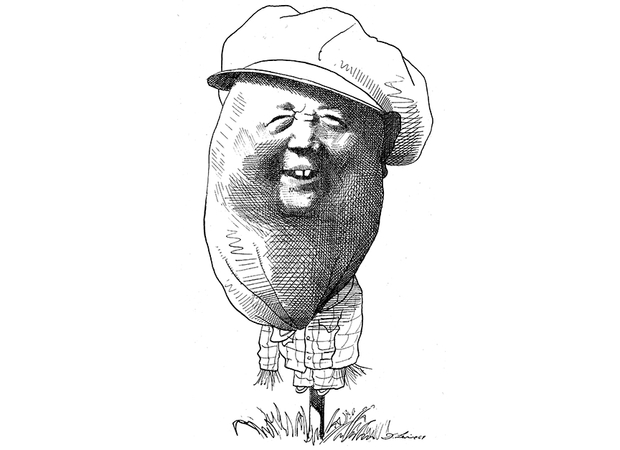
A Mao for All Seasons
from New York Review of Books
{vertical_photo_right}A psychologist and an expert on the Far East, Mr. Lifton believes that the most fruitful way to look at Mao Tse-tung and the Cultural Revolution is to combine the investigation of psychological motives with historical analysis...
The NYRB China Archive
03.28.68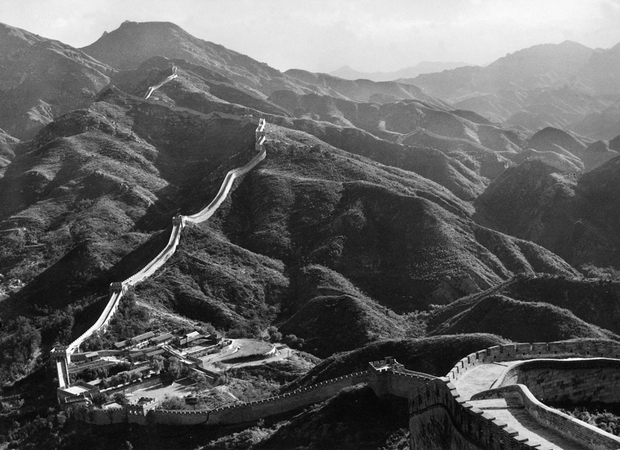
The Great Wall
from New York Review of Books
China is so distant, big, and complex that each Marco Polo nowadays tells a different tale. The authors of the three books under review—a cool Swedish journalist, a passionate Chinese true-believer, and a philosophical Frenchman—give very different...
The NYRB China Archive
10.26.67Puritanism Chinese-Style
from New York Review of Books
Specialists in the USSR and East Europe have both helped and hindered modern Chinese studies. Many scholars such as Benjamin Schwartz came to the serious interpretation of Chinese Communism from Slavic studies. On the other hand, less sensitive East...
The NYRB China Archive
07.07.66Contradictions
from New York Review of Books
Professor Schurmann is not modest. Near the beginning of his book he writes: “translations from Chinese, Russian and Japanese are my own, and hundreds of articles had to be read in the original Chinese with precision and at the same time extensively...
The NYRB China Archive
02.17.66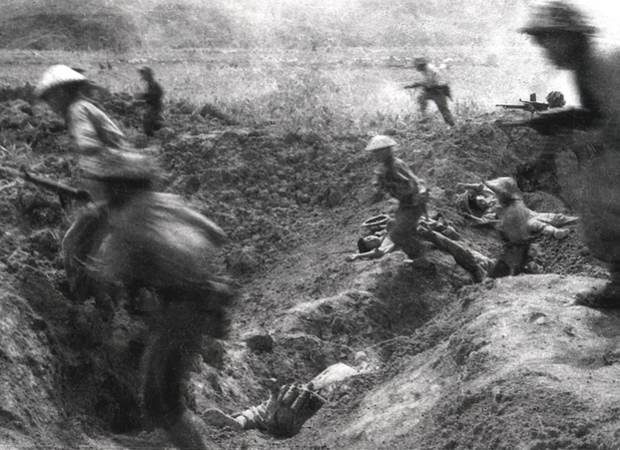
How to Deal with the Chinese Revolution
from New York Review of Books
The Vietnam debate reflects our intellectual unpreparedness. Crisis has arisen on the farthest frontier of public knowledge, and viewpoints diverge widely because we all lack background information. “Vietnam” was not even a label on our horizon...
The NYRB China Archive
05.06.65Mao’s China
from New York Review of Books
To most Westerners China is not a part of the known world and Mao is not a figure of our time. The ignorant believe he is the leader of a host of martians whose sole occupation is plotting the destruction of civilization and the enslavement of...
The NYRB China Archive
02.25.65The Popularity of Chinese Patriotism
from New York Review of Books
Fundamentally China is a sellers’ market. The first half of this century, when there was a glut of books, seems to have been the exception. Since 1949 a veil has once more been drawn over the center of the mysterious east, and the situation has...