


Reports
01.01.05
Exchange Rate and Monetary Policy in China
Cato Institute
China's account surplus has increased sharply as a product of economic growth and manipulation of its undervalued currency. This paper argues that China's account surplus is actually higher than reports indicate. China’s monetary...
Reports
05.20.04
China-U.S. Relations: Current Issues for the 108th Congress
Peony Lui
Congressional Research Service
During the George W. Bush Administration, U.S. and People’s Republic of China (PRC) foreign policy calculations have undergone several changes. The Bush Administration assumed office in January 2001 viewing China as a U.S. ”strategic competitor.”...
Reports
09.01.03
A Simple Solution to China's Pension Crisis
Cato Institute
China’s rapidly aging population, strong economic growth, and high return on capital mean that a funded pension system would be more efficient than a state-directed system. Yet, there are many problems in implementing a new privatized pension system...
Reports
08.06.03
China and the World Trade Organization
Peony Lui
Congressional Research Service
After many years of difficult negotiations, China, on December 11, 2001, become a member of the World Trade Organization (WTO), the international agency that administers multilateral trade rules. Under the terms of its WTO membership, China agreed...
Reports
08.01.03
Asia Pacific Economic Cooperation (APEC), Free Trade, and the 2003 Summit in Bangkok, Thailand
Peony Lui
Congressional Research Service
On October 20-21, 2003, the Eleventh APEC Leader’s Meeting is to be held in Bangkok, Thailand. The theme for APEC 2003 is “A World of Differences: Partnership for the Future,” which is intended to bring together the best potential of all APEC...
The NYRB China Archive
06.12.03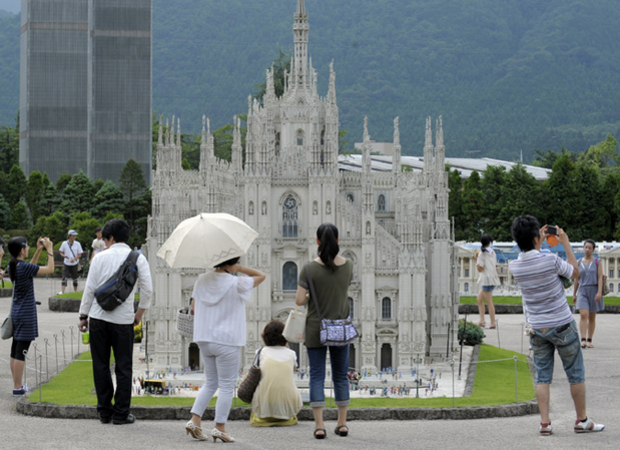
AsiaWorld
from New York Review of Books
To stand somewhere in the center of an East Asian metropolis, Seoul, say, or Guangzhou, is to face an odd cultural conundrum. Little of what you see, apart from the writing on billboards, can be described as traditionally Asian. There are the faux-...
Reports
05.16.03
Taiwan’s Accession to the WTO and its Economic Relations with the United States and China
Peony Lui
Congressional Research Service
After several years of negotiations, Taiwan joined the World Trade Organization (WTO), the international organization that sets rules for most international trade, on January 1, 2002. Taiwan’s WTO membership is expected to accelerate trade and...
Reports
10.17.02
Asia Pacific Economic Cooperation (APEC), FreeTrade, and the 2002 Summit in Mexico
Peony Lui
Congressional Research Service
On October 26-27, 2002, the Tenth APEC Leaders’ Meeting (summit) is to be hosted by Mexico in Las Cabos, Mexico. APEC 2002 is intended to send a clear message to the world that APEC has the ability to implement its initiatives while responding and...
Reports
10.26.01
Asia Pacific Economic Cooperation (APEC), Free Trade, and the 2001 Summit in Shanghai
Peony Lui
Congressional Research Service
On October 20-21, 2001, the Ninth APEC Leaders’ Meeting (summit) was hosted by China in Shanghai. The theme for APEC 2001 was “Meeting New Challenges in the New Century: Achieving Common Prosperity through Participation and Cooperation” with the sub...
Reports
10.01.01
Beginning the Journey: China, the United States, and the WTO
Elizabeth Economy
Council on Foreign Relations
The main finding of this report is that both the United States and China will run risks as Beijing moves ahead with membership in the World Trade Organization (WTO), but the potential payoffs for both countries are well worth it. It also points out...
Reports
04.24.00
China’s Long March to a Market Economy
Cato Institute
The U.S. Congress is in the historic position of being able to help pro-reform leaders in China move their country in a market-oriented direction. A vote to grant China permanent normal trade relations (PNTR) status will bolster the position of...
Reports
02.01.00
The Joint Stock Share System in China’s Nanhai County
Landesa
Between 1979 and 1983, China made the dramatic transition from a socialist agriculture dominated by large collective farms to a more market-oriented agriculture dominated by small family farms. This report describes the experiment’s background in...
Reports
07.19.99
Trade and the Transformation of China
Cato Institute
Congress will soon consider whether to revoke normal trade relations (NTR) with China and then, possibly in the fall, whether to make NTR permanent as part of China’s anticipated entry into the World Trade Organization. The consequences of...
The NYRB China Archive
02.01.96Is There Enough Chinese Food?
from New York Review of Books
1.Many Americans think they know something about Chinese food. But very few know anything about food in China, about the ways in which it is grown, stored, distributed, eaten, and wasted, about its effects on the country’s politics, and about its...
Reports
01.23.96
The Sweet-and-Sour Sino-American Relationship
Cato Institute
Relations between the United States and China are becoming frayed, with serious risks for both countries. Although the Clinton administration has wisely resisted the most reckless proposals, its policies have been inconsistent and sometimes inept...
The NYRB China Archive
09.23.93The Chinese Miracle?
from New York Review of Books
Over the last few months the news and reportage about China have become almost incomprehensibly divided between two points of view. According to one set of reports, China is now confirmed as an economic “colossus,” shaking off all the trammels of...
Viewpoint
12.14.92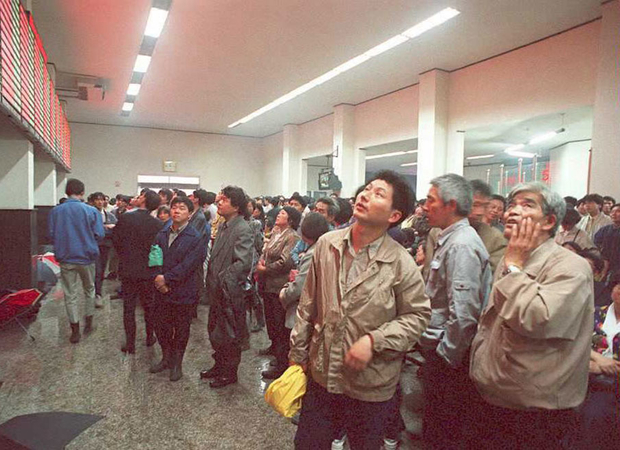
China Plays the Market
from Nation
With the Chinese stock market in turmoil earlier this month, Orville Schell, Arthur Ross Director of the Center on U.S.-China Relations, wrote about the dramatic crash for The Guardian: “Why China’s Stock Market Bubble Was Always Bound To Burst.”...
The NYRB China Archive
10.22.92The Other China
from New York Review of Books
On the same late fall day in 1991, two stories about China appeared in the Western press. One announced that thirty-five drug dealers had just been executed in the southwestern Chinese city of Kunming, probably by a single police bullet fired into...
Reports
12.01.87
Modernizings Market in Post-Mao China
Cato Institute
Is the post-Mao era truly a transition toward free-market capitalism, or is it yet another nominal “rightward” shift in the swinging pendulum of the Chinese Communist Party, to be offset in the future by more drastic elements of plunder by the...