breadcrumb

China, Japan and the Islands: What Do the Tensions Mean?

A ChinaFile Conversation

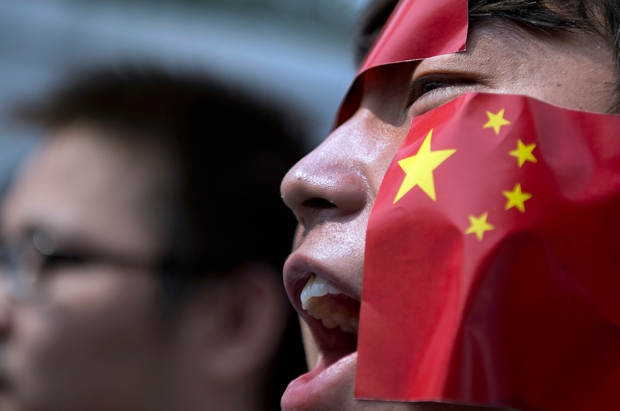
How did the Diaoyu, Spratly, and Paracel islands come to replace Taiwan as the main source of tension for maritime Asia? And how are we to explain the fact that China’s foreign policy toward its Asian neighbors has now morphed from such slogans as: “Keep our heads down, and bide our time” of the Deng Xiaoping era, and the notion of “Peaceful rise” elaborated by Hu Jintao as a way to reassure adjacent countries that China’s ascendancy would not spell conflict, to the overtly nationalistic, even truculent, new posturing adopted by the Chinese government over a handful of uninhabited islands?

To have alienated Japan, the Philippines, Vietnam, Malaysia, and Borneo so thoroughly, after having expended so much earlier capital winning their hearts and minds with benevolent soft power efforts, is quite a dramatic turn-around in fortunes.

What’s up?

It is hardly an original insight to suggest that leaders in China, as elsewhere, have often been tempted to turn to nationalism as a binding agent for domestic dissension. And, since these islands raise the always emotional issue of national sovereignty, they do provide a convenient way to outsource targets of people’s more immediate concern, especially at a time when grievances on the home front—from the growing corruption, pollution, inequality, infringements of peoples’ rights, and land confiscations—are proliferating.

But, even if China’s claims to sovereign rights over these far-flung specks of real estate were ultimately to prove justified, does it currently advance China’s national interest to pursue them in such a pugnacious and alienating way? It is hard to give any other answer but: No! Especially since what China has so ardently sought over the past century and a half is not just a restoration of its wealth and power (and ability to protect itself), but global respect. Suffice it to say, there has been precious little global respect to be had for China through such a strategy. So why have they felt compelled to proceed as they have?

I have the distinct sense that the drama we see being acted out in this web of disputes has another dimension, one that is as much psychological as geo-political. Presented at long last with the opportunity to put the shoe on the other foot, certain Chinese leaders feel almost involuntarily that it is now payback time. Indeed, many Chinese people, who have chafed under their country’s history of victimization, may also find the cathartic and gratifying exercise of watching their country’s new power put victoriously to test psychologically irresistible. After all, it is almost axiomatic that the oppressed often develop an irrepressible urge to engage in acts that flirt with rendering they themselves as oppressors as a way to demonstrate that they have irrevocably transcended their humiliating former condition of helplessness.

For China to have been acted upon in as grievous a fashion as it historically has was an undeniably bitter and painful experience, one that may now seem unassuageable except by the kinds of muscle flexing and demonstrations of power which are now being risked in the waters around China. While such acting-out may seem to be justified by sovereign incursion, it also has an undeniable psychological logic that promises a deceptive kind of gratification. But, in the real world of power-political affairs, such acting-out is also dangerous in ways that end up serving no one.

What these island disputes suggests about China is that its search for new wealth and power, fuqiang 富强, born out of an understandable urge to protect “the motherland” from foreign predation as the Qing Dynasty collapsed, may have now passed something of a milestone. Initially inspired by a defensive impulse, one wonders whether it is not now gaining a new and unwelcomed aggressive dimension. If so, should this new impulse not be tempered, it could end up as a serious impediment to the ongoing rise of a China that is viewed as “peaceful” and embraced by its neighbors. This would not only be harmful to China and the Chinese people, but to U.S.-Chinese relations as well as all the people of this increasingly dynamic and important region of our newly globalized world.

Responses

John Delury

To broaden the scope of our conversation a bit, this “wealth and power” complex is something that runs throughout modern East Asian history, and remains a core element in the legitimacy of current governments. Shinzo Abe, after winning the election to become Japan’s prime minister, promised that “we are going to win back Japan and build a strong country, a prosperous country.” South Korea’s newly elected president Park Geun-hye campaigned on her father’s legacy of having transformed South Korea into a middle class “middle power.” North Korea’s young Respected Leader, Kim Jong Un, is projecting himself as a populist leader determined to restore the DPRK to being a “strong and prosperous great country” (kangsong taeguk).

This common telos can lend a striking pragmatism to East Asian relations, when leaders see it as in their country’s economic interest to resolve, or at least shelve, ideological and historical disputes. Deng Xiaoping showed that kind of pragmatism in tabling many issues with Japan, including territorial disputes, for the sake of China’s economic development—as Ezra Vogel’s recent biography shows in detail. Likewise Park Chung-hee forced through a still controversial normalization package with Japan in order the gain the sizeable economic aid package that came with it. But they also left behind ticking time bombs of deep-seated grievances held by Chinese and South Koreans toward Japan for the brutalities of Japanese imperialism, which dominated the first half of the 20th century.

A stagnant, if not declining, Japan has just elected a nationalist leader. A rising China, perhaps but not necessarily on track to emerge as a 21st century superpower, has just selected an equally nationalist leader. Should both men, and their publics, focus on the “wealth” part of the equation, they will presumably find a way to once again table this dispute. But should Xi Jinping feel it is time for China to demonstrate its newfound “power,” and/or should Shinzo Abe determine that Japan needs to showcase its capacity to flex its muscles, despite a pacifist constitution, then the situation would seem to be bound to get worse before it gets better. Perhaps the most volatile element is the third one—the yearning for respect. China has been waiting almost 200 years to interact with the world from a position of equal, if not superior, strength. Japan is struggling after two decades of seeing its place in the world slip from under its feet. Given their unresolved historical disputes, and the very different ways in which young Chinese and young Japanese are taught to understand their past, even if this round of tension of the Diaoyu/ Senkaku islands dissipates without serious incident, it would seem a matter of time before another flare up.

Susan Shirk

Orville,

I see the domestic drivers of China’s foreign policy as more complicated than some unified political psychology driven by history.   (But then I’m a comparative political scientist and you’re a historian.)   For one thing, the two maritime conflicts – the Senkaku/Diaoyu one and the South China Sea one – have different domestic roots.   The East China Sea is a focal point for popular nationalism because it involves relations with Japan which have been a hot button domestic issue in China for some time.  The South China Sea issue is different; it was not the focus of much public attention until fairly recently.  China’s rhetoric and actions in the South China Sea became more assertive after quite a few years of trying to work things out with the other claimants, including agreeing to the declaration on the code of conduct.    So, I don’t see Beijing’s more assertive approach to the South China Sea as driven by popular nationalism per se.   Instead, it emerged out of the fragmented nature of the Chinese foreign policy process and the many new bureaucratic actors. Linda Jakobson and Dean Knox did a great report on these new actors for SIPRI nd Stephanie Klein Albrecht broke open the black box around the messy bureaucratic politics of the South China Sea issues for the International Crisis Group.  A lot of different maritime interest groups got bigger budgets, more ships, more bureaucratic influence by stirring up nationalist emotions around South China Sea sovereignty disputes.  And unfortunately it looks like the Chinese government let its policies in the South China Sea be hijacked by those interest groups within the state in a way that has harmed its relations with Southeast Asia.

So the two maritime issues are quite different: the East China Sea being driven by powerful forces of popular nationalism, and the South China Sea being driven more top-down by the nature of the foreign policy process.

Orville Schell

Susan:

It is with some trepidation that one raises psychological interpretations of foreign affairs, especially in the case of China, which has never been renowned for its interest in reflecting on this aspect of human interaction. And, surely there are legitimate political interests, factions and policies that are conditioning what gets done by Beijing in regard to all these islands. However, whenever a country really gets fired up with zeal over something outside its conventional boundaries, as China seems on the verge of doing, one must ask: What's the pay off? This is especially true when the consequences could be so manifestly negative.

So, a question for my blogging colleagues is: How does one factor these kinds of "softer" considerations into such disputes in a way that does not sound too Dr. Phil-ish?

Damien Ma

Just a quick comment on that New York Times piece. While I very much respect [Chris] Buckley’s work, the way the piece is set up seems to draw implicit connection between Xi’s comments on “core national interests” and the Senkakus/Diaoyu islands. Or at least it could be interpreted as such. But I don't recall seeing anywhere that the  Diaoyu are considered China’s core national interests, which does have a specific geopolitical and national security meaning. I’m not particularly surprised that Xi would articulate such a foreign policy vision. I’ve thought of him as something of a “liberal nationalist”--tougher on foreign policy but also believes in a certain set of economic reforms domestically. To me, his repeated invocation of the “Chinese Dream” is along the lines of liberal nationalist and the fuqiang concept that John and Orville have brought up.


Orville Schell

Damien:

I think it's still too early to have a real sense of who Xi Jinping actually is, much less, what direction he will choose - or be able - to lead his country.

The question that I am watching is this: Having at last attained so big a piece of the long-yearned for goal of “wealth and power,” how will China choose to exhibit and use this new, and in many ways well-deserved, wealth and power in the next few years?

Isabel Hilton

 I would only add to these insightful comments the perspective of the official post-Tiananmen historical narrative. When I studied in China in the early seventies, Japan was not the focus of popular anger: indeed, I remember the banner that greeted a visiting Japanese delegation at Fudan, which read, May the friendship between the Japanese and Chinese people continue through the generations!  References to any lapses in friendship in the previous generation were not well received.

 So what changed? Julia Lovell’s excellent account of this in The Opium War is one among several: a new narrative to justify the continuing need for the Communist Party was set as a matter of national security. It depended not on the lost promises of socialism but on the need to protect China from its enemies: hence the rash of museum building, patriotic education and cultivation of the national humiliation trope.   Japan is a particularly neuralgic subject for its role in the twentieth century, as we all know, but it is also worth noting that the first references to national humiliation in the wave of self-examination that comes with the arrival of foreign powers comes not, as we might expect, after the Opium Wars but after the defeat of China by Japan in 1895.       

Orville Schell

Isabel:

It is an interesting fact that, whereas the anti-Japanese sentiment which emmanated from WW II (and was real)  was largely banked by the Party and State during the Mao and Deng era (especially under Hu Jintao), was fanned back to flame again more recently. So, one must ask, "What did the leaders view as being gained by this exercise?" Especially since Japan had become such a significant trading partner?

Orville Schell is the Arthur Ross Director of the Center on U.S.-China Relations at the Asia Society in New York. He is a former professor and Dean at the University of California...

More

John Delury is an Assistant Professor of East Asian Studies at Yonsei University’s Graduate School of International Studies and Underwood International College in Seoul, South...

More

Susan L. Shirk is the chair of the 21st Century China Program and Ho Miu Lam Professor of China and Pacific Relations at the School of International Relations and Pacific Studies (...

More

Damien Ma is a Fellow at The Paulson Institute, where he focuses on investment and policy programs and the Institute’s research and think tank activities.Previously, he was a...

More

Isabel Hilton is a London-based international journalist and broadcaster. She studied at the Beijing Foreign Language and Culture University and at Fudan University in Shanghai...

More

Blog

05.16.13

China: What’s Going Right?

MICHAEL ZHAO, JAMES FALLOWS, ORVILLE SCHELL (& authors)

Michael Zhao:On a recent trip to China, meeting mostly with former colleagues at the Chinese Academy of Sciences, I got a dose of optimism and hope for one aspect of the motherland. In terms of science, or laying down a solid foundation for better science to come, things are...

Blog

05.14.13

Why Can’t China Make Its Food Safe?—Or Can It?

ALEX WANG, JOHN C. BALZANO, ISABEL HILTON (& authors)

The month my wife and I moved to Beijing in 2004, I saw a bag of oatmeal at our local grocery store prominently labeled: “NOT POLLUTED!” How funny that this would be a selling point, we thought.But 7 years later as we prepared to return to the US, what was once a joke had...

Blog

05.10.13

What’s China’s Game in the Middle East?

RACHEL BEITARIE, MASSOUD HAYOUN, TAI MING CHEUNG

Rachel Beitarie:Xi Jinping’s four point proposal for a Palestinian-Israeli peace agreement is interesting not so much for its content, as for its source. While China has maintained the appearance of being involved in Middle East politics for years, its top leaders, so far,...

Blog

05.07.13

Why Is a 1995 Poisoning Case the Top Topic on Chinese...

RACHEL LU, ANDREW J. NATHAN, SUSAN JAKES (& authors)

With a population base of 1.3 billion people, China has no shortage of strange and gruesome crimes, but the attempted murder of Zhu Ling by thallium poisoning in 1995 is burning up China’s social media long after the trails have gone cold. Zhu, a brilliant and beautiful...

Blog

05.02.13

Does Promoting “Core Interests” Do China More Harm...

THE EDITORS, STEPHANIE T. KLEINE-AHLBRANDT, SUSAN SHIRK (& authors)

On April 30, as tensions around China’s claims to territories in the South- and East China Seas continued to simmer, we began what proved to be a popular ChinaFile Conversation, asking the question, What's Really at the Core of China’s ‘Core Interests’? The participants...

Blog

04.30.13

What’s Really at the Core of China’s “Core...

SHAI OSTER, ANDREW J. NATHAN, ORVILLE SCHELL (& authors)

Shai Oster:It’s Pilates diplomacy—work on your core. China’s diplomats keep talking about China’s core interests and it’s a growing list. In 2011, China included its political system and social stability as core interests. This year, it has added a vast chunk of the...

Blog

04.25.13

Hollywood in China—What’s the Price of Admission?

JONATHAN LANDRETH, YING ZHU, JEREMY GOLDKORN (& authors)

Last week, DreamWorks Animation (DWA), the Hollywood studio behind the worldwide blockbuster Kung Fu Panda films, announced that it will cooperate with the China Film Group (CFG) on an animated feature called Tibet Code, an adventure story based on a series of recent Chinese...

Blog

04.23.13

How Would You Spend (the Next) $300 Million on U.S.-...

ORVILLE SCHELL, MICHAEL KULMA

Orville Schell:When Stephen A. Schwarzman announced his new $300 million program aimed at sending foreign scholars to Tsinghua University in Beijing the way Rhodes Scholarship, set up by the businessman and statesman Cecil Rhodes in 1902 began sending American scholars to Oxford...

Blog

04.18.13

How Fast Is China’s Slowdown Coming, and What Should...

PATRICK CHOVANEC, BARRY NAUGHTON, DAMIEN MA

Slower Chinese GDP growth is not a bad thing if it’s happening for the right reasons. But it’s not happening for the right reasons.Instead of reining in credit to try to curb over-investment, Chinese authorities have allowed a renewed explosion in credit in an effort to fuel...

Blog

04.16.13

Why is China Still Messing with the Foreign Press?

ANDREW J. NATHAN, ISABEL HILTON, JONATHAN LANDRETH (& authors)

To those raised in the Marxist tradition, nothing in the media happens by accident.  In China, the flagship newspapers are still the “throat and tongue” of the ruling party, and their work is directed by the Party’s Propaganda Department.  That’s the first...

Blog

04.11.13

Why Is Chinese Soft Power Such a Hard Sell?

JEREMY GOLDKORN, DONALD CLARKE, SUSAN JAKES (& authors)

Jeremy Goldkorn:Chairman Mao Zedong said that power comes out of the barrel of a gun, and he knew a thing or two about power, both hard and soft. If you have enough guns, you have respect. Money is the same: if you have enough cash, you can buy guns, and respect.Israel and Saudi...

Blog

04.03.13

Bird Flu Fears: Should We Trust Beijing This Time?

DAVID WERTIME, YANZHONG HUANG, ISABEL HILTON (& authors)

David Wertime:A new strain of avian flu called H7N9 has infected at least seven humans and killed three in provinces near the Chinese metropolis of Shanghai, with the first death occurring on March 4. Meanwhile, in the last month, about 16,000 pigs, 1,000 ducks, and a few swans...

Blog

04.02.13

Why Did Apple Apologize to Chinese Consumers and What...

JEREMY GOLDKORN, ISABEL HILTON, DAVID WERTIME (& authors)

Jeremy Goldkorn:On March 22, before the foreign media or Apple themselves seemed to have grasped the seriousness of the CCTV attacks on the Californian behemoth, I wrote a post on Danwei.com that concluded:“The signs are clear that regulators and establishment media would both...

Blog

03.28.13

Will China’s Renminbi Replace the Dollar as the World...

PATRICK CHOVANEC, DAMIEN MA, DONALD CLARKE (& authors)

Patrick Chovanec:This week’s news that Brazil and China have signed a $30 billion currency swap agreement gave a renewed boost to excited chatter over the rising influence of China’s currency, the renminbi (RMB). The belief, in many quarters, is that the renminbi is well on...

Blog

03.26.13

Can China Transform Africa?

JEREMY GOLDKORN, ISABEL HILTON, DONALD CLARKE

Jeremy Goldkorn:The question is all wrong. China is already transforming Africa, the question is how China is transforming Africa, not whether it can. From the “China shops”—small stores selling cheap clothing, bags, and kitchenware—that have become ubiquitous in Southern...

Blog

03.19.13

China’s New Leaders Say They Want to Fight Corruption...

ANDREW J. NATHAN, OUYANG BIN

In his first press conference after taking office as China's new premier, Li Keqiang declared that one of his top priorities would be to fight corruption, because “Corruption and the reputation of our government are as incompatible as fire and water.” This put Li on message...

Blog

03.15.13

Is the One Child Policy Finished—And Was It a Failure...

DORINDA ELLIOTT, ALEXA OLESEN, ANDREW J. NATHAN (& authors)

Dorinda Elliott:China’s recent decision to phase out the agency that oversees the one-child policy has raised questions about whether the policy itself will be dropped—and whether it was a success or a failure.Aside from the burdens only children feel when it comes...

Blog

03.13.13

China’s Post 1980’s Generation—Are the Kids All...

SUN YUNFAN, ORVILLE SCHELL, DAMIEN MA

This week, the ChinaFile Conversation is a call for reactions to an article about China's current generation gap, written by James Palmer, a Beijing-based historian, author, and Global Times editor. The article, first published by Aeon in the U.K., “The Balinghou: Chinese...

Blog

03.08.13

Will China’s Property Market Crash, and So What If It...

DORINDA ELLIOTT, BILL BISHOP

Dorinda Elliott:At this week’s National People’s Congress, outgoing Premier Wen Jiabao proclaimed that the government kept housing prices from rising too fast. Really? I wonder what my 28-year-old Shanghainese friend Robert thinks about that. He and his fiancée could never...

Blog

03.06.13

Are Proposed Sanctions on North Korea a Hopeful Sign...

ORVILLE SCHELL, SUSAN SHIRK, SUZANNE DIMAGGIO (& authors)

Orville Schell:What may end up being most significant about the new draft resolution in the U.N. Security Council to impose stricter sanctions on North Korea, which China seems willing to sign, may not be what it amounts to in terms of denuclearizing the DPRK, but what it...

Blog

03.01.13

Is America’s Door Really Open to China’s Investment...

DANIEL H. ROSEN, ORVILLE SCHELL, JONATHAN LANDRETH

Daniel Rosen:There have not been many new topics in U.S.-China economic relations over the past decade: the trade balance, offshoring of jobs, Chinese holding of U.S. government debt, whether China’s currency is undervalued and intellectual property protection problems have...

Blog

02.27.13

How Long Can China Keep Pollution Data a State Secret?

ELIZABETH ECONOMY, ORVILLE SCHELL, DONALD CLARKE (& authors)

Elizabeth Economy:The environment is center stage once again in China. A Chinese lawyer has requested the findings of a national survey on soil pollution from the Ministry of Environmental Protection and been denied on the grounds that the information is a state secret. (The...

Blog

02.22.13

Will Investment in China Grow or Shrink?

DONALD CLARKE, JONATHAN LANDRETH

Donald Clarke:I don’t have the answer as to whether investment in China will grow or shrink, but I do have a few suggestions for how to think about the question. First, we have to clarify why we want to know the answer to this question: what do we think it will tell us? This...

Blog

02.20.13

Cyber Attacks—What’s the Best Response?

JONATHAN LANDRETH, JAMES FALLOWS, XIAO QIANG (& authors)

Jonathan Landreth:With regular ChinaFile Conversation contributor Elizabeth Economy on the road, I turned to her colleague Adam Segal, Maurice R. Greenberg Senior Fellow for China Studies at the Council on Foreign Relations in New York. Segal said that “the time for naming and...

Blog

02.15.13

U.S.-China Tensions: What Must Kerry Do?

DORINDA ELLIOTT, ELIZABETH ECONOMY, ANDREW J. NATHAN (& authors)

Dorinda Elliott:On a recent trip to China, I heard a lot of scary talk of potential war over the disputed Diaoyu Islands—this from both senior intellectual types and also just regular people, from an elderly calligraphy expert to a middle-aged history professor. People seemed...

Blog

02.13.13

North Korea: How Much More Will China Take and How...

WINSTON LORD, TAI MING CHEUNG, ELIZABETH ECONOMY (& authors)

China is increasingly frustrated with North Korea and may even see more clearly that its actions only serve to increase allied unity, stimulate Japanese militarism and accelerate missile defense. For all these reasons the U.S. should lean on Beijing to—at last—not only help...

Blog

02.08.13

Rich, Poor and Chinese—Does Anyone Trust Beijing to...

ANDREW J. NATHAN, SUSAN SHIRK, DONALD CLARKE (& authors)

Andrew Nathan:The new Chinese leadership under Xi Jinping seems to be making some bold opening moves with its attacks on corruption and the announcement on February 5 of plans to reduce the polarization of incomes.  Does this mean Xi is leading China in new directions? ...

Blog

02.06.13

Airpocalypse Now: China’s Tipping Point?

ALEX WANG, ORVILLE SCHELL, ELIZABETH ECONOMY (& authors)

The recent run of air pollution in China, we now know, has been worse than the air quality in airport smoking lounges. At its worst, Beijing air quality has approached levels only seen in the United States during wildfires.All of the comparisons to London, Los Angeles, and New...

Blog

02.01.13

China’s Cyberattacks — At What Cost?

JAMES FALLOWS, DONALD CLARKE, ORVILLE SCHELL (& authors)

James Fallows: Here are some initial reactions on the latest hacking news.We call this the “latest” news because I don’t think anyone, in China or outside, is actually surprised. In my own experience in China, which is limited compared with many of yours, I’ve seen the...

DISCUSSION

The Popularity of Chinese Patriotism

MARTIN BERNAL

Fundamentally China is a sellers’ market. The first half of this century, when there was a glut of books, seems to have been the exception. Since 1949 a veil has once more been drawn over the center of the mysterious east, and the situation has reverted to that of the...

Mao’s China

MARTIN BERNAL

To most Westerners China is not a part of the known world and Mao is not a figure of our time. The ignorant believe he is the leader of a host of martians whose sole occupation is plotting the destruction of civilization and the enslavement of mankind. The more sophisticated say...

Down There on a Visit

MARTIN BERNAL

In many ways this is the book that everybody interested in China has been waiting for, a book describing what it feels like to be a peasant living through the Chinese Revolution. In the summer of 1962 Jan Myrdal, the thirty-year-old son of the famous Swedish sociologist Gunnar...