Near Three Gorges Dam, the Exodus Continues

Walls inside Zhang Haomin’s home in Zhenxi Township, in Chongqing, started cracking in 2008, around the time the reservoir behind the new Three Gorges Dam neared capacity.

“Early on, the cracks were small,” said Zhang, whose home is about three meters above the reservoir’s surface. “The town government had us paste paper strips on the walls to monitor the cracks. Since then, the paper has broken at least three times.”

Demography and Destiny

China is facing a demographic reckoning that is approaching a nightmare.

For thirty years, the government has been obsessed with keeping population growth down, often resorting to late-term abortions and other brutal measures. The panic now is that China is growing old before it has gotten rich. The 2010 census showed that the population grew barely 0.57 percent a year over the previous decade, and in major cities the rate was even lower.

Message in a Bottle for Spirits Maker Moutai

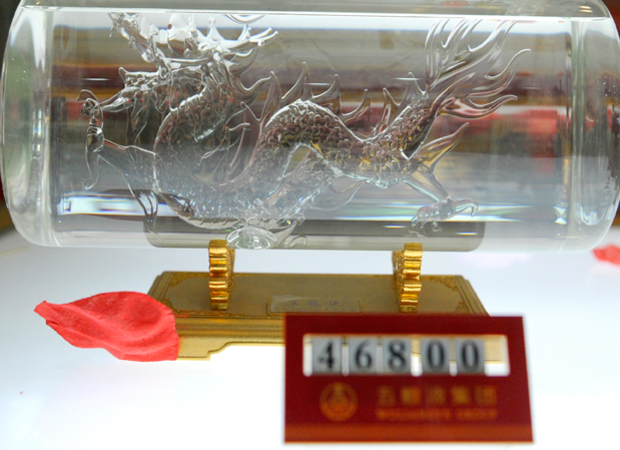
A glass of Feitian Moutai packs a wallop, which is one reason why the 106-proof baijiu is a hit among influential government officials.

They also like Feitian Moutai because a single bottle, thanks to special arrangements between state agencies and distiller Kweichow Moutai Co. Ltd., costs only 619 yuan—less than one-third the retail price.

This price gap is contributing to growing investor concern about the company. Its unusual dealer network and a possible slowdown for government liquor spending are raising red flags as well.

Julia Lovell Recommends Five Books on the Opium War

The Opium War, understood as the start of an unprecedented crisis inflicted on China by foreigners, is a key source of political legitimacy for China’s contemporary ruling party. The official Communist historiographical narrative of the Opium War relates that it brought on a national emergency which different generations of Chinese reformers—from the late 19th century in the Qing dynasty to the national democratic revolution of 1911, and so on—tried unsuccessfully to resolve, before China eventually chose Communism, which according to Mao enabled the Chinese people to stand up against foreign imperialism and its running dogs.

Who Is Beijing Daily Speaking For?

The Beijing Daily is on a tear. Earlier this month, the paper — the official daily run by the capital’s top Party leadership—led the propaganda charge against the U.S. for its involvement in the case of blind lawyer Chen Guangcheng. Earlier this week, the paper embarrassed itself with a mean-spirited call for U.S. Ambassador Gary Locke to disclose his personal assets, which in fact have already been disclosed.

Chinese Media Seduced into Wrongdoing by Western Concepts

China’s media should adhere to its own concept of news – the Western method is not worthy of emulation. In China’s news-sources should support national development. They should help bridge opposition and build consensus, and never fan the flames of conflict or discord. The 1.3 billion people of China want development and social stability. The media, which directs public, has the huge responsibility creating a public opinion environment conducive to maintaining stability.

Chinese Scandals Rev Up Exile News Media

It's payback time for Chinese exiles, especially those with a printing press, television station or just a computer at their disposal. From the newspaper and television network run by the banned Falun Gong to independent Chinese-language news sites in the United States, opposition media are having a field day covering sensitive topics that would be zapped by censors in China.

CCTV Anchor: The Hunt for Foreign "Trash"

Yang Rui says, "Foreigners who can't find a job in their home country come to China and get involved in illegal business activities such as human trafficking and espionage; they also like to distribute lies which discredit China to persuade locals to move abroad. A lot of them look for Chinese women to live with as a disguise to further their espionage efforts."

Global Times

Publication Logo Vertical: 
Publication Logo Header: 

From their website:

China changes every day. Sleepy villages transform into bustling suburbs, young hopefuls shoot to stardom online, and factories sprawl across former farmland while the farmers themselves face an uncertain future. As millions prosper, others find themselves stranded for the moment by the shifting tides of change.

The shock and thrill of the new is everywhere: new ideas, new brands, new stars, new words. Every hour sees a story break somewhere in this vast nation, whether from a corporate headquarters in Beijing or a mountain hamlet in Yunnan. 

The English-language Global Times is your key to understanding China’s changes. Founded in April 2009, the paper is one of the most dynamic players among Chinese media, and has rapidly become the major English newspaper in the nation. 

The Chinese public is not satisfied with old orthodoxies and stale stories, and neither is the Global Times. It provides in-depth coverage of controversial stories, from child AIDS victims to urban renewal, forced demolition and the fight against corruption. Its opinion pages feature heated debate over tough issues such as China’s use of the death penalty, the challenges of forming a new international order, and the nation’s growing wealth gap. 

The newspaper has become essential reading for every China-watcher. Jorge Guajardo, the Mexican Ambassador to China, describes the Global Times as “a must read for anyone wanting to understand China.” 

A measure of the Global Times’ success is the attention it has drawn from international press. Foreign media view the Global Times as a trustworthy source. The Economist calls it a “remarkable innovation,” which addresses “realms once thought taboo.” The Wall Street Journal praises its “insightful stories.” 

The Global Times’ readers, both foreign and Chinese, include ambassadors, business leaders, politicians, and intellectuals. China’s top universities use the newspaper as a teaching tool for the nation’s future elite. 

The Global Times’ unique partnership with the Global Poll Center keeps its finger on the pulse of the Chinese public, while an expanding online presence makes its unique insights even more accessible to a global audience. 

Beijing and Shanghai are joining the list of the world’s greatest cities. That is why the Global Times has 8-page daily supplements for each, keeping its readers up-to-date with what is happening in China’s two most exciting mega-cities.

In China, Facebook's Shadow

How do you have a feeding frenzy when you can’t—officially, at least—see what’s being served? This is the strange dynamic that runs through the flurry of Chinese debate this week about Facebook. In China, the site’s I.P.O, on Friday, is not simply an event; it is an existential problem—an object of admiration, envy, and, from the government’s perspective, suspicion. In Facebook’s shadow, there is also a persistent question about the weakness of Chinese innovation.