Is China's Gaokao The World's Toughest School Exam?
on October 12, 2016
Chinese children must endure years of stress and impossible expectations preparing for their final school exam
Chinese children must endure years of stress and impossible expectations preparing for their final school exam
John Pomfret was a longtime, award-winning correspondent with The Washington Post. He covered big wars and small in Afghanistan, Bosnia, Congo, Sri Lanka, Iraq, southwestern Turkey, and northeastern Iran. Pomfret spent seven years covering China—one in the late 1980s during the Tiananmen Square protests, and then from 1998 until the end of 2003 as the Bureau Chief for The Washington Post in Beijing. Returning to the United States in 2004, Pomfret was the paper’s West Coast Bureau Chief for two years before being appointed the Editor of its Outlook section, the Post’s weekly commentary section, which he ran from 2007 until September 2009. Pomfret moved back to China in 2011 to undertake research funded by a Fulbright grant and the Smith Richardson Foundation for his new book The Beautiful Country and the Middle Kingdom: America and China, 1776 to the Present.
Pomfret speaks, reads, and writes Mandarin, having spent two years at Nanjing University in the early 1980s as part of one of the first groups of American students to study in China. He has been a bartender in Paris and practiced Judo in Japan. He studied at Stanford University.
In 2003, Pomfret was awarded the Osborne Elliot Award for the best coverage of Asia by the Asia Society. In 2007, he was awarded the Shorenstein Award from Harvard and Stanford universities for his lifetime coverage of Asia. In 2011, he was awarded the Weintal Award from Georgetown University for diplomatic coverage.
He is also the author of the critically-acclaimed Chinese Lessons: Five Classmates and the Story of the New China.
Chinese cities have rolled out new measures over the past week to cool a home-buying frenzy that has seen prices skyrocket, marking a new round of tightening since policies were eased two years ago. More than a dozen of China's largest cities, including Beijing, Tianjin, Chengdu, and Shenzhen, have introduced new restrictions, from raising down payments and mortgage thresholds, to imposing quotas on how many homes individuals can buy.
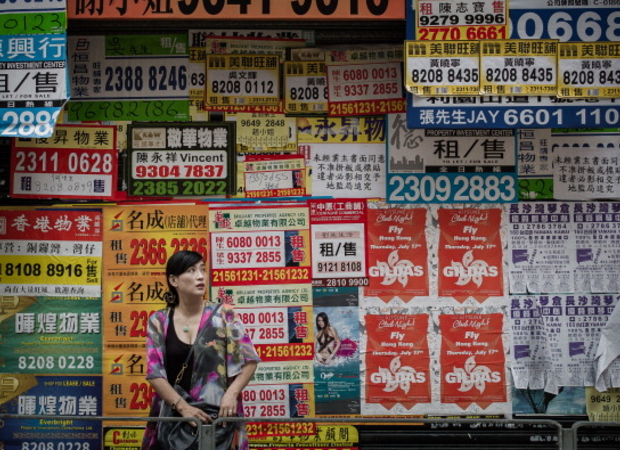
Is “I’d rather weep in a BMW than laugh on a bike” becoming the norm?
Chinese hacking has plummeted in the year since China signed an agreement with the Obama administration to curb economic espionage
Finds at the famous tomb complex point to influences from abroad and a blood-soaked succession after the death of China's first emperor
Pro-democracy politicians cross fingers and make protest signs and subversive references to Beijing’s authoritarian rulers
Government denies committing abuses and says legal rights of Uighur people are protected as new laws are announced
A country reeling from falling rice prices and foreign investment has its eyes on emergency aid and a boost in trade
Raised to be “flowers of the nation,” the first generation born after the founding of the People’s Republic of China was united in its political outlook and ambitions. Its members embraced the Cultural Revolution of 1966 but soon split into warring factions. Guobin Yang investigates the causes of this fracture and argues that Chinese youth engaged in an imaginary revolution from 1966 to 1968, enacting a political mythology that encouraged violence as a way to prove one’s revolutionary credentials. This same competitive dynamic would later turn the Red Guard against the communist government.
Throughout the 1970s, the majority of Red Guard youth were sent to work in rural villages. These relocated revolutionaries developed an appreciation for the values of ordinary life, and an underground cultural movement was born. Rejecting idolatry, their new form of resistance marked a distinct reversal of Red Guard radicalism and signaled a new era of enlightenment, culminating in the Democracy Wall movement of the late 1970s and, finally, the Tiananmen protest of 1989. Yang completes his significant recasting of Red Guard activism with a chapter on the politics of history and memory, arguing that contemporary memories of the Cultural Revolution are factionalized along the lines of political division that formed 50 years before. —Columbia University Press