


Five Ways China Has Become More Repressive Under President Xi Jinping
on October 6, 2016
According to the 2016 report by the U.S. Congressional-Executive Commission on China, there has been a broad corrosion of freedoms
According to the 2016 report by the U.S. Congressional-Executive Commission on China, there has been a broad corrosion of freedoms
According to a PEW Research Center survey, Chinese perceive the U.S. as a greater threat than the economic downturn, climate change, or ISIS
Military exercises are around country’s Natuna Islands, over waters where run-ins with Chinese fishing boats are on the rise
The most deeply affected may be those born in the early decades after 1949, as the boarding system spread — those in their 50s and 60s who run the country today.
Pakistan may not be officially included in this year's round of talks between India and China, but it's certainly high up on the agenda.
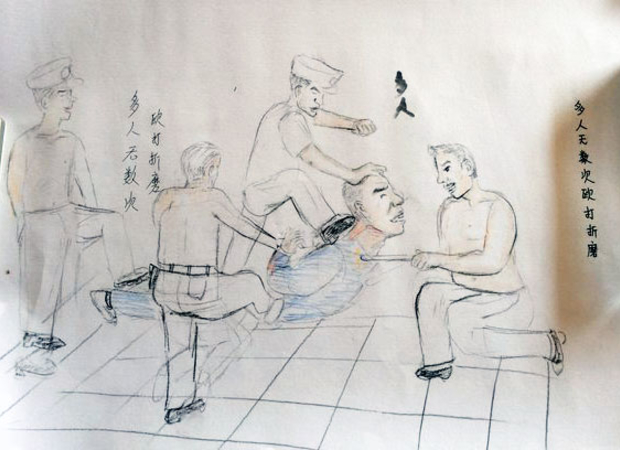
Every year in China, thousands of people suffer what the United Nations calls “arbitrary detention”: confinement in extra-legal facilities—including former government buildings, hotels, or mental hospitals—which are sometimes known as “black jails.” There is no formal arrest or presentation of charges, and access to lawyers is denied. Many of those detained in this way have criticized the government, complained about abuse, petitioned for remedies, or assisted others in seeking justice (rights lawyers have been especially vulnerable).

A Beijing native, Helen Gao is a social policy analyst at China Policy, and a freelance writer on Chinese social and cultural issues whose work has appeared in Foreign Policy and The Atlantic. She received her M.A. in East Asian Studies at Harvard.
The state-backed China Academy of Launch Vehicle Technology is building a spaceplane that can fly up to 20 people to the edge of space
China’s role in Africa is changing from resource extractor to long-term strategic partner. Djibouti is a prime example