North Korea Expected to Ask China for a Break at Summit
on May 10, 2017
North Korea is expected to press China to tone down its economic sanctions when its delegation attends an infrastructure and trade summit in Beijing on Sunday, observers said.
North Korea is expected to press China to tone down its economic sanctions when its delegation attends an infrastructure and trade summit in Beijing on Sunday, observers said.
Chinese President Xi Jinping has vowed to protect the landmark Paris agreement, which aims to curb climate change and fossil fuel emissions.
Based on comparisons with close relatives, the birdlike dinosaur probably weighed about 3 tons and could grow up to 26 feet long.
China has been trying to polish its ham-handed approach to telling its story to skeptical audiences outside its borders, just as it has at home.
The opaque nature of some big Chinese players is prompting scrutiny from policy makers and politicians in the United States and elsewhere.
In 2016, China’s exporters mulled what then seemed unthinkable: price increases for the first time in years.
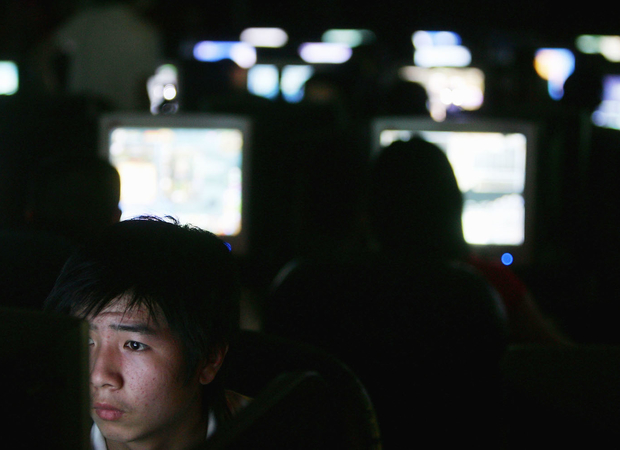
Earlier this month, citing concerns over “cyber sovereignty,” China’s Internet regulators announced new restrictions on the country’s already tightly controlled Internet—further curbing online news reporting and putting Party-appointed editors in charge. Plans were also announced for the compiling of a massive, officially sanctioned, online encyclopedia to rival Wikipedia, which Chinese censors routinely block. What does this mean for Internet freedom in other countries whose leaders also crave control over information? How much does China influence the shape of the Internet around the world? Where are the cracks in this seeming plan to press an agenda of total control?
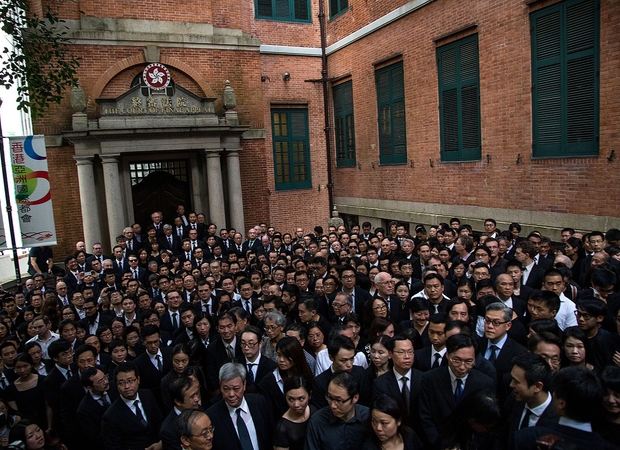
“The American Chamber of Commerce has urged Hong Kong’s next government to reach out to international businesses still ‘unclear’ about what opportunities the city can offer under the one country, two systems policy.” —South China Morning Post, April 5, 2017
The Beijing-based China Development Brief's (CDB’s) English-language website came out last month with more news about the implementation of the Foreign NGO Law in Yunnan, Shanghai,
From journalist Ian Johnson, a revelatory portrait of religion in China today—its history, the spiritual traditions of its Eastern and Western faiths, and the ways in which it is influencing China’s future.
The Souls of China tells the story of one of the world’s great spiritual revivals. Following a century of violent anti-religious campaigns, China is now filled with new temples, churches, and mosques—as well as cults, sects, and politicians trying to harness religion for their own ends. Driving this explosion of faith is uncertainty over what it means to be Chinese and how to live an ethical life in a country that discarded traditional morality a century ago and is searching for new guideposts.
Johnson first visited China in 1984. In the 1990s, he helped run a charity to rebuild Daoist temples, and in 2001 he won a Pulitzer Prize for his coverage of the suppression of the Falun Gong spiritual movement. While researching this book, he lived for extended periods with underground church members, rural Daoists, and Buddhist pilgrims. Along the way, he learned esoteric meditation techniques, visited a nonagenarian Confucian sage, and befriended government propagandists as they fashioned a remarkable embrace of traditional values. He has distilled these experiences into a cycle of festivals, births, deaths, detentions, and struggle—a great awakening of faith that is shaping the soul of the world’s newest superpower. —Pantheon
Julia Lovell, The Guardian (April 7, 2017)
Johan Elverskog, Los Angeles Review of Books (May 2, 2017)
“‘The Souls of China’ Documents Country’s Dramatic Return to Religion,” Ian Johnson in an Interview with Ari Shapiro, NPR, April 6, 2017