Central and Regional Leadership for Xinjiang Policy in Xi’s Second Term

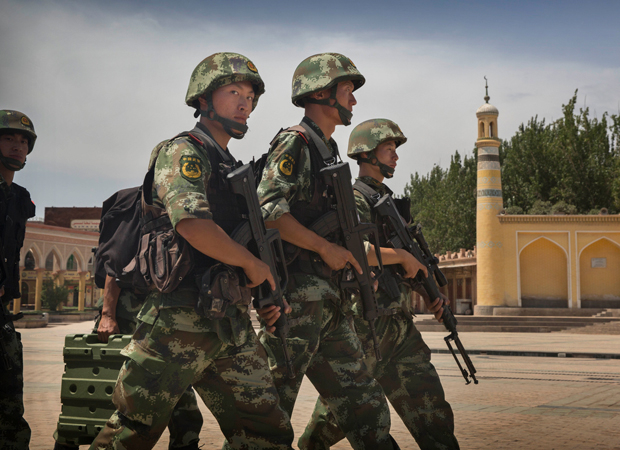
After the 19th Party Congress last fall and the recent “two meetings” in March, the Party-state has now completed its quinquennial leadership turnover and announced a major restructuring of a number of Party and state entities. This institutional restructuring will alter slightly the functional hierarchies involved in coordinating Xinjiang policy, but there is no indication that it—or the new leaders in place—will affect the content or tone of that policy. Whether regional Party Secretary Chen Quanguo himself is the progenitor of increasingly repressive measures now employed in Xinjiang, or whether he is simply the most ruthless tool by which to implement them, he is still the logical endpoint of the Party’s broader policy trajectory.

Do American Companies Need to Take a Stance on Taiwan?

A ChinaFile Conversation

China’s airline regulator recently sent a letter to 36 international air carriers requiring them to remove from their websites references implying that Taiwan, Hong Kong, and Macau are not part of China. In a surprisingly direct May 5 statement, the White House said U.S. President Donald Trump “will stand up for Americans resisting efforts by the Chinese Communist Party to impose Chinese political correctness on American companies and citizens.” The statement called Beijing’s move “Orwellian nonsense,” adding that it was “part of a growing trend by the Chinese Communist Party to impose its political views on American citizens and private companies.” The letter comes just months after Beijing punished and chastised companies like Marriott, Zara, and Delta for not showing enough deference to Beijing’s views of territorial integrity. How should American companies respond to these types of requests from the Chinese government? And does the White House’s response help American interests in China?

Frances Kitt

Frances Kitt is a Research Associate in the International Security and East Asia Programs at the Lowy Institute. Her work focuses on foreign policy, politics, and geoeconomics in Northeast Asia, with a focus on China and Korea. Before joining the Lowy Institute, Kitt gained professional experience working in China and North Korea on cultural affairs and in London at Asia House. She holds a Master of Philosophy in Asian and Middle Eastern Studies from the University of Cambridge and studied on scholarships at Seoul National University, National Cheng Kung University, and Beijing Normal University.

China Leadership Monitor

Publication Logo Header: 

The China Leadership Monitor seeks to inform the American foreign policy community about current trends in China’s leadership politics and in its foreign and domestic policies. The Monitor proceeds on the premise that as China’s importance in international affairs grows, American policy-makers and the broader policy-interested public increasingly need analysis of politics among China’s leadership that is accurate, comprehensive, systematic, current, and relevant to major areas of interest to the United States.

China Leadership Monitor analysis rests heavily on traditional China-watching methods of interpreting information in China’s state-controlled media. Use of these methods was once universal among specialists in contemporary Chinese affairs. Although the use of these methods has declined as opportunities to study China using other approaches have opened up in recent decades, their value in following politics among China’s top leadership has not. Monitor analysis also brings to bear some of the new avenues of information and insight that have opened up since the normalization of U.S.-China relations and China’s policy “opening to the outside world” in the late 1970s.

The China Leadership Monitor website is updated with new analyses quarterly.

Subscribe here to receive a free copy in your email inbox every quarter.

The China Leadership Monitor is sponsored by the Hoover Institution on War, Revolution, and Peace at Stanford University. Its General Editor is Hoover Institution Research Fellow Alice Miller.