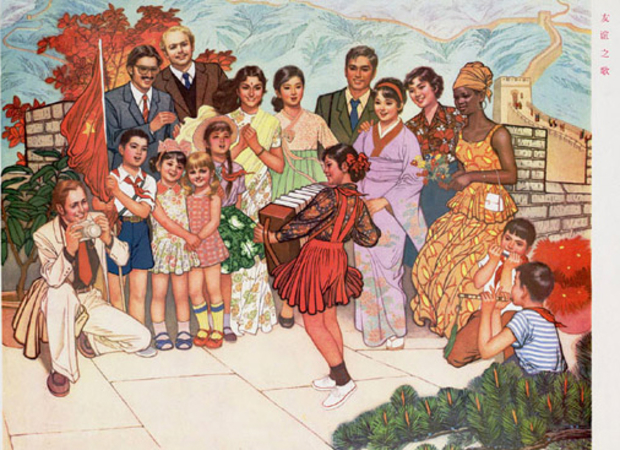
3 Years: Arrow Factory

Arrow Factory is an independently run art space located in a narrow 200-year-old alleyway in the center of Beijing. Founded in 2008, Arrow Factory reclaimed an existing storefront and transformed it into a space for site-specific installations and projects by contemporary artists that are designed to be viewed from the street twenty-four hours a day, seven days a week. Arrow Factory has aimed at reaching a diverse public made up of neighboring residents, as well as local and international art audiences, and has been instrumental in encouraging new avenues for site-oriented artistic production in China.

With this publication, audiences are able to view comprehensive documentation of some twenty-eight temporary site-specific works produced by Chinese and international artists at Arrow Factory over the past three years between April 2008 to March 2011. 3 Years: Arrow Factory provides a valuable look into the uniqueness of our contemporary situation, and captures for posterity the fleeting connections that situate Arrow Factory in China’s larger economic, intellectual, and artistic zeitgeist. —Sternberg Press
 

Raw Sewage Dumped in China’s Pearl River Delta, Daily Says

The report said that 30 percent of rivers in eastern Guangdong are polluted, threatening the health of people who live along their banks. Guangdong, with a population of 104 million people, has China’s largest economy and is one of the world’s biggest manufacturing centers.

Restoring Eco-balance

In the late 1970s, China was swept by a wave of economic growth, and with it a wholesale attack on nature. Grain was planted on grasslands and profits extracted from rivers. Land was reclaimed from lakes and seas and forests were felled for arable land.

Seeing those drastic and potentially disastrous steps, an ecologist named Hou Xueyu spoke out. Humanity needed to respect nature’s rules, he said, and safeguard its ecological balance.

SARFT Goes After Online Video, Again

A spokesman for the State Administration of Radio, Film and Television (SARFT) announced yesterday that some original drama series and films on video websites like Youku.com and Tudou.com don’t meet government censorship standards and contain unacceptable dirty language, violence and sex. In the future, original productions for the internet will need to be approved by SARFT before they can go live.

China’s Wings

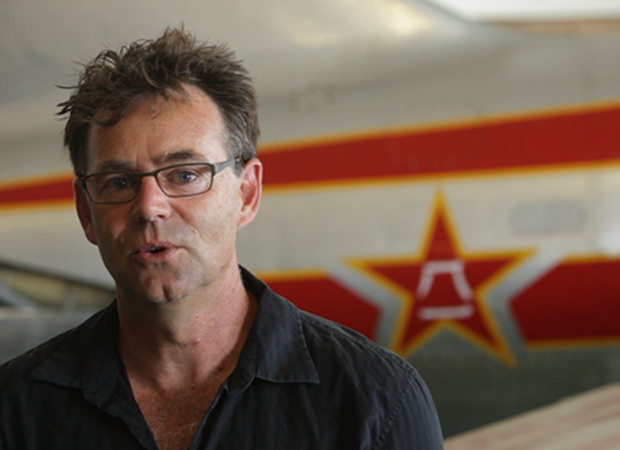
From the acclaimed author of Enduring Patagonia comes a dazzling tale of aerial adventure set against the roiling backdrop of war in Asia. The incredible real-life saga of the flying band of brothers who opened the skies over China in the years leading up to World War II—and boldly safeguarded them during that conflict—China’s Wings is one of the most exhilarating untold chapters in the annals of flight. Drawing on meticulous research, primary sources, and extensive personal interviews with participants, Gregory Crouch offers harrowing accounts of brutal bombing runs and heroic evacuations, as the fight to keep one airline flying becomes part of the larger struggle for China’s survival. He plunges us into a world of perilous night flights, emergency water landings, and the constant threat of predatory Japanese warplanes. When Japanese forces capture Burma and blockade China’s only overland supply route, Bond and his pilots must battle shortages of airplanes, personnel, and spare parts to airlift supplies over an untried five-hundred-mile-long aerial gauntlet high above the Himalayas—the infamous “Hump”—pioneering one of the most celebrated endeavors in aviation history.

A hero’s-eye view of history in the grand tradition of Lynne Olson’s Citizens of London, China’s Wings takes readers on a mesmerizing journey to a time and place that reshaped the modern world.  —Bantam

5 Signs of the Chinese Economic Apocalypse

The lights are flickering in the world's economic powerhouse. Although China's outlook may still be positive by, say, European standards, the numbers show that the country's storied growth engine has slipped out of gear. Businesses are taking fewer loans. Manufacturing output has tanked. Interest rates have unexpectedly been cut. Imports are flat. GDP growth projections are down, with some arguing that China might already be in recession. In March, Premier Wen Jiabao put the 2012 growth target at 7.5 percent; then seen as conservative, it's now viewed as prescient. If realized, it would be China's lowest annual growth rate since 1990, when the country faced international isolation after the 1989 Tiananmen Square massacre.

Busman’s Holiday

A Young China Scholar Takes Americans on Tour

The train from the old Kowloon station rumbled as it passed the Chinese border fence on its way to Canton and came to a lurching halt. It was a late summer day in 1981; I was thirty-two years old and now, as I reflected with deep satisfaction, no one could ever again dismiss me by saying I had not been to China.

Nationalist and Liberal Spar in Beijing Park (With Ai Weiwei Cameo)

In China, as is doubtless the case elsewhere, the distinction between online and offline is blurring. That presents the Communist party with a potentially dangerous problem. Online comment can serve a useful official function, allowing people to blow off steam and giving them the impression of freedom of expression. So long as it never leaves the realms of hyperspace, no harm done.

Politburo Possibilities: A Primer

This fall, the Chinese Communist Party will hold its 18th Party Congress and select a new generation of leaders who will face some of the greatest challenges seen yet in the PRC’s 63 years. Inflation is growing, wealth inequality is widening, the population is aging, the environment is degrading, the new-generation of internet-savvy youth is becoming more cynical, and the threat of a major economic crisis hangs over everything – threatening to unravel the “Beijing Consensus” of economic growth in exchange for authoritarianism. Hu Jintao has led for the past decade with a “stability at all costs” attitude – which in many ways has allowed these problems to fester. The question now is whether these problems will be addressed with greater authoritarianism or greater democracy.

Sinostand

From their website:

Sinostand is a collection of reports and analysis focusing on Chinese social, cultural and political issues. The creator, Eric Fish, is author of the upcoming book China’s Millennials: The Want Generation. He was previously a journalist in Beijing and co-host of the China Hang-up podcast.