A Hard Landing?

After three decades of annual growth averaging 10%, China's bullet-train economy is slowing markedly. Economic problems in Europe and the U.S. are stunting export growth, long the primary driver of China's economic miracle. Growth in industrial production has likewise been decelerating for months. This year growth in gross domestic product could slip to 8%—and it may get a lot worse from there. Though recently announced interest-rate cuts and a ramp-up in the government's already massive infrastructure spending could postpone the day of reckoning, to us it looks like the Great China Growth Story may be falling apart.

Barron’s

Publication Logo Vertical: 
Publication Logo Header: 

From their website:

For 95 years, Barron’s has been the source that American business and financial leaders turn to every week in print and everyday online for authoritative market analyses and insights on companies, industries and sectors, the economy and financial markets in the U.S. and around the world. 

Is the Chinese Economy Running Out of Steam

John King Fairbank, the father of Chinese studies in America, once described China as a “journalist’s dream and a statistician’s nightmare, with more human drama and fewer verifiable facts per square mile than anywhere else in the world.” These days, the statistician’s dilemma in China extends not simply to the problem of what is true but also to that of what matters. In the era of an ascendant China, every agency and investment bank, every short-seller and risk analyst and brand consultant is ready to offer a prediction on China’s economic future. So how do you separate the noise from the signal?

An Art Star’s Creative Crisis

For the past year, China's most expensive living artist hasn't been allowed to paint, doctor's orders. Zhang Xiaogang, age 54, a Beijing-based painter whose hypnotic portraits have topped $10 million at auction, recently suffered a pair of heart attacks, and his doctors told him—for the first time in his three-decade career—to rest. Few artists embody China's art boom better than Mr. Zhang, who grew up amid the Cultural Revolution and gained fame for his large, haunting depictions of families dressed in Mao jackets and comrade's caps. Yet his desire to keep breakneck pace with China's developing art scene has taken a toll.

Qingdao Toilet Paper Abuse Triggers Morals Debate

An eastern Chinese city's efforts to build user-friendly toilets have ended with huge losses of free toilet paper, provoking reflections on the misuse of public amenities in China. As most Chinese public lavatories do not provide paper or charge for their use, Qingdao, in Shandong province, has won much applause after it announced some toilets would be equipped with free-of-charge paper.

Xinhua

Publication Logo Vertical: 
Publication Logo Header: 

From their website:

Sponsored by the Xinhua News Agency, Xinhuanet is China’s important central news service-oriented website, and one of the most influential news portals in the world.

Supported by the domestic and oversea branches of Xinhua News Agency and its 29 provincial channels and companies overseas, Xinhuanet has developed its own global network for collecting news and information, and is an all-media information gathering, processing and spreading platform, boasting a strong spreading power, a wide coverage, a comprehensive collecting means and varied forms of dissemination among the Chinese network media.

Cherishing the idea to "Publicize China and Report the World" in an “Authoritative Voice, Cordially Conveyed”, Xinhuanet releases global news information 24 hours daily in languages of Chinese (simplified and traditional), English, French, Spanish, Russian, Arabic, Japanese, Korean, German, Tibetan, and Uygur.

Land of Vanishing Lakes

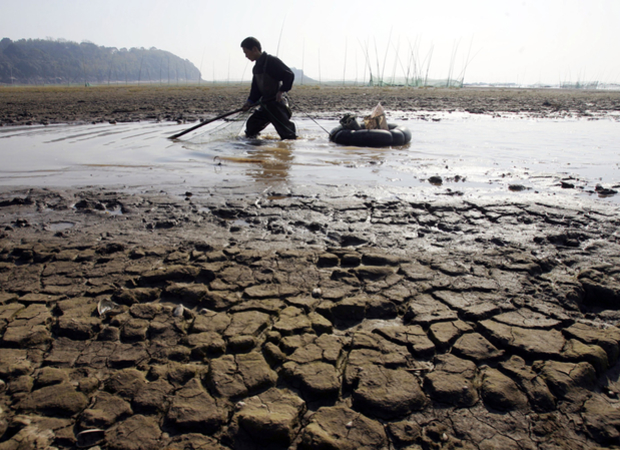
Hubei Confronts Its Lake Disappearing Act

The last lakes in Hubei province are shrinking so fast that no one knows whether new government regulations—the latest leg of a sixteen-year-old environmental scramble—can reverse the disappearing act.

The province has been losing its once-bountiful lakes for about a hundred years, but the destructive pace accelerated in modern times with extension draining projects for farmland and the expansion of water-dependent heavy industry.

Fighting the Filth

Has the division of spoils from China’s rapid economic growth become a one-sided affair? The answer is less abstract when one considers the state of the nation’s environment.

Waterways are barricaded by garbage, mountains gouged with dusty pits, and the air in many major cities, most of the time, is a brown acrid broth that bestows respiratory impairments for which the long-term effects have yet to be seen. Moreover, nothing about the current model of economic growth makes it easy to estimate the cost it will take for public health and ecosystems to recover.

Powering Down Coal-Fired Economic Expansion

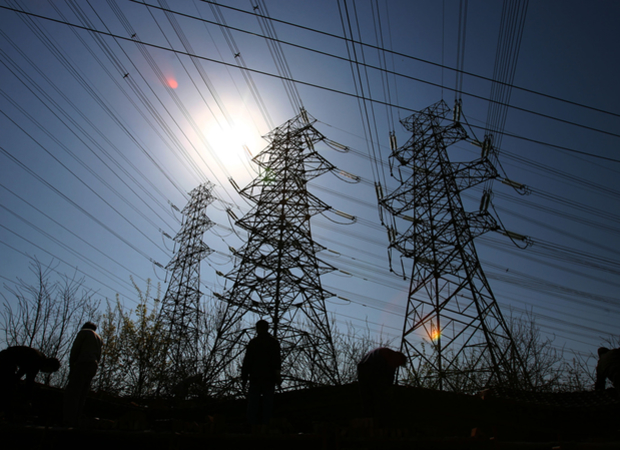
Slowing nationwide power demand and coal consumption, twin barometers for economic growth, suggest the Chinese economy may be sailing into the doldrums while at the same time changing its course.

Electricity use in May rose a relatively mild 5.2 percent compared to the same month last year and just 1.5 percent over April’s level to 406 billion kilowatt hours, the National Energy Administration (NEA) said.

Peter Hessler on His Surprising First Trip to China

I first went to China in 1994, after finishing two years of graduate school at Oxford. I had studied English language and literature, which I enjoyed, but I realized that I wanted to do something different with my career. I knew that I wanted to write but I wasn’t sure how or where. And I had long considered joining the Peace Corps — I first applied during college, and I was on track to go to Africa as a teacher when I got a fellowship to Oxford. So I cancelled that first Peace Corps application and went to England.