China and the Environment

Sixteen of the world’s twenty most polluted cities are in China. A serious water pollution incident occurs once every two-to-three days. China’s breakneck growth causes great concern about its global environmental impacts, as others look to China as a source for possible future solutions to climate change. But how are Chinese people really coming to grips with environmental problems? This book provides access to otherwise unknown stories of environmental activism and forms the first real-life account of China and its environmental tensions.

China and the Environment provides a unique report on the experiences of participatory politics that have emerged in response to environmental problems, rather than focusing only on macro-level ecological issues and their elite responses. Featuring previously untranslated short interviews, extracts from reports and other translated primary documents, the authors argue that going green in China isn’t just about carbon targets and energy policy; China’s grassroots green defenders are helping to change the country for the better. —Zed Books


Shanghaiist

Publication Logo Vertical: 
Publication Logo Header: 

From their website:

Shanghaiist is part of Gothamist LLC, the most visited network of city blogs on the Internet today. Founded in 2005, Shanghaiist has emerged as one of the most popular English-language websites about China, covering local news, events, food, and entertainment for a diverse audience of young and affluent urbanites.

Driven entirely by word-of-mouth, Shanghaiist has grown steadily year-on-year to reach more than 2 million unique visitors and 4 million pageviews each month by mid 2015.

Forbes called Shanghaiist a "sophisticated, deliciously urbane city blog." The New York Times thinks we are "ever-excellent." And Yahoo! said the site contains "the local scoop on Shanghai, including news, commentary, reviews, events, and more."

Shanghaiist readers are young, hip and upwardly mobile — the kind of audience advertisers love. The site has become a daily "must read" for thousands of Shanghai residents and "China watchers" around the globe.

Does Promoting “Core Interests” Do China More Harm Than Good?

PART TWO of a ChinaFile Conversation

On April 30, as tensions around China’s claims to territories in the South- and East China Seas continued to simmer, we began what proved to be a popular ChinaFile Conversation, asking the question, What's Really at the Core of China’s ‘Core Interests’? The participants included Shai Oster of Bloomberg News, Andrew Nathan of Columbia University, Orville Schell of the Center on U.S.-China Relations, Susan Shirk, former U.S.

The Wall Street Journal: Covering China Past and Present

ChinaFile Presents

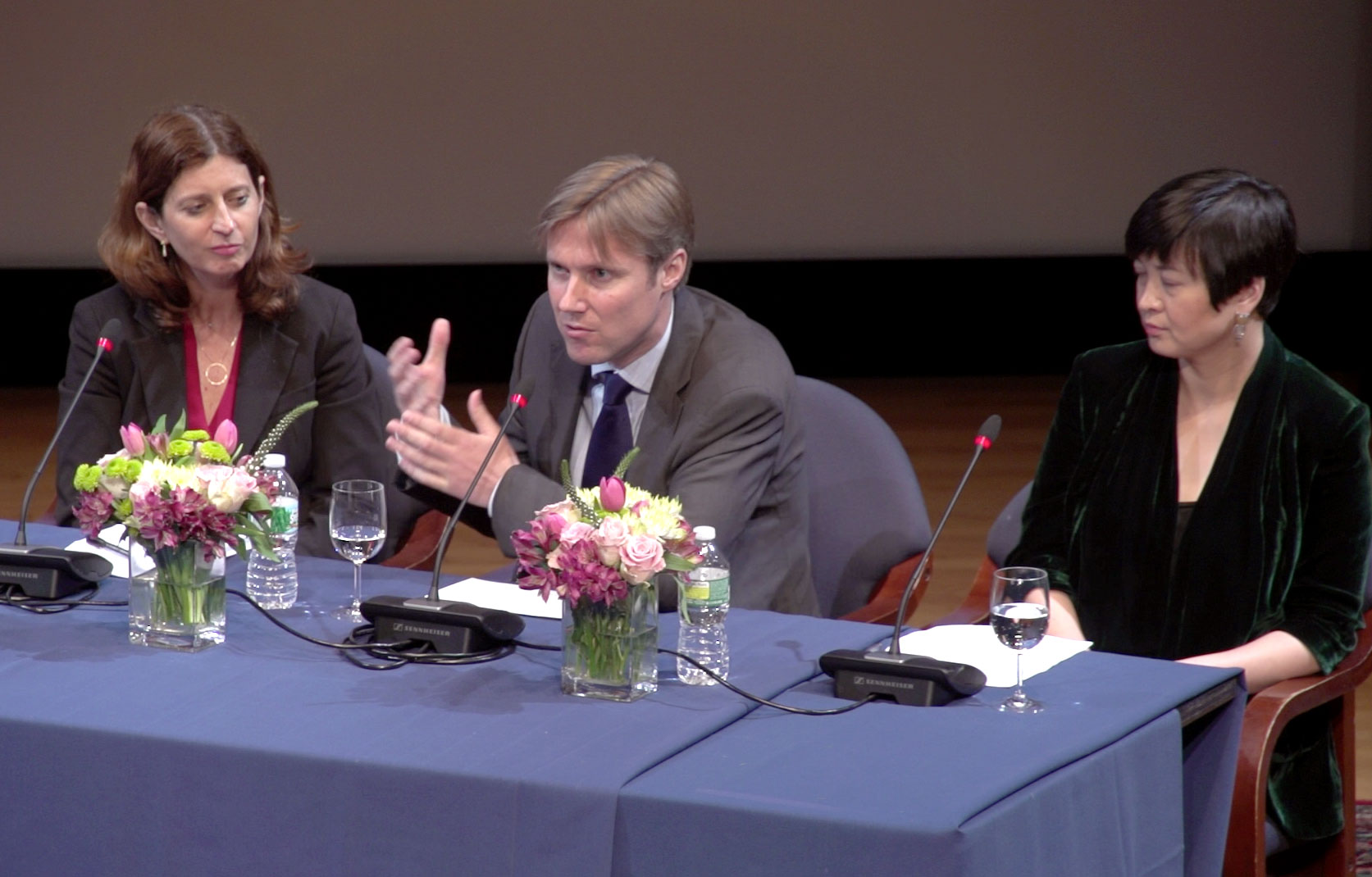
The Wall Street Journal was one of the first American publications to set up a bureau in Beijing. Since its establishment, scores of the Journal’s correspondents have traveled in and out of the country to cover China’s economic and political development. On April 30th, 2013, ChinaFile hosted a cross-section of this extremely talented pool of foreign correspondents to help reflect on China’s progress, past and present.

Topics: 

The Long Battle Over “White Pollution”

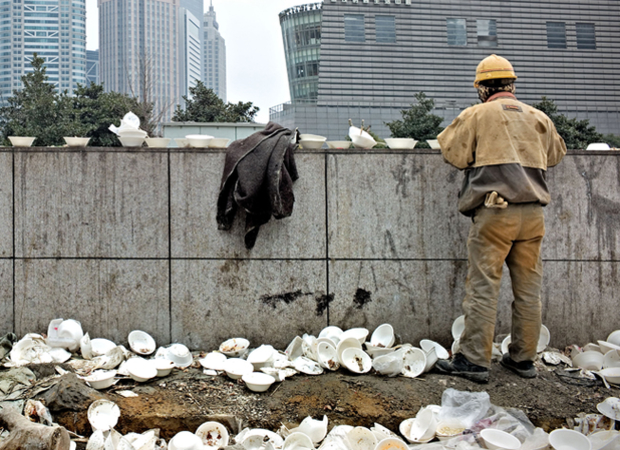
In the past weeks, Chinese citizens have learned that the styrofoam boxes from which they eat their lunches will soon be legal. On February 16, the National Development and Reform Commission (NDRC), China’s highest economic policy-making body, changed the Industrial Restructuring Catalog (2011) and removed disposable foam plastic tableware from the list of banned products. On May 1, the fourteen-year ban will be formally removed.

A Changing China: Implications for Developing Countries

Three decades of rapid growth and structural change have transformed China into an upper-middle-income country and global economic powerhouse. China's transformations over this period wielded increasing influence over the development path of other countries, either directly through bilateral trade and financial flows or indirectly through growth spillovers and terms of trade effects. Looking ahead, as China embarks on a new phase in its development journey, a phase characterized by slower but higher-quality growth, the economic landscape facing the developing world is expected to be redefined yet again. China is expected to remain both a market and a competitor, but its changes are likely to lead to new opportunities for many and new challenges for some. Key questions in this respect are: (i) how will the level and composition of China's import demand evolve as its economy slows and rebalances; (ii) to what extent will the presumed out-migration of labor-intensive manufacturing materialize and create new opportunities elsewhere; and (iii) how quickly will China move up the value chain and redefine its competitive advantage in the global marketplace? As in the past, China's transformations are expected to put formidable pressure on countries to adapt and reform, requiring both political will and entrepreneurial capacity, in a collective race where success will be measured against a rapidly moving frontier.

Embed Code: 
Topics: 
Economy
Organization: 
World Bank