Rejuvenation (复兴)

An Excerpt from “Wealth and Power: China’s Long March to the Twenty-first Century”

If any of the makers of modern China who agonized over their country’s enfeebled state and dreamed of better times during the past century and a half could have visited Beijing’s Pangu Plaza today, they would hardly believe their eyes.

National Review

Publication Logo Vertical: 
Publication Logo Header: 

From their website:

A year before National Review was founded, I spent an evening with Whittaker Chambers, and he asked me, half provocatively, half seriously, what exactly it was that my prospective journal would seek to save. I trotted out a few platitudes, of the sort one might expect from a twenty-eight-year-old fogy, about the virtues of a free society. He wrestled with me by obtruding the dark historicism for which he had become renowned. Don’t you see? he said. The West is doomed, so that any effort to save it is correspondingly doomed to failure. I drop this ink stain on the bridal whiteness of this fleeted evening only to acknowledge soberly that we are still a long way from establishing, for sure, that Whittaker Chambers was wrong. But that night, challenged by his pessimism, I said to him that if it were so that providence had rung up our license on liberty, stamping it as expired, the Republic deserved a journal that would argue the historical and moral case that we ought to have survived: that, weighing the alternative, the culture of liberty deserves to survive. So that even if the worst were to happen, the journal in which I hoped he would collaborate might serve, so to speak, as the diaries of Anne Frank had served, as absolute, dispositive proof that she should have survived, in place of her tormentors — who ultimately perished. In due course that argument prevailed, and Chambers joined the staff.

Wealth and Power

Through a series of lively and absorbing portraits of iconic modern Chinese leaders and thinkers, two of today’s foremost specialists on China provide a panoramic narrative of this country’s rise to preeminence that is at once analytical and personal. How did a nation, after a long and painful period of dynastic decline, intellectual upheaval, foreign occupation, civil war, and revolution, manage to burst forth onto the world stage with such an impressive run of hyperdevelopment and wealth creation—culminating in the extraordinary dynamism of China today?

Wealth and Power answers this question by examining the lives of eleven influential officials, writers, activists, and leaders whose contributions helped create modern China. This fascinating survey begins in the lead-up to the first Opium War with Wei Yuan, the nineteenth-century scholar and reformer who was one of the first to urge China to borrow ideas from the West. It concludes in our time with human-rights advocate and Nobel Peace Prize laureate Liu Xiaobo, an outspoken opponent of single-party rule. Along the way, we meet such titans of Chinese history as the Empress Dowager Cixi, public intellectuals Feng Guifen, Liang Qichao, and Chen Duxiu, Nationalist stalwarts Sun Yat-sen and Chiang Kai-shek, and Communist Party leaders Mao Zedong, Deng Xiaoping, and Zhu Rongji.

Excerpts

07.02.13

Rejuvenation (复兴)

Orville Schell & John Delury
If any of the makers of modern China who agonized over their country’s enfeebled state and dreamed of better times during the past century and a half could have visited Beijing’s Pangu Plaza today, they would hardly believe their eyes. Pangu’s...

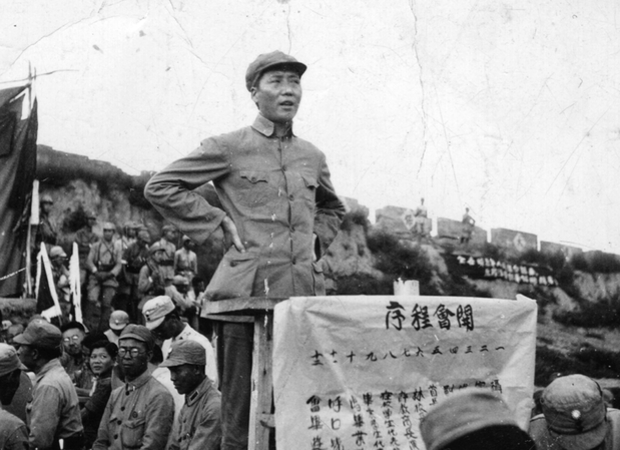
The common goal that unites all of these disparate figures is their determined pursuit of fuqiang, “wealth and power.” This abiding quest for a restoration of national greatness in the face of a “century of humiliation” at the hands of the Great Powers came to define the modern Chinese character. It’s what drove both Mao and Deng to embark on root-and-branch transformations of Chinese society, first by means of Marxism-Leninism, then by authoritarian capitalism. And this determined quest remains the key to understanding many of China’s actions today.

By unwrapping the intellectual antecedents of today’s resurgent China, Orville Schell and John Delury supply much-needed insight into the country’s tortured progression from nineteenth-century decline to twenty-first-century boom. By looking backward into the past to understand forces at work for hundreds of years, they help us understand China today and the future that this singular country is helping shape for all of us. —Random House

Renewed Growth on the New Third Board

Up to 5,000 Small to Medium Enterprises Could List in the Next Five Years

The State Council announced on June 19 that it would expand the New Third Board, an over-the-counter (OTC) market for non-listed companies’ shares, to include all small and medium-sized enterprises (SMEs) nationwide.

One of the experts estimated the number of companies that may list on the board in up to five years at between 4,000 and 5,000, up from the current 200-plus.

“We’re Uyghurs. We’re Not Terrorists.” A Plea From Xinjiang

plea from a Xinjiang native stirred up discussions of how to make peace with people from different ethnic backgrounds on Weibo. “We’re from Xinjiang. We’re Uyghurs. We’re not terrorists. There are good people and bad people in every region among every ethnic group. Please do not equal ‘Xinjiang people’ with violence.”

Unrest In Xinjiang Incites Military Crackdown

State-run media reported that more than 100 people riding motorcycles, some wielding knives, attacked a police station in remote Hotan on Friday. It follows Wednesday’s clashes elsewhere in Xinjiang which killed 35. At a meeting chaired by President Xi Jinping, China’s leaders resolved to crack down on those responsible for the violence.