


Use by Iraqi Military May Be a Boon for China-Made Drones
on December 17, 2015
Soldiers used the Chinese drone on Dec. 6 to destroy an ISIS position amid efforts to retake the city of Ramadi.
Soldiers used the Chinese drone on Dec. 6 to destroy an ISIS position amid efforts to retake the city of Ramadi.
Before the Internet age, it used to be relatively straightforward for authoritarian regimes to dictate popular news consumption: just control all the major newspapers, as China’s ruling Communist Party has done since the founding of the People’s Republic in 1949. But the advent of the Internet, particularly the rise of the social web, has broken that monopoly. Stiff online competition for the attention of China’s more than 600 million Internet users has become a major challenge for state media and its traditionally stolid reporting style.
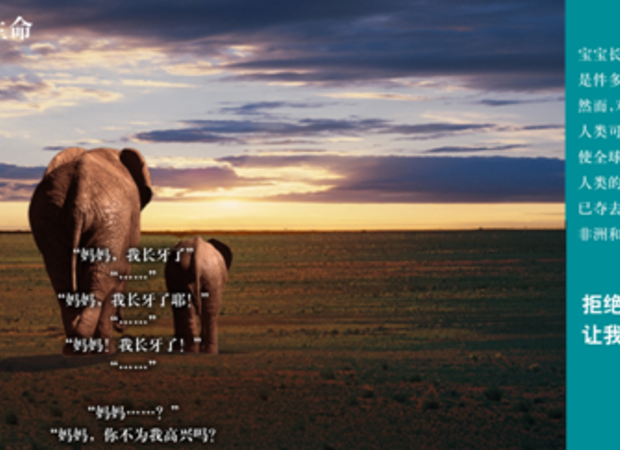
For the first time in years, there is positive news to report in the fight to save Africa’s elephants from extinction.

When Communist Party leaders adopted the one-child policy in 1980, they hoped curbing birth-rates would help lift China’s poorest and increase the country’s global stature. But at what cost? Now, as China closes the book on the policy after more than three decades, it faces a population grown too old and too male, with a vastly diminished supply of young workers.
Mei Fong has spent years documenting the policy’s repercussions on every sector of Chinese society. In One Child, she explores its true human impact, traveling across China to meet the people who live with its consequences. Their stories reveal a dystopian reality: unauthorized second children ignored by the state, only-children supporting aging parents and grandparents on their own, villages teeming with ineligible bachelors, and an ungoverned adoption market stretching across the globe. Fong tackles questions that have major implications for China’s future: whether its “Little Emperor” cohort will make for an entitled or risk-averse generation; how China will manage to support itself when one in every four people is over sixty-five years old; and above all, how much the one-child policy may end up hindering China’s growth.
Weaving in Fong’s reflections on striving to become a mother herself, One Child offers a nuanced and candid report from the extremes of family planning. —Houghton Mifflin Harcourt
Maura Cunningham, Ms.Magazine (February 8, 2016)
Kirkus Review (December 6, 2015)
Helen Wang, Los Angeles Review of Books (December 1, 2015)

International NGOs such as Save the Elephants have shared the great news that the price of ivory has decreased by almost 50 percent over the past year and a half, thanks to successful campaigns by NGOs in educating the public, and also to collaboration between the American and Chinese governments to fight illegal wildlife trade. Below is an excerpt from the Save the Elephants press release:
Andrea Crosta is the Executive Director and Co-Founder of Elephant Action League. He has 25 years of experience in conservation and research projects all over the world, and since 1989 he has been involved on a variety of projects in Africa, Asia, South America, and Europe.
Crosta has also worked for over 15 years as an international consultant to companies and governmental agencies on high-end security technologies and services, homeland security, investigation, and risk management, a knowledge that he now applies to conservation and wildlife protection. In 1998, he founded Think Italy, one of the first e-commerce companies in Italy.
Crosta is on the board of the Italian environmental NGO Torbiera Zoological Society, and he is among the founding and supervisory board members of the recently established Wildlife Justice Commission, in the Hague, The Netherlands. He is also a partner of Kids Home, a private NGO that provides support to children and their families in Chiang Mai, Thailand. He holds a Master’s Degree in Natural Sciences, a Master’s Degree in Business & Innovation, and a B.S. in Psychology.
On December 8, a Tuesday, a man surnamed Cao piloted his electric scooter along Beijing’s profoundly hazy streets, parking in front of one towering apartment complex after another to deliver packages. Although the government had just issued a “red alert” level pollution warning, part of a forecast that small deadly pollutants would raise the air quality index to hazardous levels, Cao wasn’t wearing a mask.
Moscow has traditionally been skeptical of Beijing's expanding influence in an area that it considers its own backyard.
Paris talks gave a whiff of Beijing’s ambitions to lead—but critics fear that could upend status quo.