


German President Presses China on Political Prisoners During Visit
on March 24, 2016
Gauck delivered a speech in Shanghai that criticized repressive political states and called for civil society to be allowed to flourish.
Gauck delivered a speech in Shanghai that criticized repressive political states and called for civil society to be allowed to flourish.
It sparked fears that Chinese authorities were overriding the "one country, two systems" formula.
Villagers dressed in traditional costume pole boats during the 2008 Qintong Boat Festival in Taizhou City, Jiangsu province.

On Wednesday, March 23, German President Joachim Gauck addressed an audience of university students in Shanghai. Among many views not typically aired in public in China, Gauck, a former Luterhan minister and anti-communist organizer, told the crowd at Tongji University that 1989—the year the East German communist state collapsed—proved to him that “human rights are not geographically or historically variable but indivisibly bound up with the existence of each individual...

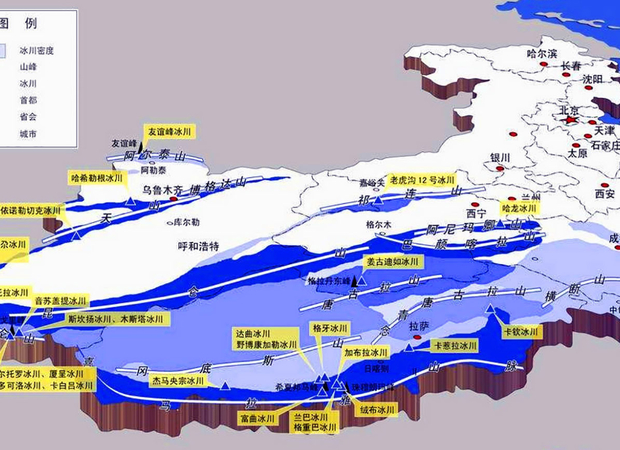
A map of glaciers in China.
Kristin Shi-Kupfer is the Director of the Research Area on Politics, Society, Media at the Mercator Institute for China Studies (MERICS), a China think tank in Berlin. She was a China correspondent for various German-language media in Beijing from 2007 to 2011. Her current research and publications focus on China’s social change, digital society, and religious policy.
Daniel Leese is professor of modern Chinese history and politics at the University of Freiburg. He is the author of Mao Cult: Rhetoric and Ritual in China’s Cultural Revolution (Cambridge, 2011) and Die Chinesische Kulturrevolution (C.H. Beck, 2016).
Data from International Data Corporation (IDC) showed that Huawei, Xiaomi and Lenovo were among the top five global smartphone makers.
Beijing seems strangely indecisive on the economy and yet increasingly authoritarian in politics.
Names that “damage sovereignty and national dignity” or “violate the socialist core values and conventional morality” would be targeted.