


How Alibaba Turned China’s Singles Day into the World’s Biggest Shopping Bonanza
on November 8, 2016
Sales this 11/11 are expected to reach $20 billion–-a 40% year-over-year surge
Sales this 11/11 are expected to reach $20 billion–-a 40% year-over-year surge
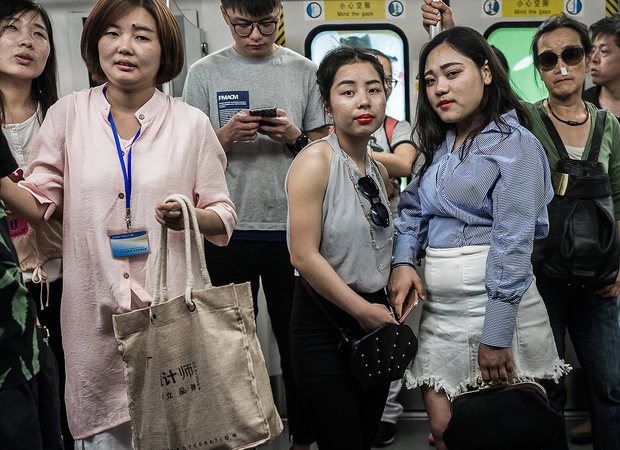
In October, several publications marked the 80th Anniversary of the Chinese Communists’ Long March. We have chosen two stories that revisited this event and that were standouts, visually. Elsewhere, photographers followed stories both large and small, from public outcry about arctic animals on display in China’s southern city of Guangzhou to the superlative Hong Kong-Zhuhai-Macao Bridge, from subterranean street photography of Beijing’s subway to China’s last match-producing factory.
Erin Ennis has been Senior Vice President of the US-China Business Council (USCBC) since February 2015, after serving as Vice President since 2005. In that position, she directs USCBC’s government affairs and advocacy work for member companies and oversees USCBC’s Business Advisory Services. She also leads a coalition of other trade associations on issues of interest to companies doing business with China.
Prior to joining USCBC, Ennis worked at Kissinger McLarty Associates, where she was responsible for implementing strategies for international business clients on proprietary trade matters, primarily in Vietnam and Japan.
Before entering the private sector, Ennis held several positions in the U.S. Government. From 1992 to 1996, she was a legislative aide to former U.S. Senator John Breaux, working on international trade and commerce. At the Office of the U.S. Trade Representative from 1996 to 2000, she first worked in Congressional Affairs on Asia issues, including annual approvals of China’s most favored nation status and the ill-fated 1997 push to renew presidential “fast track” negotiating authority. Beginning in 1998, she was assistant to Deputy U.S. Trade Representative Richard Fisher, who led U.S. trade negotiations and enforcement with Asia, the Americas, and on intellectual property rights.
A native of Louisiana, Ennis has a B.A. from Mount Holyoke College in Massachusetts and a Masters in International Affairs from Catholic University in Washington, D.C. She is an active volunteer for the Mount Holyoke Alumnae Association and the Washington National Cathedral.
In late October, the Chinese Communist Party anointed Xi Jinping as a “core leader.” While the position doesn’t come with any formal responsibilities, its symbolism is important. According to The New York Times, it shows that senior Party officials, “willingly or not,” have “bowed to [Xi’s] dominance.” How significant is this move, and what does it say about Xi’s position at the top of the Party? —The Editors
Kerry Brown is Professor of Chinese Studies and Director of the Lau China Institute at King’s College, London. From 2012 to 2015, he was Professor of Chinese Politics and Director of the China Studies Centre at the University of Sydney, Australia. Prior to this, he worked at Chatham House from 2006 to 2012, as Senior Fellow and then Head of the Asia Programme. From 1998 to 2005, he worked at the British Foreign and Commonwealth Office, as First Secretary at the British Embassy in Beijing, and then as Head of the Indonesia, Philippine, and East Timor Section. He lived in the Inner Mongolia region of China from 1994 to 1996. He directed the Europe China Research and Advice Network (ECRAN) giving policy advice to the European External Action Service between 2011 and 2014.
Brown is the author of over ten books on modern Chinese politics, history, and language, the most recent of which are The New Emperors: Power and the Princelings in China (I.B. Tauris, 2014), What’s Wrong with Diplomacy?: The Future of Diplomacy and the Case of China and the UK (Penguin, 2015) Berkshire Dictionary of Chinese Biography (editor, Berkshire, 2014), CEO, China: The Rise of Xi Jinping (I.B.Tauris, 2016), and China and the New Maoists (co-authored with Simone van Nieuwenhuizen, Zed Books, 2016). He is the author of one book of poetry, Lost Calls: 64 Poems (Library Partners Press, 2016).
Brown has a Master of Arts from Cambridge University, a Post Graduate Diploma in Mandarin Chinese (Distinction) from Thames Valley University, London, and a Ph.D. in Chinese politics and language from Leeds University.
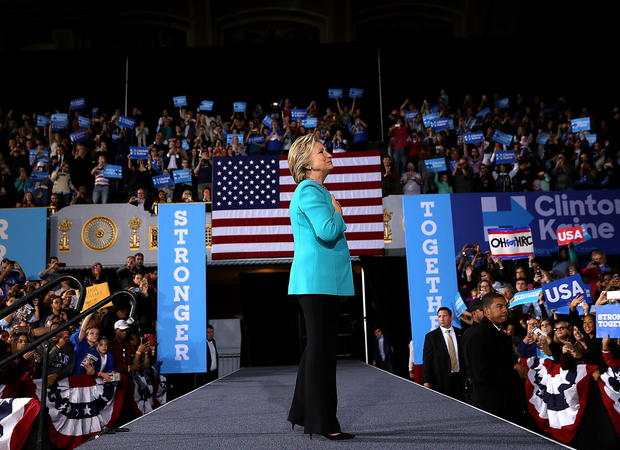
The United States, China’s largest trading partner but also its greatest geopolitical rival, faces an election that threatens domestic instability. A Donald Trump victory would confirm to many Chinese the inherent weakness of American democracy. A Hillary Clinton victory, on the other hand, would force Beijing to deal with a politician widely viewed as unfriendly, and sometimes even hostile, to Chinese interests.
The law requires internet operators to cooperate with investigations involving crime and national security, mandatory testing and certification of equipment
The extraordinary intervention in the affairs of this semiautonomous former British colony could prompt a constitutional crisis and incite more street protests
Could the first foreign crisis of a potential Clinton presidency come not in the Middle East or with Russia, but in northeast Asia?
Senior official was widely seen as a voice for reform of the country’s fiscal system