


U.S. Returns Chinese Fugitive After 13 Years on the Run
on November 16, 2016
The U.S. government sent back to China a former official long wanted on corruption charges, in an act hailed by Beijing as a major diplomatic success
The U.S. government sent back to China a former official long wanted on corruption charges, in an act hailed by Beijing as a major diplomatic success
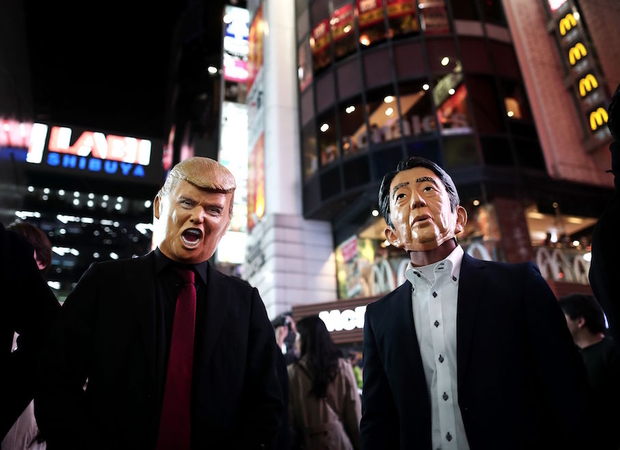
President-elect Donald Trump campaigned on a platform of neo-isolationism that could see many traditional U.S. allies in Asia left without Washington’s support in the newly roiled waters of the South- and East China Seas. What will the governments of Japan, South Korea, the Philippines, and Taiwan, especially, do if confronted by China but find themselves unable to turn to America for support? And what of other regional neighbors such as Indonesia, Malaysia, Singapore, Thailand, and Vietnam?
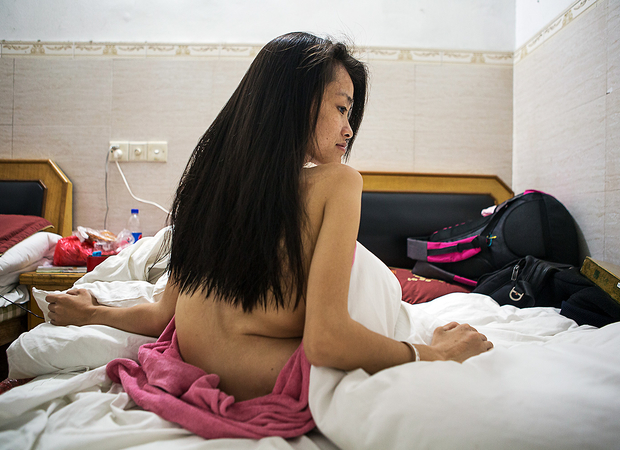
According to my caretakers at the orphanage, Chunchun arrived a few years before I did, when she was a baby. They estimate that I was around three or four years old at the time of my arrival, howling and screaming at the top of my lungs. I had been abandoned by my biological parents a few days earlier, and spent the intervening days on the streets.

According to my caretakers at the orphanage, Chunchun arrived a few years before I did, when she was a baby. They estimate that I was around three or four years old at the time of my arrival, howling and screaming at the top of my lungs. I had been abandoned by my biological parents a few days earlier, and spent the intervening days on the streets.
Sheila A. Smith, an expert on Japanese politics and foreign policy, is Senior Fellow for Japan studies at the Council on Foreign Relations (CFR). She is the author of Intimate Rivals: Japanese Domestic Politics and a Rising China (Columbia University Press, 2015) and Japan’s New Politics and the U.S.-Japan Alliance (Council on Foreign Relations, June 2014). Her current research focuses on how geostrategic change in Asia is shaping Japan’s strategic choices. In the fall of 2014, Smith began a project on Northeast Asian nationalisms and alliance management.
Smith is a regular contributor to the CFR blog Asia Unbound, and frequent contributor to major media outlets in the United States and Asia. She joined CFR from the East-West Center in 2007, where she directed a multinational research team in a cross-national study of the domestic politics of the U.S. military presence in Japan, South Korea, and the Philippines. She was a visiting scholar at Keio University in 2007-08, where she researched Japan’s foreign policy towards China, supported by the Abe Fellowship. Smith has been a visiting researcher at two leading Japanese foreign and security policy think tanks, the Japan Institute of International Affairs and the Research Institute for Peace and Security, and at the University of Tokyo and the University of the Ryukyus.
Smith is Vice Chair of the U.S. advisors to the U.S.-Japan Conference on Cultural and Educational Exchange (CULCON), a bi-national advisory panel of government officials and private sector members. She also serves on the advisory committee for the U.S.-Japan Network for the Future program of the Maureen and Mike Mansfield Foundation. She teaches as an adjunct professor at the Asian Studies Department of Georgetown University and serves on the board of its Journal of Asian Affairs. Smith earned her M.A. and Ph.D. from the department of Political Science at Columbia University.
Lijie Zhang is a photographer born in Beijing. She has an M.A. in Photography from the University of the Arts London and an M.A. in Journalism from Beijing Normal University. She is currently working on a number of long-term projects, including “The Innocent: Mentally Disordered Artists,” “The Rare: Rare Diseases in Mainland China,” “Midnight Tweedle,” and many more. She is the winner of the Magnum Foundation Human Rights and Photography fellowship; the Hou Dengke Documentary Photography Award; silver prize in the Lianzhou International Photo Festival, among other awards. Zhang’s work has been featured worldwide, including in The New York Times Lens Blog, Newsweek, burn, VICE, and China Daily. Additionally, she has been involved in multiple exhibitions in New York, Montreal, Aarhus-Denmark, London, Lianzhou, and Pingyao.
China sends messsage that ordinary people can’t take the law into their own hands, and the Communist Party is simply not going be swayed by a public outcry.
The idea of the US as the guardian of liberal values against powers like China might now be upended
Security contractors discovered preinstalled software in some Android phones that monitors where users go, whom they talk to and what they write in texts
A new generation of immigrant restaurateurs is aiming to offer an updated spin on the Chinese restaurant, with prices to match