Sandra Rwese

Sandra Rwese is the Founder and Director of the Kampala, Uganda-based tourism advisory firm Gulu & Hirst. Launched in 2014, G&H advises tourism, banking, academic, and other service sectors how to train their staff, advertise online, and engage Chinese customers. Rwese speaks conversant Mandarin and has traveled extensively throughout both China and Africa.

Wendy Cutler

Wendy Cutler joined the Asia Society Policy Institute (ASPI) as Vice President and Managing Director of the Washington D.C. Office in November 2015. In these roles, she focuses on building ASPI’s presence in Washington—strengthening its outreach as a think/do tank—and on leading initiatives that address challenges related to trade and women’s empowerment in Asia. She joined ASPI following an illustrious career of nearly three decades as a diplomat and negotiator in the Office of the U.S. Trade Representative (U.S.T.R.). Most recently she served as Acting Deputy U.S. Trade Representative, working on a range of U.S. trade negotiations and initiatives in the Asia-Pacific region. In that capacity she was responsible for the Trans-Pacific Partnership (TPP) agreement, including the bilateral negotiations with Japan.

Cutler’s other responsibilities with USTR included U.S.-China trade relations, the Asia Pacific Economic Cooperation (A.P.E.C.) Forum, and the U.S.-India Trade Policy Forum. She was the Chief U.S. Negotiator for the U.S.-Korea (K.O.R.U.S.) Free Trade Agreement and negotiated a wide range of bilateral agreements with Japan on such issues as telecommunications, autos, and semiconductors. She has extensive multilateral trade experience as the U.S. negotiator for the W.T.O. Financial Services Agreement and several Uruguay Round Agreements. Prior to joining U.S.T.R.,  Cutler worked on trade issues at the Commerce Department.

Cutler received her master’s degree from Georgetown University’s School of Foreign Service and her bachelor’s degree from the George Washington University. She is married and has one son.

TPP is Dead, Now What?

A ChinaFile Conversation

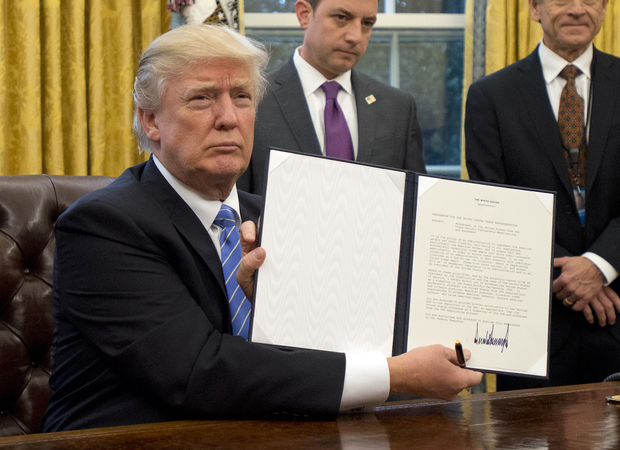
On Monday, on his first full working day as president, Donald Trump officially withdrew the United States from the Trans-Pacific Partnership (TPP), a 12-nation trade pact that did not include China and did not have the votes to pass Congress. What kinds of opportunities does U.S. withdrawal create for China to build a Beijing-led regional trade architecture? What will it look like? What challenges will China face in doing so? What changes can we expect in Asia as China assumes a larger role in shaping trade rules?

Charlene Barshefsky

Ambassador Charlene Barshefsky is Senior International Partner at WilmerHale and is one of the most influential lawyers in the U.S. She advises multinationals and private equity firms on their global market access, investment, and acquisition strategies, is a member of the Council on Foreign Relations, and served in president Bill Clinton’s Cabinet as the U.S. Trade Representative, chief trade policymaker, and trade negotiator. Among the agreements negotiated by her were China’s historic WTO agreement, and landmark global agreements in financial services, telecommunications, technology products, and cyberspace.

As Trump Stresses ‘America First,’ China Plays the World Leader

China is calmly mapping out global leadership aspirations from trade to climate change, drawing distinctions between President Xi Jinping’s steady hand and new U.S. President Donald Trump