


How China’s Liberals Are Feeling the Trump Effect
on January 20, 2017
With the presidential election of Donald Trump, a man whose grasp of both democratic concepts and ethical norms is questionable, we have been forced to ask some hard new questions
With the presidential election of Donald Trump, a man whose grasp of both democratic concepts and ethical norms is questionable, we have been forced to ask some hard new questions
Taiwanese delegation will attend new president’s swearing-in, prompting Beijing to warn it could ‘disturb or undermine Sino-U.S. relations’
Edward Wong became a reporter for The New York Times in 1999. He covered the Iraq war from Baghdad from 2003 to 2007, and then moved to Beijing in 2008. He has written about a wide range of subjects in China for the Times, and became its Beijing bureau chief in 2014.
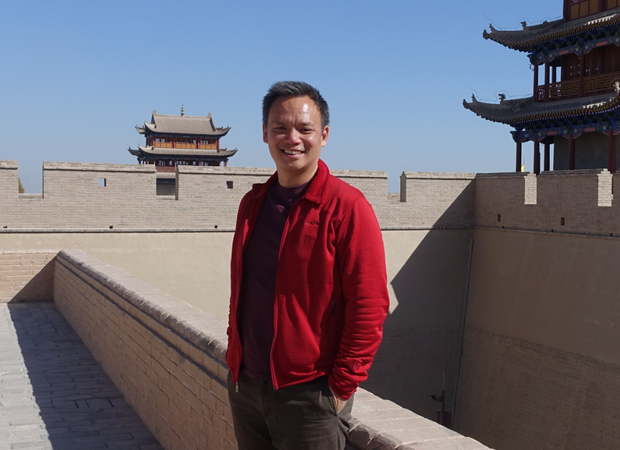
Andrew Mertha (PhD University of Michigan, 2001) is professor of Government at Cornell University and the president of the Center for Khmer Studies (CKS).
He specializes in China and Cambodia, particularly on bureaucratic politics, political institutions, and the policy process. He currently also serves as an adviser to Cornell’s China Asia Pacific Studies (CAPS) Program and is a core faculty member in Cornell’s East Asia (EAP) and Southeast (SEAP) programs. In 2008, Mertha was invited to join the National Committee on U.S.-China Relations’ second iteration of the Public Intellectuals Program.
Mertha has written three books, The Politics of Piracy: Intellectual Property in Contemporary China (Cornell University Press, 2005), China’s Water Warriors: Citizen Action and Policy Change (Cornell, 2008), and Brothers in Arms: Chinese Aid to the Khmer Rouge, 1975-1979 (Cornell, 2014). He has articles appearing in The China Quarterly, Comparative Politics, International Organization, Issues & Studies, CrossCurrents, and Orbis. He has also contributed chapters to the following edited volumes: Engaging the Law in China: State, Society and Possibilities for Justice (edited by Neil Diamant, Stanley Lubman, and Kevin O’Brien, Stanford University Press, 2005); China’s Foreign Trade Policy: the New Constituencies (edited by Ka Zeng, Routledge, 2007); and State and Society in 21st Century China, 2nd Edition (edited by Peter Gries and Stanley Rosen, Routledge, 2010). His edited volume, May Ebihara’s Svay: A Cambodian Village, with an Introduction by Judy Ledgerwood (Cornell University Press/Cornell Southeast Asia Program Press) will be published in 2017.
Mertha’s current research focuses on the last two decades of Khmer Rouge governance, from 1979 to 1999, after they had been toppled by the Vietnamese and returned to the jungles of Cambodia.
Mertha has provided public testimony for the U.S.-China Economic and Security Review Commission, briefed the Congressional-Executive Commission on China, and has accompanied a US congressional staff delegation to Beijing, Xinjiang, and Shanghai to discuss issues of terrorism and narcotics trafficking. He has appeared on National Public Radio, the British Broadcasting Corporation, and Voice of America. Mertha’s comments have appeared in the Washington Post, the International Herald Tribune, the Wall Street Journal, the Associated Press, the Los Angeles Times, BusinessWeek, the San Francisco Chronicle, and the Cambodia Daily.
Mertha is on the Editorial Committee for the Journal of Comparative Politics, The China Quarterly, and Asian Survey.
On January 11, during his confirmation hearing before the Senate Foreign Relations Committee, U.S.
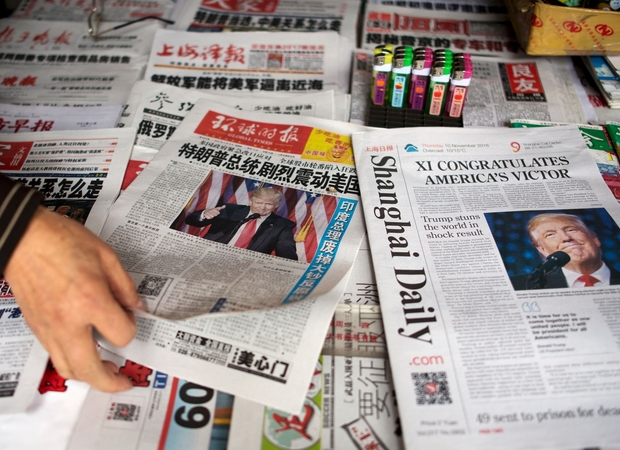
Billionaire investor Wilbur Ross, U.S. President-elect Donald Trump’s choice for commerce secretary, voiced sharp criticism of China’s trade practices on Wednesday
China loomed large in the US senate’s confirmation hearing today of Wilbur Ross for commerce secretary.
A brash new U.S. president is on a collision course with a Chinese leader bent on consolidating power.
Last month, as China encountered some of its worst pollution yet, artists in Chengdu did something bold: They put smog-filtering cotton masks over the faces of statues representing ordinary urbanites that dot a centrally located shopping street.