


Contact
on March 11, 2017
ChinaFile is published by Asia Society, located at: 725 Park Ave., New York NY 10021
ChinaFile is published by Asia Society, located at: 725 Park Ave., New York NY 10021
ChinaFile is an online magazine published by the Asia Society, dedicated to promoting an informed, nuanced, and vibrant public conversation about China, in the U.S. and around the world.
Sheena Chestnut Greitens is Associate Professor at the LBJ School of Public Affairs at the University of Texas at Austin, where she directs UT’s Asia Policy Program, a joint initiative of the Clements Center for National Security and the Strauss Center for International Security and Law. She is also concurrently a Jeane Kirkpatrick Visiting Fellow at the American Enterprise Institute (AEI).
Chestnut Greitens’ work focuses on national security, East Asia, and authoritarian politics and foreign policy. Her first book, Dictators and their Secret Police: Coercive Institutions and State Violence (Cambridge, 2016) received multiple academic awards. Her second book, on authoritarianism, security, and diaspora politics, focuses on North Korea (Cambridge University Press, Elements Series in East Asia, forthcoming 2023). She is currently finishing her third book manuscript, which examines how internal security concerns shape Chinese grand strategy.
Chestnut Greitens’ work has appeared in academic journals and edited volumes in English, Chinese, and Korean, and in major media outlets. She regularly testifies to Congress and briefs policymakers on issues related to authoritarianism and security in the Indo-Pacific. She received a Ph.D. from Harvard University; an M.Phil from Oxford University, where she studied as a Marshall Scholar; and a Bachelor’s degree from Stanford University.
Jane Perlez has been a reporter at The New York Times since 1981. She won a Pulitzer Prize in 2009 for coverage of the war against the Taliban and al Qaeda in Pakistan and Afghanistan. She has reported on wars, diplomacy, and foreign policy from Somalia to Poland to Indonesia. Since moving to Beijing in 2012, she’s written about everything from China’s space program to the Dixie Mission—the group of Americans sent to Mao Zedong’s revolutionary base at Yan’an who hoped to establish good relations between the U.S. and the soon-to-be-victorious Chinese communists. Last year, she took over from Edward Wong to become The Times’s Beijing bureau chief.
Much of Perlez’s reporting has focused on China’s foreign policy, particularly its relations with the United States and its Asian neighbors. So she is the ideal interpreter as we try to understand Chinese foreign relations in a new age of uncertainty. Goldkorn interviewed Perlez in front of a live audience at the Beijing Bookworm for this podcast.
Paul Stronski is a senior fellow in Carnegie’s Russia and Eurasia Program, where his research focuses on the relationship between Russia and neighboring countries in Central Asia and the South Caucasus.
Until January 2015, Stronski served as a senior analyst for Russian domestic politics in the U.S. State Department’s Bureau of Intelligence and Research. He was Director for Russia and Central Asia on the U.S. National Security Council Staff from 2012 to 2014, where he supported the president, the national security advisor, and other senior U.S. officials on the development and coordination of policy toward Russia. Before that, he worked as a State Department analyst on Russia from 2011 to 2012, and on Armenia and Azerbaijan from 2007 to 2010. A former career U.S. foreign service officer, Stronski served in Hong Kong from 2005 to 2007.
Stronski has taught history and post-Soviet affairs at Stanford, George Mason, and George Washington universities. Prior to his government service, he worked on a USAID-sponsored technical assistance project for the healthcare sector in Central Asia.
Stronski is the author of Tashkent: Forging a Soviet City, 1930-1966 (University of Pittsburgh Press, 2010), which won the 2011 Central Eurasian Studies Society Book Award for History and the Humanities. Since the mid-1990s, he has undertaken extensive research and work experience in Russia, Uzbekistan, Kazakhstan, and Armenia.
Andrew S. Weiss is Vice President for Studies at the Carnegie Endowment for International Peace, where he oversees research in Washington and Moscow on Russia and Eurasia.
Prior to joining Carnegie, he was Director of the RAND Corporation’s Center for Russia and Eurasia and Executive Director of the RAND Business Leaders Forum.
Weiss’ career has spanned both the public and private sectors. He previously served as Director for Russian, Ukrainian, and Eurasian Affairs on the National Security Council staff, as a member of the State Department’s Policy Planning Staff, and as a policy assistant in the Office of the Under Secretary of Defense for Policy during the administrations of Presidents Bill Clinton and George H. W. Bush.
Before joining RAND, Weiss was a Vice President and investment strategist at American International Group, Inc. subsidiary companies, where he worked primarily on global commodities, energy, and foreign exchange markets.
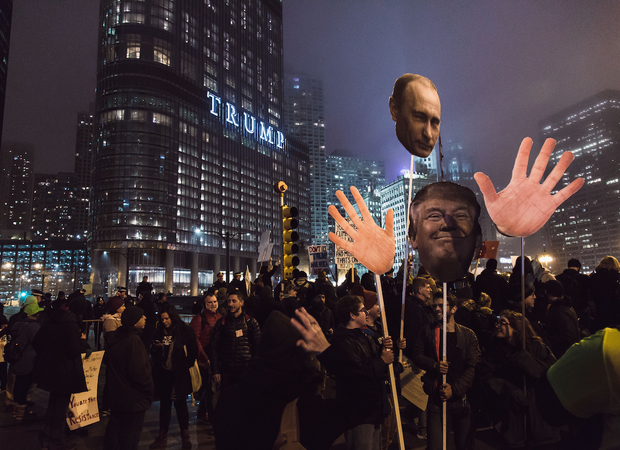
The Trump administration has spurred a debate in the United States on how to best manage the complex bilateral relationship with Russia. Paul Haenle sat down with Carnegie scholars Andrew Weiss, Paul Stronski, and Alexander Gabuev on the sidelines of the Carnegie Global Dialogue Series to discuss the implications that changes made in the Trump administration’s policies toward Russia and China may have on China-Russia relations.
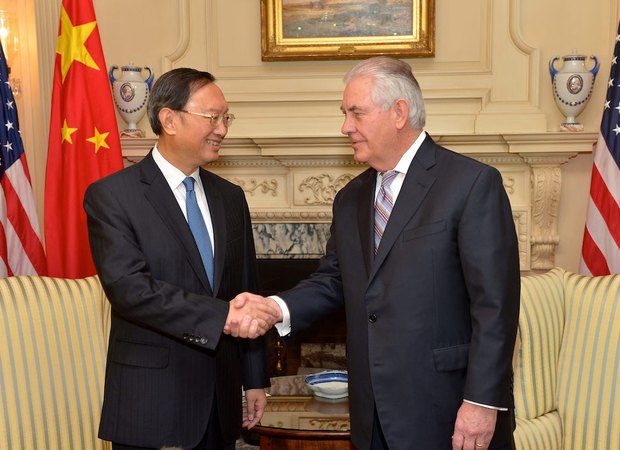
The United States rebuffed a proposal from China to “apply the brakes” to an escalating standoff with North Korea, saying “positive action” was required before either country would engage with “irresponsible” leader Kim Jong Un.
China expressed concern on Thursday over revelations in a trove of data released by Wikileaks purporting to show that the CIA can hack all manner of devices, including those made by Chinese companies.
A wave of anti-South Korean sentiment has broken out across China after the South’s embrace of an American missile defense system that China says can be used to spy on its territory.