David Rank

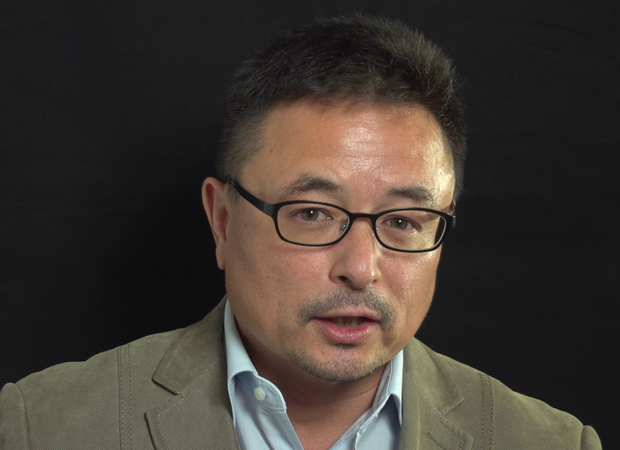
David Rank spent 27 years as a State Department Foreign Service Officer, including his final assignment as Deputy Chief of Mission and, following the 2016 election, as the Chargé d’Affaires (Acting Ambassador) at the U.S. Embassy in Beijing. In addition to six Foreign Service assignments in greater China (three in Beijing, two at the American Institute in Taiwan, and one at the U.S. Consulate General in Shanghai), Rank served at the U.S. embassies in Kabul, Athens, and Port Louis (Mauritius). His domestic assignments included jobs as Director of the State’s Office of Afghanistan Affairs, Senior Advisor to the Special Representative for Afghanistan and Pakistan (SRAP), Special Assistant to the Under Secretary of State for Political Affairs, and Korea desk officer. From 2012-2013, he was a Dean and Virginia Rusk Fellow at Georgetown University’s Institute for the Study of Diplomacy. In 2015, he received the State Department’s Distinguished Honor Award for his role in the release of the only American servicemember held by the enemy in Afghanistan. He is also the recipient of the American Foreign Service Association’s Sinclaire Award for the study of languages and their related cultures. Rank speaks Mandarin, French, Dari, and Greek.
No Wall Too High

“It was impossible. All of China was a prison in those days.”

Mao Zedong’s labor reform camps, known as the laogai, were notoriously brutal. Modeled on the Soviet Gulag, they subjected their inmates to backbreaking labor, malnutrition, and vindictive wardens. They were thought to be impossible to escape—but one man did.

Xu Hongci was a bright young student at the Shanghai No. 1 Medical College, spending his days studying to be a professor and going to the movies with his girlfriend. He was also an idealistic and loyal member of the Communist Party and was generally liked and well respected. But when Mao delivered his famous February 1957 speech inviting “a hundred schools of thought [to] contend,” an earnest Xu Hongci responded by posting a criticism of the Party—a near-fatal misstep. He soon found himself a victim of the Anti-Rightist Campaign, condemned to spend the next 14 years in the laogai.

Xu Hongci became one of the roughly 550,000 Chinese unjustly imprisoned after the spring of 1957, and despite the horrific conditions and terrible odds, he was determined to escape. He failed three times before finally succeeding, in 1972, in what was an amazing and arduous triumph.

Originally published in Hong Kong, Xu Hongci’s remarkable memoir recounts his life from childhood through his final prison break. After discovering his story in a Hong Kong library, the journalist Erling Hoh tracked down the original manuscript and compiled this condensed translation, which includes background on this turbulent period, an epilogue that follows Xu Hongci up to his death, and Xu Hongci’s own drawings and maps. Both a historical narrative and an exhilarating prison-break thriller, No Wall Too High tells the unique story of a man who insisted on freedom—even under the most treacherous circumstances. —Farrar, Straus and Giroux

Milton Leal

Milton Leal is a Brazilian journalist and film producer. Since 2015, he has been covering the relationship between China and Latin America, with a special focus on environment, trade, and infrastructure projects. He has written several articles for chinadialogue and Diálogo Chino. He also writes about the global development of blockchain and cryptocurrency markets. With over 10 years experience in the Brazilian energy sector, Leal recently wrote a book on the wholesale electricity market. He has independently produced two full-length documentaries, one following a two-month trip to the Amazon.

Is China Building Too Many Airports?

Over the next three years, local authorities in China are planning to build more than 900 airports for general aviation—the segment of the industry that includes crop dusting and tourism. The figure is nearly double the central government’s goal of “more than 500” over the period.

A news report has warned that’s just too many airports.

In May 2016, the State Council, China’s cabinet, announced that the country wanted to construct more than 500 general aviation airports to boost the size of the industry to over 1 trillion yuan (U.S.$146 billion).