How Big a Deal Are Guo Wengui’s Allegations?

A ChinaFile Conversation

In a months-long barrage of mudslinging via Twitter and theatrical online videos, Chinese real estate billionaire Guo Wengui has alleged corruption at the highest levels in the Chinese Communist Party—some of which appear to be accurate, some as yet unproven and some plainly spurious. He is living in opulent, self-imposed exile in a lavish apartment in the Sherry Netherland hotel in New York City. Recently he has alleged corruption and secrets in the family of Wang Qishan, a key alley of President Xi Jinping, and the man in charge of Xi’s massive anti-corruption campaign.

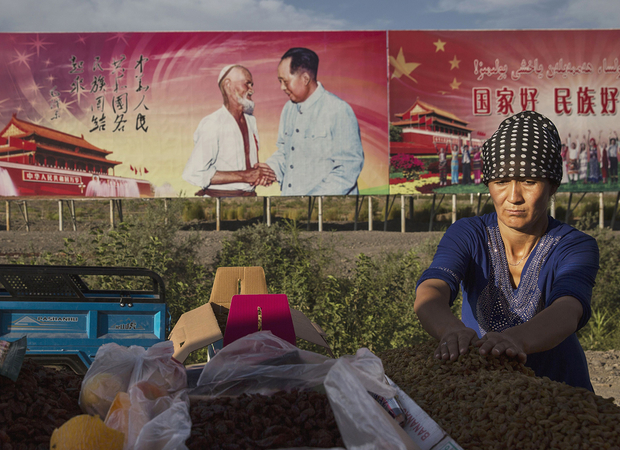
Islamophobia in China, Explained

A Sinica Podcast

Islamophobia isn’t a phenomenon limited to Trump’s America or the Europe of Brexit and Marine Le Pen. It has taken root in China, too—in a form that bears a striking resemblance to what we’ve seen in recent years in the West. The Chinese Party-state now faces a vexing conundrum: how to balance, on the one hand, its idea of China as a multiethnic state and to prevent overt anti-Muslim sentiment with, on the other hand, its commitment to atheism—all the while combating the “three evils” of terrorism, separatism, and religious extremism.

Yu-Hua Chen

Yu-Hua Chen is an Assistant Professor in China Studies at the Global Studies Program of Akita International University (AIU), Japan. Chen graduated from the Australian National University (ANU). His research interests include China’s foreign and security policy, history of modern China, international relations theory, foreign policy of Taiwan, and geopolitics.

Prior to teaching at AIU, Chen was a visiting fellow at George Washington University, a lecturer at the ANU, an assistant at Academia Sinica, and a Second Lieutenant in Taiwan. His current research is centered around topics related to “rivalry with China.”