Ge Yulu

Ge Yulu was born in 1990 in Wuhan, Hubei. He received a Bachelor’s degree in Visual Media Art from Hubei Institute of Fine Art in 2013, and Master’s degree in Experimental Art from China Central Academy of Fine Arts (CAFA) in 2017. He now works and lives in Beijing and Wuhan. Most of his artworks are about individuals’ resistance in public space. He intends to motivate discussion on related topics by practicing extreme performance, and to evoke the public’s participation by creating interference.

Ge’s works have been exhibited in Luo Zhongli Art Gallery, Yudian Gallery, and CAFA Art Museum.
Amid NSA Ajit Doval’s Visit, Anti-War Sentiments Take Root in China

National Security Adviser (NSA) Ajit Doval has commenced his visit to China, outside the glare of media, amid public calls by Chinese authorities seeking unilateral withdrawal of Indian troops engaged in a tense standoff with Chinese forces, from the Doklam plateau.

What If Trump Ordered a Nuclear Strike on China? I’d Comply, Says Admiral

The commander of the United States Pacific Fleet was asked a hypothetical question during a talk on Thursday in Australia: If President Trump ordered a nuclear strike on China, would he comply? “The answer would be yes,” the commander, Adm. Scott H. Swift, replied.

Why Justin Bieber Got Banned from Performing in China

The Beijing Municipal Bureau of Culture issued an injunction against the twenty-three-year-old pop star, Justin Bieber, who was in the middle of a global tour, prohibiting him from performing in China. (On Monday, Bieber announced that he was cutting his tour short.) “Justin Bieber is a gifted singer,” the bureau acknowledged, in a statement released on July 21st. “But in order to maintain order in the Chinese market and purify the Chinese performance environment, it is not suitable to bring in badly behaved entertainers.”

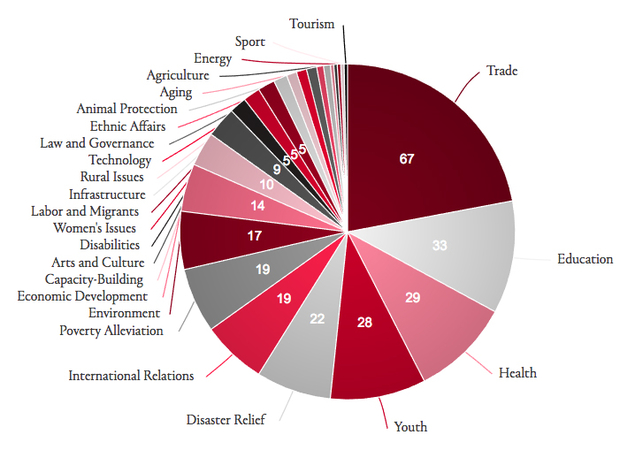
Analysis on the First Six Months of the Foreign NGO Law

Contributor Tee Zhuo has done a deep dive on the statistics provided by the Ministry of Public Security for the six first months of Foreign NGO Law implementation. Among his findings are that representative offices tend to skew toward trade with regard to their field of work, and that temporary activities are dominated by Hong Kong-based NGOs. The full analysis is available here.