U.S. Considered Blacklisting Two Chinese Banks over North Korea Ties

U.S. officials alarmed by public displays of Pyongyang’s nuclear and missile technology last summer considered taking the provocative step of blacklisting two of China’s biggest banks from the U.S. financial system for doing business with North Korea, three people familiar with the matter said.

Regina Wai-man Chung

Regina Wai-man Chung is a Research Assistant at the Journalism and Media Studies Centre at the University of Hong Kong. Her research focuses on journalism and media, gender, development, and global politics. She was also a documentary researcher, humanitarian aid worker, and journalist.

Guangdong Gives Awards to Foreign NGOs

As reported by Chinanews.com, on March 26 the Guangdong Public Security Bureau (PSB) Foreign NGO Management Office gave six foreign NGOs a “2017 Exceptional Representative Office Award.” These foreign NGOs were: The Chinese General Chamber of Commerce (Hong Kong), The Federation of Hong Kong Industries, Tin Ka Ping Foundation (Hong Kong), Taiwan Trade Center, Canada-China Children’s Health Foundation, and Delegations of German Industry & Commerce.

Putin’s Fourth Term

A China in the World Podcast

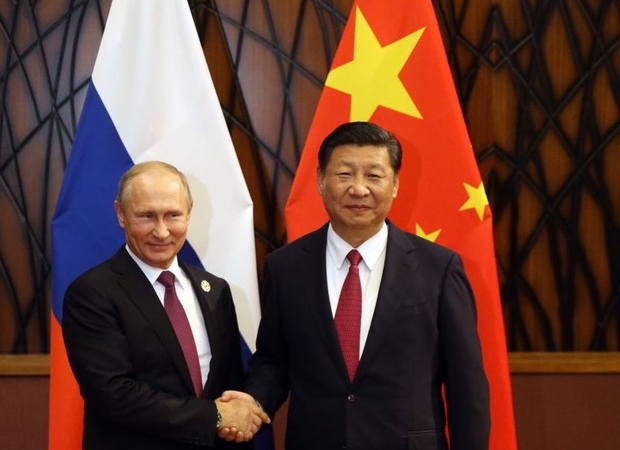
Vladimir Putin was elected to his fourth term as president of Russia on March 18, 2018. His continued leadership has important implications for the international community, including China.

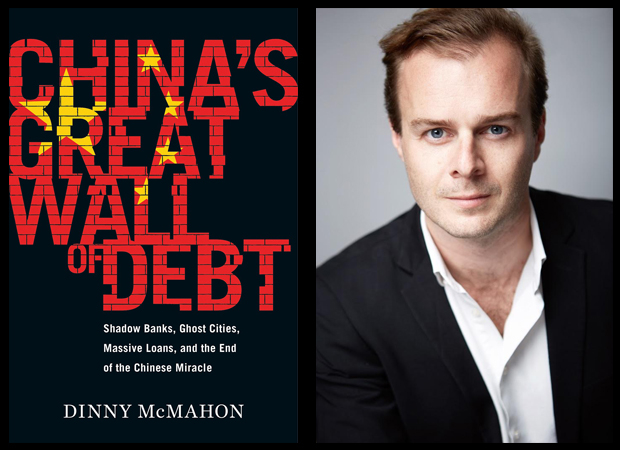
China’s Great Wall of Debt

Houghton Mifflin Harcourt: Over the course of a decade spent reporting on the ground in China as a financial journalist, Dinny McMahon gradually came to the conclusion that the widely held belief in China’s inevitable economic ascent is dangerously wrong.

In this unprecedented deep dive, McMahon shows how, lurking behind the illusion of prosperity, China’s economic growth has been built on a staggering mountain of debt. While stories of newly built but empty cities, white elephant state projects, and a byzantine shadow banking system have all become a regular fixture in the press in recent years, McMahon goes beyond the headlines to explain how such waste has been allowed to flourish, and why one of the most powerful governments in the world has been at a loss to stop it.

Through the stories of ordinary Chinese citizens, McMahon tries to make sense of the unique—and often bizarre—mechanics of the Chinese economy, whether it be the state’s addiction to appropriating land from poor farmers, why a Chinese entrepreneur decided it was cheaper to move his yarn factory to South Carolina, why ambitious Chinese mayors build ghost cities, or why the Chinese bureaucracy was able to stare down Beijing’s attempts to break up the state’s pointless monopoly over the distribution of table salt.

Debt, entrenched vested interests, a frenzy of speculation, and an aging population are all pushing China toward an economic reckoning. China’s Great Wall of Debt unravels an incredibly complex and opaque economy, one whose fortunes—for better or worse—will shape the globe like never before.

Book Review: 

The Economist (March 22, 2018)

Mara Hvistendahl, The Wall Street Journal (March 13, 2018)

Edward Chancellor, Reuters (March 9, 2018)

Kirkus Reviews (January 9, 2018)

James Kidd, South China Morning Post (January 4, 2018)

Related Reading:

China’s Ghost Cities and Their Multibillion-Dollar Debt Are Raising Concerns,” Dinny McMahon, Australian Financial Review, April 6, 2018

China’s Zombie Firms Can’t Lurch Forever,” Dinny McMahon, Foreign Policy, March 14, 2018

Lavender-Filled Teddy Bears from Tasmania Are a Big Hit in China,” Dinny McMahon, The Wall Street Journal, April 9, 2014

Is China a Financial Paper Tiger?,” Public Affairs Council, March 2018

Author’s Recommendations:

Stealing the State: Control and Collapse in Soviet Institutions, Steven Solnick (Harvard, 1998)

How States Fail: The Origins of Power, Prosperity, and Poverty, Daron Acemoglu and James Robinson (Chicago, 2012)

Fragile by Design: The Political Origins of Banking Crises and Scare Credit, Charles Calomiris and Stephen Haber (Princeton, 2014)

Margaret E. Roberts

Margaret (Molly) Roberts is an Assistant Professor at the University of California, San Diego. Her research branches the intersection of political methodology and the politics of information, with a specific focus on methods of automated content analysis and the politics of censorship in China. She received a Ph.D. from Harvard in Government (2014), M.S. in Statistics from Stanford (2009), and B.A. in International Relations and Economics (2009). Her forthcoming book, Censored: Distraction and Diversion Inside China’s Great Firewall, explores the impact of censorship on information access among Chinese citizens. Her work has appeared in venues such as the American Journal of Political Science, American Political Science Review, Political Analysis, and Science.

China’s Communist Party Takes (Even More) Control of the Media

A ChinaFile Conversation

China’s Communist Party made moves last month to solidify and formalize its (already substantial) control over the country’s media. China’s main state-run broadcasters are to be consolidated into a massive new “Voice of China” under the management of the Party’s Central Propaganda Department. The department—which, several years ago, the Party began calling its “publicity department” in English—will also now have direct control over the regulation of film, radio, television, book publishing, Internet, and the news media, rather than exercising that control in part through government (as opposed to Party) organs charged with the same mission. What will this change achieve practically? Why is it happening? Is it the result of confidence on the part of China’s leaders, or paranoia? And how is formalizing the Party’s role as chief censor likely to effect the Chinese leadership’s reputation at home and overseas?