How Can My NGO Operate Before It Finds a Professional Supervisory Unit?

The Ministry of Public Security (MPS) has not offered formal guidance on this point, though it is becoming more pressing for NGOs who have been unable to obtain sponsorship from unresponsive Professional Supervisory Units (PSUs). Several NGOs have told The China NGO Project that public security officials seem to appreciate the challenges for foreign NGOs seeking a PSU, and that the NGOs themselves feel reasonably secure as long as they are making a good-faith effort to engage in the registration process and are not actively carrying out activities. However, it is still unclear how long the MPS will allow foreign NGOs to continue maintaining offices in China without formally registering or how foreign NGO expatriate employees will be able to obtain visa renewals if they do not have a “host organization” to provide an invitation letter.

New Temporary Activity Analysis from China Development Brief

A recent report from China Development Brief (CDB) discusses how some foreign NGOs are choosing to carry out multiple, long-term temporary activities as an alternative to registering for a representative office. Pointing to a decline in the number of new representative offices from 2017 to 2018, and to the increase in new temporary activity filings over the same time period, CDB suggests that many foreign NGOs prefer to file for temporary activities because of its simpler administrative process. CDB notes that even some foreign NGOs that have already established representative offices also use the temporary activity mechanism. This can be because they want to conduct activities outside of their designated area of operations, or because the temporary activity mechanism allows for a greater degree of flexibility.

Thanks to the PSB in Tianjin, a New Registration in Zhejiang, and Youth Exchanges in the Greater Bay Area

Ministry of Public Security WeChat Posts—May 15, 2019

Recently, the Zhejiang PSB Foreign NGO Management Office issued a registration certificate to the China-Africa Chamber of Commerce representative office in Huzhou. The PSB congratulated the China-Africa Chamber of Commerce and pledged to continue strengthening management services, to ensure the organization’s ability to carry out activities that promote China-Africa economic and cultural exchange as well as activities relating to trade and investment. At the same time, the PSB expressed its hope that the NGO will actively strengthen communication with its professional supervisory unit, conduct activities in accordance with the law under the framework of the foreign NGO law, aid in the Belt and Road Initiative, and help to build friendship between Africa and China. The China-Africa Chamber of Commerce thanked the PSB for its service and guidance, pledging to thoroughly fulfill its duties in accordance with the law, build a platform for cooperation between China and Africa, and actively promote economic exchange to achieve win-win results.

New Report on Youth Activists in China

The China Youth Activists Development Concern Group (中国青年行动者发展关注组) recently released a report detailing the obstacles facing young Chinese who are involved in socially progressive, non-governmental organizations. The report, “Report on Current Situation Facing Chinese Youth Activists,” relies on in-person interviews with 36 youth activists conducted in March 2018, and it focuses on “activists who had already experienced some form of suppression.” The authors find that most youth activists are involved in organizations with progressive agendas focusing on issues of social inequality, including labor rights, environmental justice, gender equality, and disabilities. They also find that young activists typically become involved with social organizations through personal experience with inequality, such as mistreatment or illness of friends or family members, or through school-related activities.

Is Hong Kong Forgetting to Remember June Fourth?

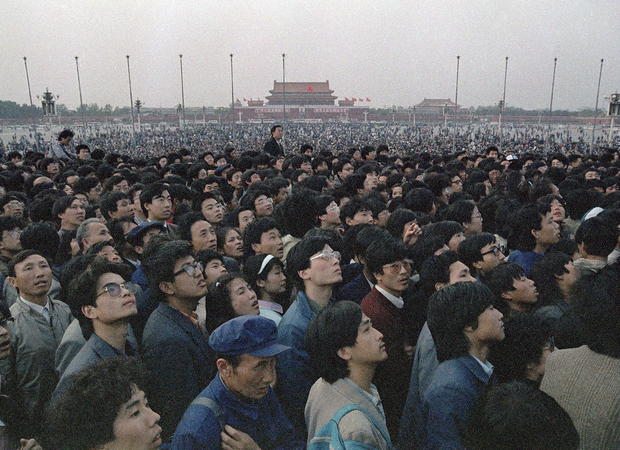
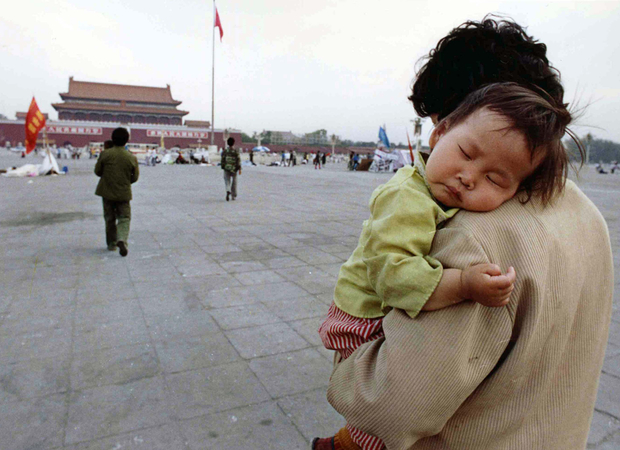
In sharp contrast to anywhere else in China, Hong Kong has stood as a steadfast stronghold of remembrance of the massacre, protected by the territory’s political system that guarantees freedoms of assembly and expression. Every June 4, the commemorative vigil in the city’s Victoria Park strikes a defiant stance against the Chinese Communist Party’s official oblivion. But now, 30 years on, Hong Kong’s struggle in keeping the memory alive is more difficult than at any time since the former British colony was retroceded to Chinese control in 1997, giving rise to the possibility that Beijing may finally succeed in snuffing out the last reminders of the bloody suppression.

How I Learned About Tiananmen

A ChinaFile Conversation

In April, ChinaFile put out a call for young people who grew up in China to describe how they first learned about the Tiananmen Square protests and massacre, and how they felt about it. Here is a selection of the responses we received, including several from authors who requested their posts be published anonymously.

Six Questions and Four Articles About Tiananmen Square

Why can’t we banish history from our memories? The author Ling Zhijun titled his 2008 exploration of Mao Zedong’s disastrous people’s communes “History No Longer Lingers,” and it sometimes feels counterintuitive that we cannot forget past tragedies and concentrate on a better future. But in the time since People’s Liberation Army soldiers started shooting unarmed students in Beijing 30 years ago, thousands of witnesses, journalists, historians, and commentators have prevented that history from slinking away. In these four intense and moving articles, the authors wrestle with commemorating, understanding, and remembering that fateful time in June.

Santiago Bustelo

Santiago Bustelo is a Ph.D. candidate at Fudan University. He has a Master’s degree in Public Policies, Strategies and Development from the Institute of Economics of the Federal University of Rio de Janeiro, where he conducted research about China under the guidance of Professor Antonio Barros de Castro. His main academic papers focus on development models in Latin America and China from a comparative perspective, with an emphasis on industrial policy and innovation systems.

Bustelo was a researcher at the National Institute of Science and Technology (INCT/PPED, Brazil), focusing on government, varieties of capitalism, and development in emerging countries. He served as Parliamentary Advisor to the National Chamber of Deputies of the Argentine Republic, and worked as Research Coordinator at the China-Brazil Business Council.