


Montargis Train Station
on April 30, 2025
The Montargis Railway Station, in Loiret, France, November 20, 2008.

The Montargis Railway Station, in Loiret, France, November 20, 2008.
Uncle Lusheng and his wife Huayu with their second child in rural Jiangxi, 1963. Congo, their third child, would be born in 1964.

For several generations now, the overriding philosophy of life for many Chinese intellectuals and average citizens has been “mingzhe baoshen,” (明哲保身) which dictionaries define as “a wise man looks after his own hide” or “put one’s own safety before matters of principle” but can be also be rendered more colloquially as “keep your head down, mouth shut, and stay out of trouble.” After decades of political movements that have targeted intellectuals and citizens for speaking out, alternately resulting in criticisms, attacks, imprisonment, re-education, and other forms of persecution, most Chinese people have learned that there is no benefit to protesting, or speaking “truth to power.”

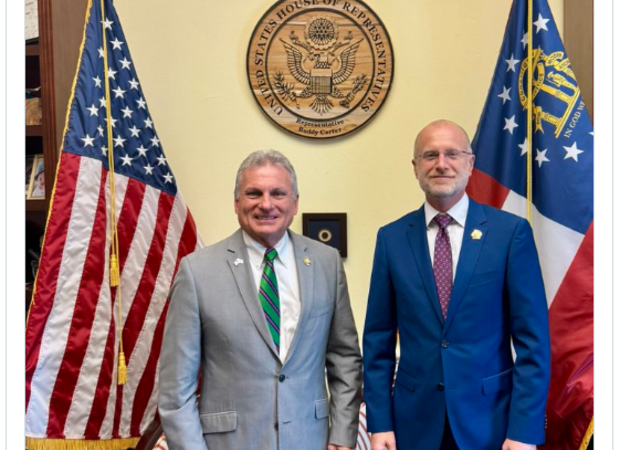
A post on X by U.S. Federal Communications Commission Chairman Brendan Carr, in which he and Representative Buddy Carter wear gold lapel pins in Trump’s image.
Joseph Torigian discusses the life of Xi Jinping’s father, Xi Zhongxun, and how his legacy shapes the worldview of one of the world’s most powerful leaders today. Torigian’s new book, The Party’s Interests Come First: The Life of Xi Zhongxun, Father of Xi Jinping, examines the elder Xi’s role as a revolutionary and early leader in the Chinese Communist Party. The book, due to be published in June, is the first English-language biography of Xi Zhongxun.

Every Friday, at an open air market in the outskirts of Quetta, the mile-high capital of Pakistan’s southwestern Balochistan province, locals gather to buy and sell donkeys. For generations, these animals have been the primary means of transporting goods and people. Donkey carts have remained a popular form of transportation for Pakistan’s poorest people, even as motorbikes, cars, trucks, and buses have clogged up the streets of Pakistani cities. Now there’s a new buyer for Quetta’s donkeys—and it’s not the men who drive donkey carts.

When it comes to China, there are several different factions pushing the Trump Administration in different directions: MAGA nationalists who favor economic, cultural, and possibly military warfare against China; more old-fashioned Republicans who simply distrust the Chinese Communist Party; and the tech elite, especially Trump advisor Elon Musk, who has huge investments in China and doesn’t seem to want cross-Pacific tensions. Trump himself has not said much about China since January 20, but he has taken several steps towards a trade war with China:

Many observers argue that the first Trump administration played an important role in consolidating a bipartisan U.S. “consensus” on China, the core element of which is a judgment that Beijing is Washington’s foremost strategic competitor. Documents such as the 2017 national security strategy and speeches by prominent officials—most notably one by former Secretary of State Mike Pompeo in July 2020—argued that erstwhile China policy had failed, framed China in explicitly adversarial terms, and depicted Chinese President Xi Jinping as a Marxist-Leninist autocrat with pretensions to global hegemony. Ironically, though, the most prominent dissenter from this putative understanding may well be the individual whom one might expect to be its strongest exponent: the past and current U.S. president, Donald Trump.

Andrew Polk is the co-founder and head of economic research at Trivium China, a Beijing-based strategic advisory firm. Before founding Trivium, Polk was China director at Medley Global Advisors, where he advised asset managers and hedge funds on developments in China's economy and financial markets. Previously, Mr. Polk was the resident China economist at The Conference Board's China Center for Economics and Business, where he conducted economic analysis on the Chinese economy for corporate clients. Polk is the co-author of The Long, Soft Fall in Chinese Growth (The Conference Board, 2015) and maintains a deep network of professional contacts in the official, academic, and business communities in China—built over a decade of living in China and working on China issues.
On March 11, ChinaFile and the Center for China Analysis (CCA) hosted a conversation between Julian Gewirtz, a historian, China expert, and former senior director for China and Taiwan Affairs at the National Security Council under President Joe Biden, and ChinaFile Editor-in-Chief and CCA Senior Fellow Susan Jakes, about the future landscape of U.S.-China relations under the new U.S. administration. They discussed the Trump administration’s plans to overturn the norms and institutions that have underpinned U.S. foreign policy for decades and helped prevent a fraught relationship from escalating into armed conflict, and how these plans could influence U.S.-China relations. They also delved into what this means for President Xi Jinping’s ambitions for China, how he perceives the opportunities and challenges facing the country, how he interprets changes in U.S. policy, and how it may affect his calculus on China’s domestic and foreign affairs toward the United States in the coming months.
