


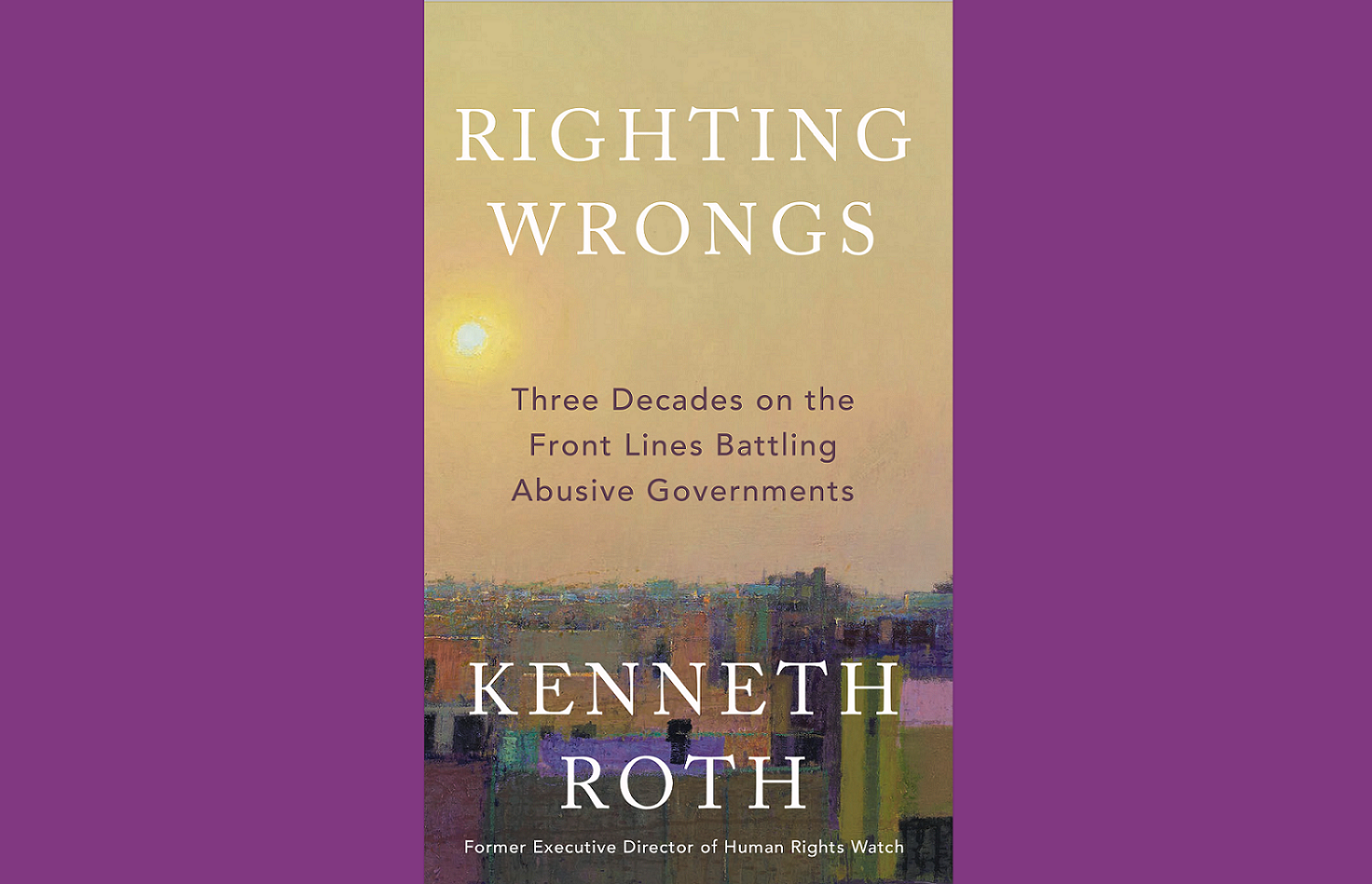
There is no greater challenge for the human rights movement than China. No government surpasses Beijing in the combination of its repression at home and its determination to silence critics abroad. And no other government makes so concerted an effort to undermine the international human rights standards and institutions that might hold it to account, dedicating to the task significant proceeds from the world’s second largest economy.
Yet my decades of experience addressing the issue show that even the Chinese government feels the heat from pressure to respect human rights. That is reason to persist.
Beijing’s repression is well documented: its crushing of Hong Kong’s freedoms, its severe restrictions on traditional and social media, its arbitrary detention and even torture of dissidents, and its determination to forcibly assimilate non-Han minorities, foremost Tibetans and Uyghurs. Its efforts to suppress any inkling of independence among Uyghurs has led to highly intrusive surveillance, the detention of an estimated one million among a population of 11 million, and the widespread use of forced labor.
Less appreciated is Beijing’s susceptibility to human rights pressure. That vulnerability begins with its implicit claim that free and fair elections are unnecessary because people in China are happy with rule by the Chinese Communist Party (CCP). That claim is premised on the tremendous economic progress that the Party has overseen and on the social stability that it contends it provides, even if the starting point for measuring progress is typically the disastrous Cultural Revolution, which was also the product of CCP rule.
Hundreds of millions of Chinese have indeed become middle class, with greater freedom than in the earlier days of Communist rule to own property and start businesses. But large parts of the population in rural areas are still impoverished, with little education, no meaningful prospect for social mobility, and severe restrictions on their ability to live where they want (due to the hukou system). Moreover, much of China’s economic growth is due less to the guidance of the Party—state-run enterprises are notoriously inefficient—than to the energy and hard work of the Chinese people once the government allowed private enterprise to flourish.
Today, many aspects of CCP rule seem to impede economic growth. China’s leader, Xi Jinping, has prioritized fending off any perceived threat to his power over building the economy, whether by quashing elements of the tech sector or distrusting consumers to spend wisely despite the diminishing returns of government-led infrastructure investment. And perhaps the biggest obstacle to China’s continued growth is its aging, shrinking population, a demographic echo of the many years of the Party’s one-child policy. CCP policies have also led to a bloated real-estate sector mired in debt, and to inadequate investment in healthcare and other social services which makes consumers feel compelled to save for a rainy day rather than spend.
This mixed record lies behind Beijing’s hostility to scrutiny of its human rights record. Predictably, acceptance of civil and political rights such as unfettered debate, let alone free and fair elections, is out of the question in Xi’s China because it would jeopardize the Party’s dictatorship. Yet surprisingly, Xi also rejects scrutiny of his policies as a matter of economic and social rights.
Although China has acceded to the treaty upholding those rights—the International Covenant on Economic, Social and Cultural Rights—Beijing does not want to be asked whether it is conscientiously allocating available resources to meet the basic needs of all segments of society, as the treaty requires. That would invite awkward questions about the fate of Uyghurs, Tibetans, and even Han Chinese in poor rural areas. It would also raise questions about the government’s enormous expenditures on surveillance and repression when so many people in China are struggling to make ends meet.
Nor does Beijing want people asking why China’s social safety net is so porous or why social benefits such as schooling, healthcare, and pensions are allocated according to where a person was born rather than their income or needs.
In short, Xi’s government is trying to redefine what human rights mean. It would limit its obligations to its ability to expand the economy, provide social stability (meaning repression), and promote vague, easily manipulated concepts such as “happiness.” By according no place for the internationally endorsed concept of individual rights as a check on collective power, it would eviscerate what human rights are all about.
Because most people in China have no possibility of publicly disagreeing with the dictatorship-for-growth imposition—dissent in China is a sure route to prison—the CCP can pretend that its rule has public support. To ensure that deception, it has built a vast apparatus for propaganda and domestic censorship.
Hong Kong represented the exception. By coming to the streets in the hundreds of thousands in 2019-2020 to stand for democracy, the people of Hong Kong showed they had no interest in accepting Communist Party dictatorship. That embarrassing, highly visible contradiction of the Party’s claim of public support pushed Beijing to eliminate Hong Kong’s freedoms.
The people of Taiwan, the other part of “China” where freedom of expression prevails, are no more interested in Communist Party rule than their Hong Kong counterparts. That provides Xi a dangerous incentive to subjugate Taiwan.
Taiwan and Hong Kong also pose an economic threat to the Party’s argument for legitimacy. Although per capita gross national income has grown significantly in mainland China, it has grown even faster—and to a considerably higher level—in Taiwan and Hong Kong. Both territories have escaped the “middle-income trap,” which mainland China has not done.
Given the difficulty of convincingly proving that its dictatorship is popular, the Chinese government seems to cultivate an external manifestation of its legitimacy. It works to convince the international community to see it as serving the people of China rather than maintaining power by the barrel of a gun. That way it can argue to people back home (though never explicitly), you may not have elected us, but everyone else accepts us, so you should too.
The government puts enormous effort into countering and suppressing external condemnation of its human-rights record because such censure undermines its efforts to portray itself as widely respected. China’s sensitivity to criticism gives the human-rights movement leverage, but the movement faces a formidable opponent.
* * *
There was once a time when most Western officials professed that trade with China was a human rights policy. That was the rationale offered by President Bill Clinton when in 1994 he delinked China’s human rights record from its Most Favored Nation trading status. Behind his argument for “engagement” was the view that trade with China would expand China’s economy and create a middle class that over time would insist on respect for its human rights. Trade would also require an improved legal system that would gradually extend to non-commercial issues. These propositions conveniently suggested that there was no need to exert pressure on Beijing to improve its human-rights practices.
That view is now widely understood to have been incorrect. To the contrary, much as trade with Russia and the wealth it engendered gave Vladimir Putin more resources to pursue his aggressive autocratic rule and ultimately to invade Ukraine, so trade with China has enabled Xi to strengthen his dictatorship by giving him the financial means to reenforce his rule with legions of security officials and an extensive censorship and surveillance regime.
Moreover, as China’s economy grew, and as more companies and countries believed that their economic welfare depended on their access to the huge Chinese market, Beijing realized, in an ironic twist on the original argument for economic engagement, that it had a powerful weapon to silence human-rights criticism: it could deny access to critics.
That is what it did when it largely stopped purchasing Norwegian salmon because the Nobel Peace Prize had been awarded to Liu Xiaobo in 2010. Never mind that the Nobel committee is a private organization based in Oslo that has nothing to do with the Norwegian government, let alone Norwegian salmon companies. When upon an extradition request from Washington in 2018 the Canadian government detained Meng Wanzhou, the chief financial officer of technology giant Huawei, Beijing blocked the import of Canadian canola and pork products. (It also detained two Canadians in China as hostages.)
Beijing imposed heightened tariffs on key Australian exports when the Australian government pressed in April 2020 for an independent investigation into the origins of the COVID-19 pandemic that broke out in Wuhan in late 2019. Beijing did not want people focusing on the cover-up of human-to-human transmission during the first three weeks of January 2020 while millions of people fled or traveled through Wuhan, which enabled the pandemic to go global. And it certainly did not want anyone exploring whether the virus might have leaked from the Wuhan Institute of Virology, which was collecting and dangerously manipulating wild coronaviruses.
Companies have also been highly vulnerable to Beijing’s retaliation. Most famously, China’s media platforms suspended broadcasts of National Basketball Association games after Daryl Morey, then the general manager of the Houston Rockets, tweeted his support for pro-democracy protesters in Hong Kong in 2019. NBA broadcasts in China were worth hundreds of millions of dollars a year. Beijing placed the American retailer PVH, owner of the Calvin Klein and Tommy Hilfiger brands, on the “unreliable entities” list for having taken steps to avoid use of cotton produced by Uyghur forced labor in Xinjiang.
Chinese censorship has become a global threat. Companies abiding by censorship restrictions when operating inside China now increasingly impose that censorship on their employees and customers around the world. Meta, the parent company of Facebook and Instagram, said the Hong Kong government was responsible for 50 instances between July 2020 and June 2022 in which the company removed content globally.
* * *
Because the Chinese government is so willing to retaliate economically against critics, few governments dare to criticize Beijing. That poses a serious problem for human rights advocacy, because a key strategy is to enlist allied governments to use their diplomatic and economic clout on behalf of human rights.
However, human rights activists were able to persuade a collection of governments that if they banded together in a joint statement, Beijing could not retaliate against them all. The focus was Beijing’s persecution of Uyghurs in Xinjiang. Every six months or so, alternating between the U.N. Human Rights Council in Geneva and the U.N. General Assembly in New York, Human Rights Watch and its allies worked with various governments—Germany, France, Britain, Canada, Australia, the Netherlands, and the United States—to build support for a joint statement on Xinjiang.
In July 2019, a joint statement issued during a session of the Human Rights Council attracted 25 supporters. A tradition when joint statements are issued on the sidelines of the council is that one of the signatories reads the statement out loud before the council, but the signatories were still scared of retaliation, so they submitted only a written statement. In October 2019, the British government ventured to read aloud another joint statement adopted in the context of the U.N. General Assembly. The sky did not fall on London. By October 2022, 50 governments were willing to sign a statement on Xinjiang.
Beijing responded to each group condemnation with a counterstatement signed by the tyrants and autocrats of the world, including Russia, Syria, North Korea, Myanmar, Belarus, Venezuela, and Saudi Arabia. The human rights records of these signatories undermined the effort. Sadly, even though most Uyghurs are Muslims, the governments of only a few Muslim-majority countries—Turkey, Albania, and Bosnia-Herzegovina—were willing to criticize Beijing. But about half of the members of the Organization of Islamic Cooperation refused to sign the pro-China counterstatements.
Beijing’s effort to buy support from other governments included Xi Jinping’s $1 trillion Belt and Road Initiative, an infrastructure development program. Its lack of transparency made its loans seem designed to encourage corruption, which was useful to cement alliances with the officials who benefited. The secrecy also precluded the popular oversight needed to ensure financial viability, which was part of why many loans proved to be debt traps.
* * *
Fearing condemnation by the U.N. Human Rights Council, the Chinese government had long made considerable efforts to undermine its work. Beijing prevented domestic critics from traveling abroad, denied key international experts access to the country, organized its allies to sing its praises, and presented blatant disinformation.
One casualty of these efforts was Cao Shunli, a Chinese lawyer who was detained at Beijing’s airport in September 2013 as she was about to board a flight to Geneva, where she planned to participate in a training session on human rights ahead of a U.N. Human Rights Council review of China. She died in custody six months later at age 52.
Beijing routinely voted against efforts to monitor or condemn other governments out of concern that it would create a precedent that might be employed against China. The Chinese government at various times turned its back on the Syrian civilians facing indiscriminate airstrikes by Russian and Syrian planes; the Rohingya Muslims ethnically cleansed from their homes by the Myanmar army’s murder, rape, and arson; Yemeni civilians under bombardment and blockade by the Saudi-led coalition; and the Venezuelan people suffering economic devastation due to the corrupt and repressive mismanagement of Nicolás Maduro.
The Chinese government had not always been as inalterably opposed to the defense of human rights. For many years on the U.N. Security Council, it allowed human-rights resolutions to proceed so long as the situation did not too closely parallel Beijing’s own domestic practices or involve governments that had recognized Taiwan. For example, as Muammar Gaddafi sought to crush a 2011 uprising against his rule, China supported a resolution establishing an arms embargo on Libya, imposing targeted sanctions on certain Libyan officials, and referring the country to the International Criminal Court. But under Xi, most efforts to defend human rights were deemed threatening because they strengthened a U.N. human rights system that might turn its attention to China.
In Beijing’s view, the Human Rights Council should be a forum for only polite, general conversation among governments—“constructive dialogue” without “finger pointing”—with due deference to each sovereign nation’s interpretation of human rights. It urged “win-win cooperation,” later renamed “mutually beneficial cooperation,” in an effort to frame rights as a question of voluntary cooperation rather than legal obligation. It rejects pressure to uphold universal standards and would leave it to each country to define its own human-rights path. It wanted governments to “refrain from imposing their own values . . . on others,” assuming that Beijing’s repression reflects a cultural characteristic rather than Chinese leaders’ unadulterated despotism.
Beijing failed to undermine most work of the council, which continued to order investigations and issue condemnations for many countries, including Syria, Myanmar, Venezuela, Ethiopia, and the Democratic Republic of Congo. But by using its economic clout, the Chinese government succeeded in fending off any investigation or condemnation of its own repression.
Human Rights Watch and its allies sought to change that. An important prelude to the effort was a report on Xinjiang by the U.N. High Commissioner for Human Rights, at the time the former Chilean president Michelle Bachelet, which Human Rights Watch and allies encouraged her to produce. Bachelet had rightly insisted on “unsupervised access” for an investigation in Xinjiang, which the Chinese government refused, countering that she could come for a “friendly visit.” However, using remote investigation, Bachelet was able to assemble a report, and in December 2021, her spokesperson hinted that it would be published imminently.
The U.N. secretary-general, António Guterres, sabotaged that plan. In Beijing to attend the Winter Olympics in February 2022, he announced that he had secured an invitation from the Chinese government for the high commissioner to conduct a “credible visit” to Xinjiang. Bachelet then had no choice but to delay her report and accept the “visit”—Beijing’s preferred term—that her boss had arranged, not the unsupervised access that she had held out for. Her visit was predictably a show tour. She had no opportunity to speak privately and safely with Uyghurs who had been in detention, let alone those who were still there.
Her report was then further delayed for months as she contended with Beijing’s efforts to weaken it and stall. She finally did issue a strong report, describing persecution that “may constitute . . . crimes against humanity,” but did so literally 13 minutes before the end of her term on August 31, 2022. That meant she had no capacity to press the U.N. Human Rights Council to address Beijing’s persecution in Xinjiang. That task fell to her successor, Volker Türk, a long-time aide of Guterres.
In Türk’s almost three years in office to date, he has refused to criticize Beijing’s conduct in Xinjiang. He said simply that he stood by Bachelet’s report, the least he could do. But he never explicitly embraced its charge of possible crimes against humanity; he merely noted that “my Office [meaning his predecessor] has documented grave concerns,” citing “large-scale arbitrary detentions and ongoing family separations.” Rather than contribute to the public pressure on Beijing, he vowed “to engage with the Chinese authorities” through “dialogue” —music to the ears of Xi, who was more than happy to engage and engage and engage and talk and talk and talk to avoid the delegitimization that public condemnation brings. On the most challenging issue he faced, Türk utterly failed.
Guterres was even worse. Through a spokesperson, he distanced himself from Bachelet’s report, stressing her “independence”; said it was “important for everyone to see the Chinese response” to the report, in which Beijing had denied all wrongdoing; urged only that the Chinese government “take on board” the report’s recommendations; and stressed that China “is a very valuable partner” and “we very much hope that that cooperation will continue.” That was far from a statement of profound concern about possible crimes against humanity targeting the Uyghurs of Xinjiang.
Given Bachelet’s publish-and-run report and Türk’s and Guterres’ refusal to criticize China on Xinjiang, the human rights community was forced to address Xinjiang at the U.N. Human Rights Council without the active support of arguably the two most important U.N. officials. Nonetheless, it took a gamble and, in October 2022, pressed for the first time for the council to place Xinjiang on its agenda by discussing Bachelet’s report. The effort failed narrowly by a vote of 19 to 17, with 11 abstentions, but the outcome suggested that the tables may be turning on Beijing’s efforts to block scrutiny of its persecution in Xinjiang.
Significantly, the “yes” votes included non-Western Somalia, Honduras, and Paraguay, and co-sponsors included Muslim-majority Turkey and Albania. But those that voted against the people of Xinjiang included Muslim-majority Indonesia, Qatar, and the United Arab Emirates, and among those that abstained were major democracies: Argentina, Brazil, India, Malaysia, Mexico, and Ukraine. To illustrate how much the vote mattered to Beijing, Xi is reported to have personally telephoned several (unidentified) heads of state to urge a pro-China vote.
There were some indications that this pressure was making a difference. As the spotlight intensified on the mass detention centers in Xinjiang, Beijing went from denying their existence to portraying them as benevolent “vocational training centers.” In 2019, Beijing claimed that trainees had “graduated.” Some were released, but others were given criminal sentences and moved to an expanded prison system. Others were placed in forced labor, sometimes outside of Xinjiang. More recently, some Uyghurs from Xinjiang were allowed to travel abroad, and some Uyghurs from the diaspora were permitted to visit Xinjiang, though with severe restrictions. These shifts suggest an effort by the Chinese government to disguise its efforts to coerce Uyghurs to become loyal followers of the CCP, indicating, once more, that Beijing was feeling the heat. That implied that further pressure could make a positive difference.
* * *
The repression in Xinjiang became so severe, and the rationalization that trade would improve human rights so empty, that the possibility reemerged of using economic pressure. In December 2021, the U.S. Congress adopted a powerful piece of legislation, the Uyghur Forced Labor Prevention Act. It was sponsored by then-senator Marco Rubio, who is now secretary of state.
The act presumptively bars all imports from Xinjiang unless the importing company can demonstrate that forced labor was not used. Given the opacity of supply chains in China, that is difficult if not impossible to show. The industries affected include importers of products made with cotton (about 20 percent of the world’s cotton comes from Xinjiang, creating a major problem for the apparel industry), polysilicon (45 percent, used in solar panels), tomatoes (15 percent of tomato paste), and aluminum (10 percent). If firmly implemented, with attention to Beijing’s efforts to launder Xinjiang products through third countries or other parts of China, the law could add significant pressure on Beijing to curb the use of Uyghur forced labor.
That pressure would be more intense if other major economies, especially the European Union, followed Washington’s lead, not just by banning the products of forced labor if found—an ignorance-is-bliss approach—but by presumptively banning all imports from Xinjiang. While exports from Xinjiang to the United States plummeted since the act, exports to the European Union in 2022 increased by a third.
If Donald Trump will give Marco Rubio the leeway, he could make a big difference by pushing for a tougher policy from the E.U. and other allies (Britain, Canada, Australia) and for stronger enforcement of the presumption by U.S. customs officials. That is not so far-fetched. One way to understand Uyghur forced labor is as an unfair competitive practice, akin to government subsidies or concessional loans, because it reduces the costs of production. It would be fully consistent with Trump’s tariff plans if he were also to intensify U.S. efforts to stop Beijing’s use of this unfair labor practice.
* * *
The lessons I draw from these efforts is that despite the Chinese government’s economic clout and its willingness to retaliate against those who dare to spotlight its repression, Beijing remains vulnerable to international censure.
As governments end their infatuation with the Chinese market and find safety in numbers from Beijing’s retaliation, the prospect of a formal U.N. condemnation of the Chinese government’s repression—Beijing’s nightmare—may come to pass. That Beijing continues to care about its international reputation is perhaps the most important opportunity that the human rights community has to mitigate Beijing’s repression.
Moreover, as China’s economic problems mount, Xi will find it increasingly difficult to portray his dictatorial rule as superior to more accountable political systems, making him more vulnerable to efforts to stigmatize his repression. In a country as vast and powerful as China, domestic pressure for reform will always be key—witness the blank-paper protests that forced Xi to abandon his “zero-COVID” policies—but given Beijing’s sensitivity to international stigmatization, external pressure can help to open space for domestic activism.
The enormity of the problem posed by China requires a long-term perspective. A government as powerful as China’s does not change overnight. In assessing efforts to defend human rights in China, it is important to look not only for immediate changes in government conduct but also for indications that the government is feeling the pressure. Given the formidable efforts that Beijing puts into defending its reputation and countering condemnation of its repression, there is every reason to believe that it does. The goal must be to sustain that pressure until it shifts the cost-benefit calculation behind Beijing’s repression.