


In the years following 2017, when evidence of mass arbitrary detention in China’s Uyghur region began reaching the outside world, a broad coalition responded. Civil society mobilized, governments passed genocide resolutions, the UN launched an investigation, and corporations faced legal exposure over tainted supply chains.
In 2026, that energy has largely dissipated. Governments that once spoke plainly about conditions in the Uyghur region (Xinjiang, known to Uyghurs as East Turkistan) now say little, or nothing at all. The UN’s human rights office has seemingly made little progress. Western companies continue to expand, largely unchecked, into the Uyghur region. These developments reflect a choice governments and other institutions have made, quietly setting aside Uyghur rights in favor of economic and strategic priorities.
The situation for Uyghurs remains bleak. Although internment camp detention receded after its peak in 2019, Chinese authorities carried out a parallel campaign of prosecutions and sentencing, often under broad security-related charges. Estimates in 2024 and 2025 from human rights groups and researchers have put the number of Uyghurs and other Turkic peoples incarcerated in prisons or pre-trial detention facilities at between 400,000 and 500,000. If the Uyghur region were a country, it would have the highest prison rate in the world.
At the same time, controls outside detention, through pervasive surveillance and data-gathering, restrictions on movement, and the continued growth of forced labor programs continue to shape daily life. In March, China’s National People’s Congress passed the Law on Promoting Ethnic Unity and Progress, further institutionalizing state control over education and cultural life for “ethnic minorities.” For Uyghurs, the law does little more than codify an already-existing political and social structure that has systematically eviscerated their ability to move freely, speak openly, or exercise any influence over the decisions being made about their lives.
For Uyghurs living in the diaspora like Zubayra Shamseden, a co-author of this piece, international attention has always been disconnected from the situation on the ground. Her family has been a target of state repression for generations, but a renewed wave of crackdowns in the 1990s took an unfathomable toll, including the execution of her cousin Abduxaliq Abdureshid, the killing of her nephew Hammat Muhammet by Chinese police, the death of her youngest brother Sadirdin under mysterious circumstances in Kazakhstan, and a life sentence handed to her younger brother Abdurazzak, who remains in prison today.
Zubayra has not been able to reach her remaining relatives since 2015. For her family, and for millions of Uyghurs today, repression long predates the mass detentions starting in 2017 that drew global attention, and has continued well beyond. Her story, and the countless others like it, deserve sustained concern, yet global attention fades by the day. This is a moral tragedy in and of itself, but the elimination of any meaningful capacity for local resistance to, or accountability for, systematic human rights abuses also produces harmful spillovers well beyond Xinjiang.
This is clearest when you consider two of the most consequential policy challenges of our time that run directly through Xinjiang: the global climate crisis and a renewed nuclear arms race. Progress on either will be significantly more difficult while repression in the region goes unaddressed.
Take climate change. Although China has made progress on its renewable energy supply over the past decade, it is simultaneously deepening its reliance on coal. Even as coal’s share of electricity production has steadily diminished, China set a record in 2025 for new coal plant proposals, with Xinjiang accounting for the largest share.
Simply put, Xinjiang has a lot of coal—40 percent of China’s total reserves—and China’s intention is to consume mountains of it through its emerging “coal-to-chemicals” industry, a highly polluting and water-intensive production chain that turns coal into natural gas, fuels, fertilizers, and plastics. China has more coal-to-chemicals projects in its pipeline than any other country, and the majority are concentrated in the Uyghur region. Chinese energy conglomerate TBEA, for instance, is planning one such project in the Uyghur region that would require expanding a coal mine into what would become the largest in the world.
China is increasingly channeling this industrial capacity into energy security goals, and its newly issued Five-Year Plan for the coal industry names Xinjiang’s Zhundong and Hami basins as two of just four national coal-to-chemicals development sites, alongside Ordos and Yulin. This logic may have already been vindicated by the energy supply shock amid the ongoing conflict in Iran. But any increase in domestic production of natural gas and other products through coal, for example, to hedge against global supply fluctuations, will only push emissions higher.
Researchers estimate that the coal-to-chemicals industry in China has already added around 3 percent to China’s total CO2 emissions from 2020 to 2024, with further expansion projected to add another 2 percent by 2029. Such a cumulative increase would amount to a level comparable to the total annual emissions of a country like Germany or South Korea.
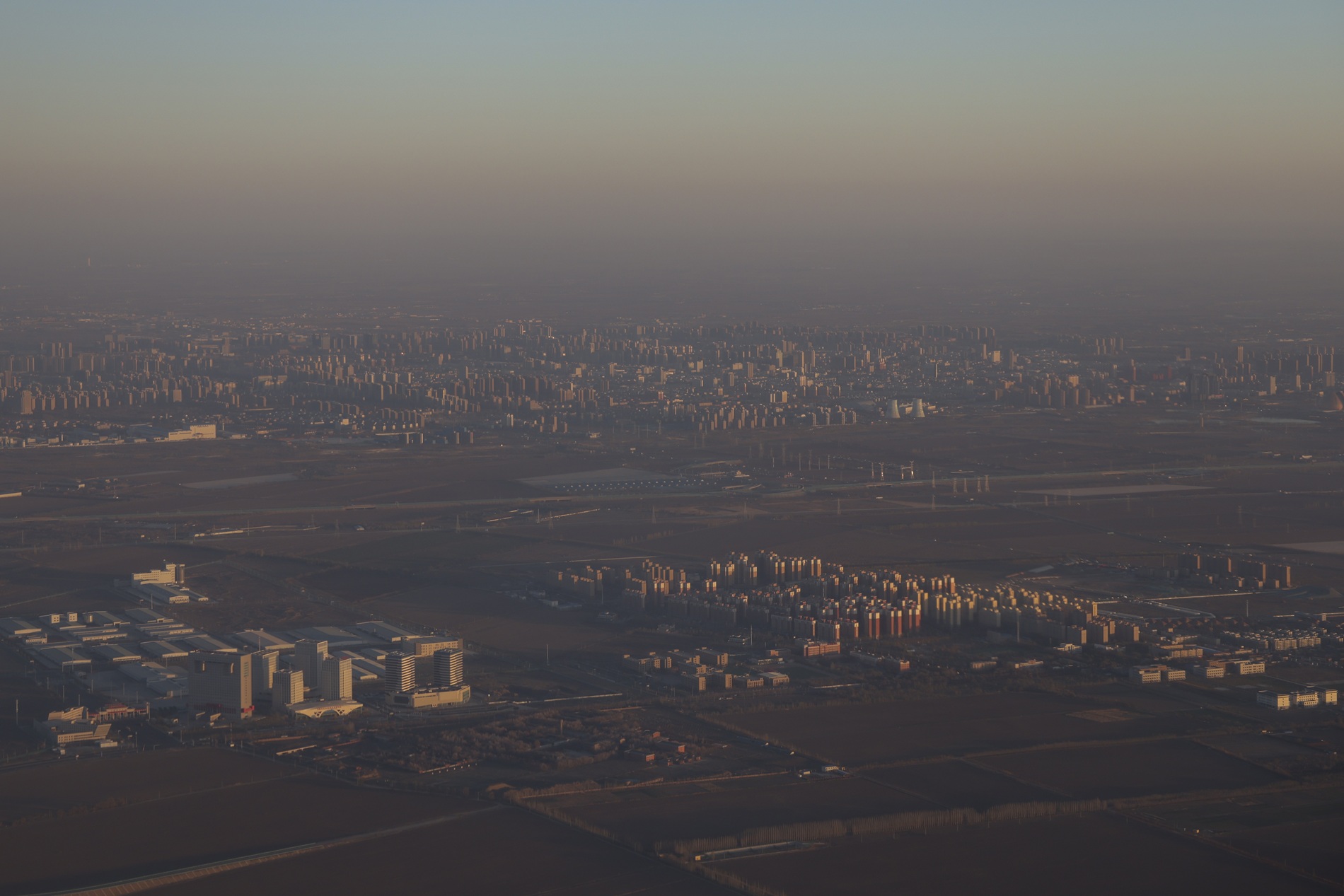
Beyond its global emissions impact, this expansion will also intensify the harms already faced by Uyghurs, bringing heightened stress on groundwater in an already arid region, toxic waste streams that degrade the land, and air pollution displaced from eastern cities as coal capacity there is curtailed and relocated westward.
Xinjiang is also central to the global clean energy transition itself, producing around a quarter of global solar-grade polysilicon and more than half of China’s metallurgical-grade silicon. This concentration reflects deliberate policy choices tied to cheap coal and weak environmental enforcement, deepening the entanglement between global clean energy supply chains and the political economy of repression in the region. Researchers have clearly demonstrated the breadth of forced labor baked into solar supply chains from the region. TBEA, the company planning a major coal-to-chemicals project, was previously found to have heavily invested in government programs amounting to forced labor. As this industry expands, the coercive mechanisms documented elsewhere in the region are likely to follow.
The global implications of Xinjiang’s emissions trajectory and its role in the climate crisis are also unfolding alongside a parallel buildup that is only now beginning to attract the attention it warrants: China’s most significant nuclear expansion since the Cold War.
Though much attention has been paid to the effects of U.S. nuclear testing in Nevada and the Pacific islands, as well as Soviet testing in northern Russia and Kazakhstan, less scrutiny has been directed at nuclear testing in China. The Uyghur region has been central to China’s nuclear program for decades, hosting 45 confirmed nuclear weapons tests between 1964 and 1996, leaving a legacy of contamination whose full health consequences for Uyghurs and other peoples living in the region have never been fully assessed.
But the region’s nuclear legacy is no longer a matter of history. Geospatial analysts have documented extensive new construction at the Lop Nur test site between 2020 and 2024, and a recent Reuters investigation revealed more than 80 launch pads, along with bunkers and facilities that analysts say may serve command operations linked to a missile silo field, pointing to the continued expansion of hardened nuclear infrastructure.
In 2020, the U.S. government claimed that China conducted a secret underground nuclear test in the Uyghur region, an assessment that was sharpened by U.S. officials in February 2026 immediately after the collapse of bilateral arms control between the U.S. and Russia. China’s own nuclear expansion is accelerating within this context, leaving a fragile status quo with no agreed-upon global prohibition on testing and growing uncertainty about how long informal restraints will hold.
Once again, millions of Uyghurs and other Turkic peoples already living under systematic repression find themselves caught in the middle of forces whose consequences they will bear and whose decisions they have no part in making. The immediate burden of resumed nuclear testing will fall squarely on the local population.
The Chinese Communist Party’s (CCP’s) approach to nuclear expansion mirrors its approach to emissions, pollution, and environmental harms, with the Uyghur region absorbing the costs while the strategic and economic benefits accrue elsewhere. The CCP is explicit about the role assigned to Xinjiang, designating it a hub for resource extraction and green energy production, including the polysilicon that underpins solar manufacturing worldwide. The expansion of nuclear infrastructure in the region follows the same pattern, even if it goes publicly unstated. By concentrating resource extraction and nuclear testing capacity, the CCP has made Xinjiang into a kind of “sacrifice zone,” where the people and the land absorb the environmental, labor, and health costs while the economic benefits flow to China’s industrial and urban centers elsewhere.
History is full of sacrifice zones, and Uyghurs are not the first to be consigned to one. Coal communities across Appalachia, for example, have spent generations being ravaged by coal extraction, their land and health sacrificed for energy powering cities far away. Indigenous peoples from Canada to Ecuador whose land has been crossed by pipelines have watched oil spills degrade forests and coastlines. Pacific Islanders in the Marshall Islands, Kiribati, and French Polynesia continue to live with the contamination and displacement left behind by decades of nuclear testing by the U.S., U.K., and France, their atolls hijacked by powers that never asked permission or accounted for the consequences.
What distinguishes each of those cases is that affected communities—however divided they may have been over costs and benefits of energy projects in particular—could push back. The modern anti-coal movement has contributed to stricter environmental enforcement and state-supported site clean-ups around the world; indigenous groups have fought hard against the appropriation and destruction of their land by major oil companies; and grassroots movements in the United States, the Pacific Islands, and Kazakhstan helped build the de facto moratorium on nuclear testing that has held, however precariously, since the mid-1990s.
Each of these movements, though not always successful all of the time, have shown that sacrifice zones are neither inevitable nor are they necessarily permanent. Many continue to fight for restitution for past harms, and against current and future projects, which helps to shape global policy in ways that extend well beyond their own immediate circumstances. In Xinjiang, that possibility has been foreclosed.
Coal-to-chemicals production requires land, water, and labor that can be commandeered without opposition, and a local population with no means of redress. Forced labor in solar supply chains persists because workers cannot organize, refuse work assignments, or speak to outside investigators. Nuclear testing infrastructure expands in part because the capacity for local resistance has been thoroughly extinguished. Such a complete erasure of agency reflects how rapidly conditions have deteriorated over the past decade.
History offers lessons in this regard as well. In the Niger Delta, decades of unchecked oil extraction has led to an environmental catastrophe and an armed insurgency whose consequences have spread beyond Nigeria’s borders. Similarly, cobalt mining in the Democratic Republic of the Congo (DRC) continues to fuel cycles of violence and instability. The former has supplied global oil markets for the past half century, while the latter is an essential component for batteries in consumer electronics and, more recently, electric vehicles.
China’s iron grip over Xinjiang means that no one should expect the situation to lead to instability in the same way as Nigeria or the DRC, but the costs of extraction and exploitation absent accountability have a way of spreading nonetheless. In the case of China, emissions, corrupted supply chains, and the potential unraveling of nuclear restraint will likewise not respect borders.
Looking away from the Uyghur crisis, therefore, carries a cost for everyone. If we accept the sacrifice zone logic, in which some are treated as permanently expendable, we vastly weaken the foundations upon which global accountability, and solidarity, depends. And as Xinjiang becomes more deeply embedded in the systems shaping climate outcomes, supply chains, and nuclear risk, the incalculable costs already paid by Uyghurs will increasingly fall on the rest of us, too.