breadcrumb

Media Censorship and Its Future

An interview with former “Southern Weekend” editor, Chang Ping

The year 2013 has gotten off to an inauspicious start for China’s press, especially for its most outspoken members. At the end of last year, when many of the country’s media were heralding newly installed Chinese leader Xi Jinping’s visit to Guangdong province as a modern day analogue to Deng Xiaoping’s 1992 “southern tour” (which was itself modeled to recall the glories of his imperial predecessors), the local newspaper, Southern Weekend, tried to frame Xi’s trip slightly differently. Editors at the paper—which has long tested China’s limits on expression—took six quotes from Xi’s Guangdong speeches and turned them into headlines, each calling for reform, no matter how difficult.

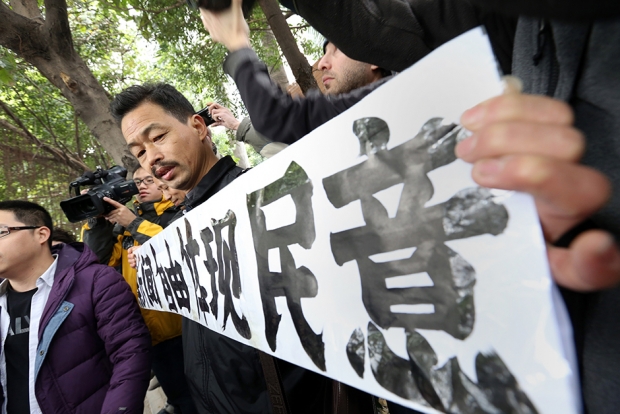
China’s new leaders had yet to introduce any specific reform policies, and the difficulties entailed quickly became manifest. Two weeks after Xi’s “new Southern tour,” officials at the Guangdong propaganda department broke with precedent to rewrite the Southern Weekend’s New Year’s editorial and force the editors to run it. The original had called for constitutional democracy. The rewrite cut that part down to one sentence and instead extolled the Party’s unique role in “the rejuvenation of the Chinese nation.” The Southern Weekend staff regarded the official meddling as a severe threat to the paper’s longstanding spirit of independence and went on strike. Support for the paper flooded the Internet and took to the streets.

The tough official measures weren’t confined to Guangdong. In Beijing, the website of Yanhuang Chunqiu, a pro-reform history journal, was shut down on January 4 (the day after Southern Weekend was forced to print the altered New Year’s editorial) after its own New Year’s editorial also called for constitutional democracy. As a countermeasure at the national level, the government ordered almost all major newspapers to reprint an editorial by the Global Times, a nationalist tabloid owned by the Chinese Communist Party’s official mouthpiece, People’s Daily. The Global Times editorial blamed the Southern Weekend staff’s protest on manipulation by “foreign forces.” When Beijing News editors tried to refuse to print the Global Times editorial, they were visited by Beijing propaganda officials who saw to it that their orders were enforced. In protest, Dai Zigeng, publisher of the Beijing News, immediately announced his resignation.

Why did all this happen, and what does it all mean for the future of the Chinese press? ChinaFile talked to Chang Ping, former news director at Southern Weekend, who was in charge of the newspaper’s news, opinion, and New Year’s editorial from 1999 to 2002. (Chang Ping is a pen name for Zhang Ping.) In 2008, the Central Propaganda Department denounced his articles about unrest in Tibet and forced him to leave his post at Southern Weekly (the Southern Weekend’s companion magazine), where he had risen to the post of deputy editor. In 2011, Chang Ping applied to work in Hong Kong, but the government there never replied to his application for a visa. He is now living in Germany.

The government has been meddling with Southern Weekend for a long time. Why did it trigger so much resistance this time?

State suppression of Southern Weekend has always been more severe than outsiders imagine. The newspaper was criticized every week I worked there more than ten years ago. The change came when Hu Jintao’s administration established its “stability maintenance” (weiwen) system. Before that, the Southern Media Group (publisher of both Southern Weekend and Southern Weekly) observed an unwritten rule that it would not allow the Guangdong provincial propaganda department to intervene in the newspaper’s editorial policy or personnel decisions, and the Group itself refrained from editorial interference at its papers, Southern Weekend and the Southern Metropolis Daily.

However, beginning in 2002, both the Group and the propaganda department directly appointed Southern Weekend’s editors-in-chief and forced the departure of the staff who had been the paper’s backbone.

From that point on, censorship at Southern Weekend operated much as it did for other Chinese media: the propaganda department sent editorial directives [to restrict or mandate] future stories. After pieces were published, the department reviewed and appraised the articles and criticized or punished their reporters and editors. But recently, the propaganda department added another procedure in between: it ordered Southern Weekend to disclose which stories its reporters planned to work on, and began to review and censor articles prior to publication. According to sources on the inside, 1,034 articles were censored prior to publication in 2012. It’s much worse than before. The New Year’s editorial incident may look like an isolated event. But actually, the protests resulted from long-standing grievances due to rigid censorship.

How have Chinese journalists responded to this kind of control? Have you seen examples of effective resistance?

Actually, resistance to news blackouts has always existed within the Southern Media Group. People used to think, incorrectly, that the resistance was due to the open-mindedness of Southern Media’s leadership. They may be more open-minded than their counterparts around the country, but their open-mindedness is not what’s most important. They have to be open-minded because the editors and reporters below them force them to be. The staff reporters push back against the middle-level cadres. The middle-level cadres push back against the higher-level leaders. This is a tradition at Southern Media and it draws idealistic youngsters into the paper’s ranks and their presence makes resistance to news blackouts even stronger.

I witnessed this resistance in 2006. The leadership of the Southern Metropolis Daily had decided to replace the editor-in-chief and the staff objected. They went to see the publisher and demanded he rescind his decision or they would go on strike. The publisher immediately relented.

Why does it seem like censorship is getting worse?

You are correct. Over the past decade, the rapid development of the Internet has led people to believe there will be more space for speech. But the constraints [on the press] have actually gotten tighter. Fortunately, journalists are resisting. Otherwise, it would be worse. Now, the government’s domestic strategy is to maintain stability. Hu Jintao once said China should learn from North Korea, and sent people to investigate the Eastern European system. Although this trend began in the Jiang Zemin era, the Hu and Wen administration furthered it, regardless of the cost. For example, they bought the most advanced Internet surveillance technology, say, from CISCO. Internet companies like Sina and Tencent have struck a deal with the authorities—or you might call it collusion. In order to secure their business interests, they spend huge amounts monitoring social media. The progress I mentioned earlier is being rolled back and the space society has carved out for free expression is being constricted. Moreover, the “stability maintenance” system is making social management crueler. For example, the way law enforcement handles petitioners and property demolition is becoming ever more gangster-like. Although the media tries to fight, it can’t be a counterweight to the giant “stability maintenance” machine.

Do you think the new leadership will continue to use the “stability maintenance” system?

Many people hope the leadership transition will bring about change. But, we haven’t seen any tangible change so far. I don’t think it was Xi Jinping who made the decision [to crack down on the media], because as long as the “stability maintenance” system is up and running, things get tighter and tighter. However, some of Xi’s recent speeches are pretty far from calls for real reform. His inclination to reform is suspect, especially when he refers to the Cultural Revolution as a “socialist exploration.”

Do you think new media, such as social media, can further China’s freedom of speech?

New media by itself is a tool. What is more important is how it is used. The government definitely wants to use it to control and steer public opinion. And, indeed, they are spending hugely on it. People in society hope social media will expand the space for expression. It’s not clear how things will turn out. New media might become society’s tool if society uses it more aggressively. For instance, in the current Southern Weekend and Yanhuang Chunqiu cases, new media played an important role. Without new media, it would have been unimaginable for the propaganda department’s work to have been exposed.

What influence will the Southern Weekend incident have in the long run?

In the long run, it could break some taboos. Obviously, one of them is the exposure of the propaganda department. Within the Chinese Communist Party, propaganda departments occupy an especially powerful position. Their power is almost unchecked. People are able to file a complaint, petition, or lawsuit against other organs, but not against propaganda departments. On the other hand, the propaganda departments issue so many prohibitions, while their own work is treated as absolutely infallible. Their work is mysterious because all of the prohibitions are categorized as state secrets. Moreover, the propaganda organs leave few written records because they deliver their orders by telephone or even text message. All of this makes the whole propaganda apparatus very opaque. But this time, Southern Weekend forced the provincial propaganda department to disclose how it made the decision to rewrite the New Year’s editorial. This was remarkable progress toward breaking the taboo.

Moreover, while the original Southern Weekend New Year’s editorial proposed reform subtly, in a way acceptable to the government, the propaganda department’s intervention triggered resistance from the public and demands for constitutional democracy and freedom of speech. And these demands were resoundingly clear.

Prior to joining the Asia Society, Ouyang Bin worked as a journalist in China. He served at Phoenix Weekly, Newsweek Select (Newsweek’s Chinese edition), Caijing magazine, and...

More

Media

05.17.13

Chinese Anxiety—In Debate About Overwork, a Glimpse...

TEA LEAF NATION

Almost half of all Chinese report feeling “more anxiety” now than they did five years ago. What, exactly, is driving these concerns, or increasing reports of these concerns? Avid followers of China-related news might immediately think of censorship and other restrictions on...

Media

05.10.13

Unrest in Beijing Over Mysterious Death of Young Woman

TEA LEAF NATION, RACHEL LU

A rare protest in Beijing involving hundreds of people was documented by photos posted on China’s social media (scroll down to see a sample photo). The cause of the protest was the death of a twenty-two-year-old migrant worker, who fell several stories from an apparels...

Media

05.09.13

Truth in Chinese Cinema?

JONATHAN LANDRETH

In 1997, as James Cameron’s Titanic sank box office records around the world—including in China—Sally Berger, assistant film curator at the Museum of Modern Art, worked to bring New York moviegoers a raft of Chinese movies they’d never heard of.The fourteen films in the...

Culture

05.09.13

“I Just Want to Write”

TEA LEAF NATION

Whether or not I deserved the Nobel Prize, I already received it, and now it’s time to get back to my writing desk and produce a good work. I hear that the 2013 list of Nobel Prize nominees has been finalized. I hope that once the new laureate is announced, no one will pay...

Media

05.07.13

Rat Meat Masquerading as Lamb—Yet Another Food Safety...

TEA LEAF NATION

Rat meat + gelatin + red food coloring + nitrates = lamb. Have you tried it yet?“This is what a ‘complete’ sheep looks like,” reads a caption under the photoshopped image of a sheep with Jerry, the mouse from Tom and Jerry, as its head. The image was posted by...

Media

05.01.13

The Wall Street Journal: Covering China Past and...

THE EDITORS

The Wall Street Journal was one of the first American publications to set up a bureau in Beijing. Since its establishment, scores of the Journal’s correspondents have traveled in and out of the country to cover China’s economic and political development. On April 30th, 2013,...

Media

05.01.13

The Long Battle Over “White Pollution”

TEA LEAF NATION

In the past weeks, Chinese citizens have learned that the styrofoam boxes from which they eat their lunches will soon be legal. On February 16, the National Development and Reform Commission (NDRC), China’s highest economic policy-making body, changed the Industrial...

Media

04.22.13

Social Media’s Role in Ya’an Earthquake Aftermath...

TEA LEAF NATION

China’s social media was in mourning yesterday as users turned their profile photos to grey in remembrance of the victims of the 7.0 earthquake that struck the Ya’an region in Sichuan province on Saturday. As of April 22, the death toll has risen to 192.The Ya’an earthquake...

Media

04.12.13

Leftist Hawks and Conspiracy Theorists: The People’s...

TEA LEAF NATION

Is Sina Weibo, China’s Twitter, turning into a new war zone? Dai Xu, a colonel in the Chinese Air Force and military strategist, thinks so.“A month ago, a pseudo-Japanese devil [derogatory term for pro-Japan Chinese] at Shanghai’s Fudan University besieged me and Luo Yuan....

Media

04.02.13

China Concerto

JONATHAN LANDRETH

Before February 2012, when his name exploded onto the front pages of newspapers around the globe, most people outside of China had never heard of Bo Xilai, the now-fallen Communist Party Secretary of the megacity of Chongqing. But in the years leading up to the murder trial that...

Media

04.02.13

Singing a Note of Caution About New First Lady Peng...

TEA LEAF NATION

Xi Jinping, the newly appointed Chinese President, unfolded his presidency with a grand foreign tour to Russia, Tanzania, South Africa, and the Republic of the Congo. While this series of state visits unequivocally underscored China’s diplomatic emphasis on its neighboring...

Media

03.13.13

Chavez and Bo Xilai Gone: Death of a Political Model?

TEA LEAF NATION

Venezuelan president Hugo Chavez’s death on March 5, 2013 came in the same week as the “Two Sessions” began in China, when China’s national legislature meets in Beijing. It was also almost exactly a year since the spectacular political demise of Bo Xilai, the former party...

Media

03.12.13

Pig Carcasses in Shanghai River Spawn Dark Humor on...

TEA LEAF NATION

The Huangpu River usually appears in glamor shots of Shanghai, serving as scenic backdrop to the colonial splendor of the Bund or the modern marvel of the Pudong skyline. But of late, a more grim and distasteful association has emerged. As of March 12, almost 6,000 dead pigs have...

Media

03.11.13

Young Family’s Arrest Brings Tension Between Vendors...

TEA LEAF NATION

A one-and-a-half-year-old girl wraps her arms around her mother’s neck, crying. Her mother, handcuffed, cannot hug her back—she can only squat down beside the police car to match her daughter’s height. “I’m sorry, mommy can’t hold you…”On March 6, 2013, one...

Media

03.08.13

“Shanghai Calling” Translates Funny

JONATHAN LANDRETH

Director Daniel Hsia and producer Janet Yang were motivated to make Shanghai Calling, their first feature film together, by the shared feeling that no matter how much more important relations between the United States and China grew, they always seemed fraught with...

Media

03.01.13

No Closer to the Chinese Dream?

TIMOTHY GARTON ASH

2013 began dramatically in China with a standoff between journalists and state propaganda authorities over a drastically rewritten New Year’s editorial at the Southern Weekly newspaper.In the first week of the New Year, the editors of Southern Weekly, a weekly newspaper in...

Media

02.22.13

China’s State-Run Media Shares Powerful Map of “...

TEA LEAF NATION, DAVID WERTIME

It appears that Chinese environmental activism is going further mainstream. The Sina micro-blogging account of Global Times, a well-known Communist Party mouthpiece, has just shared news about the horrific proliferation of “cancer villages” in China. Earlier today...

Media

02.21.13

In Face of Mainland Censorship, Taiwanese Revisit...

TEA LEAF NATION

Within twenty-four hours of registration, Sina Weibo (China’s equivalent of Twitter) deleted the microblog account of Frank Hsieh, former premier of Taiwan’s pro-independence Democratic Progressive Party (DPP). Ironically, Hsieh’s last tweet before he lost the power to post...

Media

02.20.13

On China’s Twitter, Discussion of Hacking Attacks...

TEA LEAF NATION, DAVID WERTIME

As The New York Times reported yesterday evening, U.S.-based cybersecurity firm Mandiant has just released a deeply troubling report called “Exposing One of China’s Cyber Espionage Units.” The report alleges wide-spread hacking sponsored by the People’s Liberation Army,...

Media

02.16.13

NBA Star Debuts on Chinese Social Media, Fans Clamor: #...

TEA LEAF NATION, DAVID WERTIME

Tea Leaf Nation editor David Wertime spoke on February 15 on Public Radio International’s The World about NBA star Kobe Bryant (@KobeBryant), who has recently opened an account on Sina Weibo, China’s Twitter. Listen to the full two-minute interview:Bryant has...

Media

02.13.13

Officer Draws Gun on Drunk Driver—To Overwhelming...

TEA LEAF NATION

A policeman draws his gun to stop a desperately escaping criminal. It may sound sensational, but this is technically what happened in the southern Chinese megalopolis of Guangzhou on January 31. As traffic policemen were manning a drunk driving checkpoint, a driver in a red...

Media

02.12.13

Joke About Gay Romance on Chinese New Year Gala Lights...

TEA LEAF NATION

Is “bromance” in the air? Not according to state-run China Central Television (CCTV).Thousands of fans yelled “Get together” in unison when piano prodigy Li Yundi made a guest appearance at Chinese-American pop sensation Leehom Wang’s New Year’s...

Media

02.11.13

Covering China: Yesterday, Today, and Tomorrow

THE EDITORS

On February 5, 2013, ChinaFile celebrated its official launch by bringing together a panel of former and current New York Times correspondents, whose collective China experience spans the course of half a century, to discuss their coverage of China. ChinaFile’s publisher...

Media

02.08.13

Lil Buck Goes to China

JONATHAN LANDRETH

In November 2011, The Asia Society’s Center on U.S.-China Relations, headed by Orville Schell, hosted the inaugural U.S.-China Forum on the Arts and Culture.Schell's son, Ole, a filmmaker, tagged along with his video camera and captured the first trip abroad—and the first...

Media

02.07.13

Chinese Beverage Maker Turns Legal Setback Into Viral...

TEA LEAF NATION

This is no tempest in an herbal tea pot. The JDB Group, maker of China’s most popular herbal tea—one that raked in approximately 20 billion RMB (USD $3.2 billion) in revenues in 2012—lost another legal battle in its epic trademark war with the state-owned Guangzhou...

Media

01.30.13

Chinese Web Erupts With Widespread Calls for Change as...

TEA LEAF NATION, DAVID WERTIME

Beijingers are choking on their air—again. Just seventeen days after Chinese cyberspace erupted with complaints about air so bad that it was “beyond index,” denizens of the Chinese capital awoke once again to a city blanketed with smog. Over the past twenty-four hours, the...

Media

01.25.13

Former China State TV Director Bemoans Anti-Japanese...

TEA LEAF NATION

Are Chinese audiences growing weary of anti-Japanese propaganda? It would seem that some, at least, are growing sick of the pathetic villains, superhuman heroes, and lame endings that many Chinese movies and television series about World War II, or what Chinese refer to as the...

Media

01.23.13

A Map of Two Chinas

TEA LEAF NATION

On Friday, China’s National Bureau of Statistics announced that income inequality in the country exceeds a warning level set by the United Nations.China’s publication of its Gini coefficient—a widely used measure of economic equity—drew attention for a number of reasons....

Media

01.16.13

Their Horizons Widening, China’s Web Users Look...

TEA LEAF NATION

Last week, Google Executive Chairman Eric Schmidt urged North Korean leaders to embrace the Internet. Only a small proportion of that country’s 24 million people can access the World Wide Web, and the majority of the 1.5 million mobile phones there belong to political and...

Media

01.09.13

Why is a Mediocre, Low-Budget Comedy Taking China’s...

TEA LEAF NATION

December 2012 saw hot competition in Chinese cinema. It began with Life of Pi, which was directed by Ang Li, an Oscar-winning director, followed by 1942, a historical movie by director Feng Xiaogang, and The Last Supper, by up-and-coming director Lu Chuan. The film market seemed...

Media

01.08.13

Online and Off, Social Media Users Go to War for...

TEA LEAF NATION

When Mr. Tuo Zhen, the propaganda chief of Guangdong province, rewrote and replaced the New Year’s editorial of the Southern Weekend newspaper without the consent of its editors, he probably did not think it would make much of a splash. Indeed, Mr. Tuo might have believed that...

Media

01.07.13

“Help Me Pay This Bill”: A Short But Incisive Send-...

TEA LEAF NATION, DAVID WERTIME

It is a social media classic, a send-up of the corruption and profligacy that so often enrage Web users in China. A very short story variously titled “I Did Not Eat For Free” and “Help Me Pay This Bill” has been making the rounds for months on Sina Weibo, China’s...

Media

01.03.13

How a Run-Down Government Building Became the Hottest...

TEA LEAF NATION, DAVID WERTIME

It is perhaps a sign of the times in China that an image of nothing more than a ramshackle county government building could echo so widely. Since its posting on Sina Weibo, China’s Twitter, hours before New Year’s Eve, the image (see below) has been shared nearly 70,000 times...

Media

12.24.12

The Most Popular Chinese Web Searches of 2012

TEA LEAF NATION

What did China search for in 2012? It wasn’t the hotly disputed Diaoyu Islands or the widely-watched London Olympics.On Baidu.com, China’s homegrown search engine commanding about eighty-three percent of the Chinese search market, the most popular searches focus on stories...

Media

12.17.12

Media Effort to Emphasize Newtown Tragedy Backfires in...

TEA LEAF NATION, DAVID WERTIME

Tragedy can strike anywhere. Mere hours before the horrific shooting at an American school in Newtown, Connecticut that left twenty-eight people dead, including twenty children, a horrific school attack also happened in China. At an elementary school in a village in Guangshan...

Media

12.12.12

The “Chinese Dream” Means One Thing to its Leaders...

TEA LEAF NATION

Since China unveiled the new Politburo Standing Committee at the 18th National Congress of the Chinese Communist Party, the country’s Web users have been paying close attention to the new elite group of leaders who will set the country’s agenda for the next decade.A recent...

Media

12.09.12

New Leaders’ Common Touch Gives Netizens “Great...

TEA LEAF NATION, DAVID WERTIME

Glad-handing with the locals. Kissing babies. Eating fast food. These are tried and true ways that American politicians seek to advertise their common touch; but when China’s new leaders employ these methods, it is greeted as a pleasant surprise, maybe even a sign of reform.Xi...

Media

12.04.12

“Ai Weiwei: Never Sorry” Hits the Road

JONATHAN LANDRETH

Debut filmmaker Alison Klayman has been on a global tour with her documentary—Ai Weiwei: Never Sorry—a film about one of China’s most provocative artists and activists, which this week, was named one of fifteen films put on a short list to be considered for a...

Media

12.01.12

Chinese AIDS Activist Endures “Degradation” in New...

TEA LEAF NATION

Chinese people translate “New Yorker” into “New York Ke” to designate people living in New York City, including Chinese immigrants. But in Chinese, “ke” means “visitor” or “guest.” It has been a sad word in Chinese literature and poems for thousands of years,...

Media

11.27.12

Spotted on Weibo: Chinese Leaders Share a Human Moment

TEA LEAF NATION

An active Beijing-based micro-blogger named Dongdong Wang recently tweeted this image on Sina Weibo, China’s Twitter: At first glance, it doesn’t look like much: Outgoing Premier Wen Jiabao (left) and outgoing President Hu Jintao (right) appear to...

Culture

11.27.12

Remember to Tell the Truth

MAYA E. RUDOLPH

The recording of memory brings history to life and creates a legacy of its own. In 2010, documentary filmmaker Wu Wenguang launched the Memory Project to try to shine a light on the long-shrouded memories of one of modern China’s most traumatic episodes—the famine of 1958-...

Culture

11.21.12

A New Tower of Babel

SHEILA MELVIN

Xu Bing, the renowned Chinese artist whose many laurels include a MacArthur Foundation “genius” award and an appointment as vice president of China’s Central Academy of Fine Arts, has long demonstrated a fascination with the written word.His groundbreaking work, Book from...

Media

11.21.12

Official Online Poll: Chinese Want Democracy

TEA LEAF NATION

With China’s new leadership now set, Chinese Web users have turned their attention to answering the key question: “What’s next?” In concert with the 18th Party Congress, the website of Communist Party-sanctioned Peoples’s Daily hosted an online poll asking Web...

Media

11.19.12

A Conservative Commentator Calls Out Chinese Liberals,...

TEA LEAF NATION

Speech on the Chinese Internet, it seems, is beginning to thaw once more following the country’s leadership transition. After months of speculation, new Chinese leader Xi Jinping was announced on November 16 at the close of the 18th Party Congress, which accompanied a slowdown...

Media

11.02.12

Chinese Movie Mogul Promises New Party Leaders Will...

JONATHAN LANDRETH

A wise old cartoon turtle in Kung Fu Panda advises Po, the portly black and white star of the 2004 DreamWorks Animation blockbuster film, not to fret about honing his fighting skills, but rather to focus on the moment and do his best.“Yesterday is history, tomorrow’...

Media

10.26.12

Myanmar Envy

BI CHENG

Chinese netizens’ reactions to tentative democratic reforms in neighboring Myanmar, including to the recent repeal of censorship rules for private publishers by the Southeast Asian nation’s reformist government, reflect just how closely it’s possible for average Chinese to...

Media

10.11.12

Netizens React to Mo Yan’s Nobel Prize

OUYANG BIN

Upon hearing the news that novelist Mo Yan was awarded the 2012 Nobel Prize in Literature, a flurry of messages about the fifty-seven-year-old Shandong native circulated on weibo, China’s equivalent of Twitter, expressing decidedly mixed opinions about whether the author of...

Media

09.16.12

What Microblogs Aren’t Telling You About China

AMY QIN

In China, where notions of freedom of speech and freedom of expression are seen by the government as secondary to the all-important ideal of social stability, there is little space, if any, for truly open and unmediated public conversation. Elections, the media, and protests,...

Media

08.30.12

Chinese “Traitors” and the Foreign Press

HU YONG

On June 2nd, local family planning officials forced Feng Jianmei, a twenty-two-year-old Shaanxi woman pregnant with her second daughter, to undergo an abortion, as a consequence of China’s One Child Policy. In years past, this sad story...

Media

08.16.12

The People’s Daily Said What?

BI CHENG

In the course of its dramatic growth, China often churns out unprecedented numbers. But few of them have been more controversial than the recently released National Revival Index, a formula devised to measure China’s economic and social development by the Academy of...

Media

08.03.12

Netizens Weigh in on Weightlifting Defeat

AMY QIN

When seventeen-year-old Zhou Jun from Hubei province stepped onto the mat in London on Sunday, the pressure she was facing far exceeded the weight of the 96-kg barbell sitting at her feet. The entire history of China’s success in women’s weightlifting at the Olympics depended...

Media

07.27.12

Could CCTV's Naming of Flood Victims Signal a Turn...

AMY QIN

In the face of mounting criticism from online commentators and state media, Beijing city officials have finally raised the official death toll of the devastating floodwaters that hit the city last weekend from thirty-six to seventy-seven. The announcement, made by state-run news...

Media

07.05.12

Powerless Media=Powerless Citizens, Says China Youth...

AMY QIN

Tapping into widespread public frustration with corruption among government officials, advocates of press freedom in China seem to have found an effective tool with which to ally citizens to the journalistic cause. In a July 3 editorial published in the China Youth Daily, the...

Media

06.30.12

Bloomberg Unearths Xi Jinping’s Family Fortune

AMY QIN

A recent Bloomberg report detailing the millionaire assets of the extended family of Xi Jinping, China’s presumptive next leader, has drawn praise from the community of China media observers for its thorough investigative work and fact-based reporting. Beijing-based...

Media

06.11.12

A Great Massacre, a Great Earthquake, and a Great...

HU YONG

The head of the Gansu branch of People’s Daily, Lin Zhibo, provoked the ire of many netizens for remarks he made regarding the Great Famine on his Weibo account. Lin claimed that in many of the villages in Anhui and Henan (the two provinces that were hardest-hit during the 1959...

Media

06.11.12

Did A CCTV Anchor’s Outburst Even Matter?

HU YONG

Yang Rui, a host on China Central Television's (CCTV) English-language channel, called on the Public Security Bureau via Sina Weibo on May 16 to “clean out foreign trash, wipe out foreign snake heads (human smugglers), root out foreign spies, kick out foreign shrews (apparently...

Media

06.07.12

An Absent Presence

SUN YUNFAN

In Chan Koonchung’s dystopian science fiction novel The Fat Years, set in China in 2013, the whole month of Feburary 2011 has disappeared from people’s memory. In reality, the month that is closest to being spirited away is the month of June 1989 when the Communist Party of...

Media

06.06.12

In the News: Fact vs. Rumor

AMY QIN

China-focused news editors have had numerous causes for celebration in the past few months. The various scandals surrounding the dethronement of Bo Xilai, the dramatic nighttime escape of blind activist Chen Guancheng, and the upcoming Party leadership have provided a maelstrom...

Media

06.02.12

On Weibo: Cultural Revolution Suicides

AMY QIN

As people across China took part in the June 1 Children’s Day campaigns to, among other things, remember the millions of “left-behind” children in the countryside, some netizens on Weibo spent the time reflecting on another, seemingly bygone, era. Trending on Weibo right...

Media

05.31.12

Godwin’s Law with Chinese Characteristics

HU YONG

This winter writer-blogger-race car-driver Han Han found himself facing charges of plagiarism from celebrated fraud-buster Fang Zhouzi. Both Han and Fang have huge followings among China’s microbloggers. And their personal disagreement soon exploded into a chaotic on-line...

Media

05.29.12

Patriots or Traitors?

AMY QIN

In Chinese, to be patriotic is to ai guo, literally “to love [one’s] country.” But what does it really mean to love your country? Does it mean unconditional support for your country’s government, warts and all? Or is there more room for nuance—can you disagree with the...

Media

05.25.12

Can CCTV Become the Next Al Jazeera?

AMY QIN

In a recent piece published in the Columbia Journalism Review, Sambuddha Mitra Mustafi assesses the early stages of China's multibillion dollar efforts to expand its domestic media empire onto the global stage. Just this year, CCTV launched two network broadcast centers—one in...

Media

05.24.12

Under the WeiboScope

AMY QIN

With more than 300 million registered users, the popular microblogging service Sina Weibo—sometimes called the Chinese Twitter—can offer unique insights into the quotidian musings of Chinese netizens. One way to sort through the barrage of microblogs posted each second is to...

Media

12.15.11

Anxiety’s Remote Control

HU YONG

The Chinese government agency that English speakers know as SARFT has several monikers. Its full name is the State Administration for Radio, Film, and Television. Literally translated, its Chinese name, guangdian zongju, is more like the "General Office for Radio, Film...

DISCUSSION

Murdoch’s Chinese Adventure

JONATHAN MIRSKY

During a Parliamentary hearing last week in London, the Murdochs, father and son, riveted television audiences with their combination of wide-eyed, hand-on-heart innocence (James), and long silences and “Yups” and “Nopes” (Rupert). After the elder Murdoch declared how “...

Is Democracy Chinese?

IAN JOHNSON

Chang Ping is one of China’s best-known commentators on contemporary affairs. Chang, whose real name is Zhang Ping, first established himself in the late 1990s in Guangzhou, where his hard-hitting stories exposed scandals and championed freedom of expression. As censorship has...

China’s Death-Row Reality Show

JONATHAN MIRSKY

Until it was taken off the air last December, one of the most popular television programs in China’s Henan province, which has a population of 100 million, was “Interviews Before Execution.” The presenter was Ding Yu, a pretty young woman, always carefully dressed with...