


Taiwan’s President Tsai Urges Mainland China to Work with Her to Break Deadlock
on August 9, 2017
Taiwan’s President Tsai Ing-wen has called on mainland China to work with her government to establish “a new model of cross-strait interactions”.
Taiwan’s President Tsai Ing-wen has called on mainland China to work with her government to establish “a new model of cross-strait interactions”.
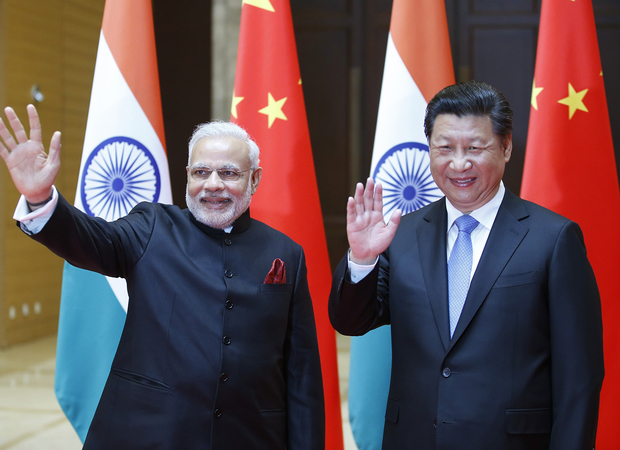
China and India are engaged in a new border standoff high in the Himalayas. Tensions between the world’s two most populous nations have been simmering for at least two years and began to roil after Chinese President Xi Jinping’s first visit to India in September 2014 and soured further in June when Chinese moved into disputed territory.
Commissioned by the government to commemorate the 90th anniversary of the founding of the People’s Liberation Army, China’s latest propaganda film was meant to be a patriotic tale about the young soldiers who served their country in its earliest days.
India’s diplomatic efforts to end a seven-week military standoff with China have hit a roadblock, people briefed on the talks said, prompting Chinese state-run media to trumpet rhetoric of “unavoidable countermeasures” on the unmarked border.
China is willing to take the economic hit of greater sanctions on North Korea, a top official said Monday, as Washington continues to pressure Beijing on the issue.
China’s giant cash pile is increasing—and it’s a sign that the government’s industry-spanning crackdown on money fleeing the country is working.
Manoj Joshi is a Distinguished Fellow at the Observer Research Foundation, New Delhi, heading its national security program. He is a journalist who specializes in national security, especially maritime affairs.
Joshi has had a long-term interest in national security matters. In 2011, he was appointed by the Government of India to the Task Force on National Security chaired by Naresh Chandra to propose reforms in the national security system of the country.
He has been a member of the National Security Council’s Advisory Board and has authored several papers in professional journals and contributed chapters to scholarly works on South and Southeast Asia.
Joshi has a Ph.D. from the School of International Studies (SIS), Jawaharlal Nehru University and has held visiting appointments in several universities and defense institutions such as the Navy War College, the National Defence College, and the Defence Services Staff College. He is a regular participant in symposiums organized by the Indian Navy.
In recent years, he has focused on the rise of China. His most recent publication is “The South China Sea Disputes: Territorial Claims, Geopolitics, and International Law,” ORF Occasional Paper, August 2016 (Observer Research Foundation, New Delhi).
Beijing scored diplomatic points with its endorsement of tougher United Nations sanctions against North Korea, avoiding a showdown with Washington over Pyongyang’s repeated nuclear provocations.
China could conduct a “small-scale military operation” to expel Indian troops from a contested region in the Himalayas, according to an article published a Chinese state-controlled newspaper.