Roland Hinterkoerner

Roland Hinterkoerner is founder and editor of online publishing enterprise Expertise Asia, which has been focusing on communicating analysis as well as thought-provoking and controversial opinions on the global financial system and current affairs. He also joined Orfi Capital in Hong Kong in 2017 as a partner to expand the firm’s fund management activities and formulate macro strategies. Previously, Roland spent his entire institutional career in banking, where he worked in predominantly fixed income, derivative and advisory functions. Across 26 years he was based in London and Tokyo, and Hong Kong since 2008, where he most recently covered the C-suite of Asia’s largest corporate conglomerates.

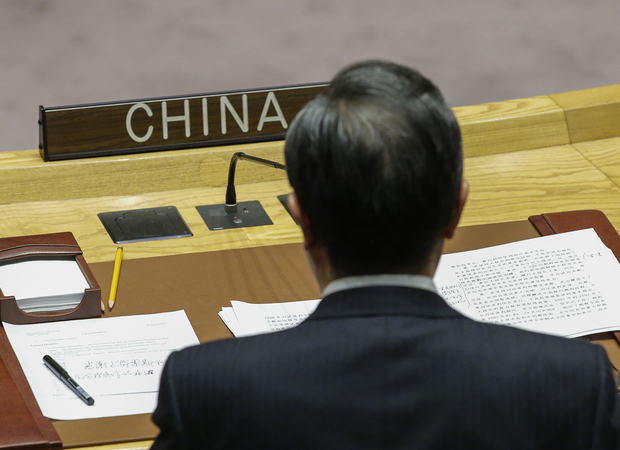
Should China Support the U.S. in a War with North Korea?

A ChinaFile Conversation

On August 9, U.S. President Donald Trump warned North Korea that if it does not stop threatening the United States, it will be “met with fire and fury and frankly power, the likes of which this world has never seen before.” Just hours later, the North Korean army said in a statement that it is “carefully examining” a plan to strike the waters around Guam, a U.S. Pacific territory which hosts a large American military base. And while it’s unclear if Pyongyang was responding to Trump’s comments, or whether both countries are engaged mainly in a battle of inflammatory rhetoric, the possibility of a military conflict between the United States and North Korea now appears more likely than it has been in decades. As it often does in moments of high tension, China’s Foreign Ministry called on all relevant parties to avoid the possibility of intensifying conflict or “escalating the situation with words or actions” and continue to pursue a “political solution.” Should tensions between the U.S. and North Korea continue to worsen, or in the still unlikely event of a military conflict, what is China likely to do and what should it do?

China Warns U.S. Over Aluminum Dispute

China has told the Trump administration to tread carefully in a spat over aluminum exports if it wants to avoid damaging the relationship between the world’s two largest economies. The Chinese Ministry of Commerce on Thursday disputed U.S. suggestions that Chinese aluminum foil shipments are unfairly subsidized.

A Missing Tycoon’s Links to China’s Troubled Dalian Wanda

Dalian Wanda, the Chinese conglomerate that owns the AMC movie theater chain and nurtures Hollywood ambitions, has sometimes turned to the secretive business network of a politically connected Chinese billionaire in times of need. Now both Wanda and that billionaire, Xiao Jianhua, are under official pressure in China — and one Wanda insider says that may not be a coincidence.

Gaps in Records Cloak China’s North Korean ‘Slave Laborers’ in Mystery

It is an open secret that a significant number of North Korean laborers work in China and Russia in border cities, especially in Siberia. But owing to minimal record-keeping, little is known about the workers’ presence or activities

Spotlight: Washington, Pyongyang Step up War Rhetoric, Further Escalate Tensions over Korea Nuclear Issue

In the latest of the increasingly intense war of words, Pyongyang said it would prepare a plan by mid-August to strike the U.S. territory of Guam with intermediate missiles, the Korean Central News Agency (KCNA) reported Thursday.

Comparing Recent NGO Laws in Russia and China

Do Russia’s Laws Foreshadow China’s Future?

Over the last several years, Russia and China have developed strikingly parallel laws on the management of foreign NGOs and foreign support of domestic civil society. While regular visitors to this site are familiar with the 2017 Foreign NGO Law in China, they may be less aware of two similar laws in Russia: the 2012 law on “foreign agents” and 2015 law on “undesirable” organizations.