China Just Got One Step Closer to Ending Its Family-Planning Policies

Over the years few things have symbolized China’s heavy-handedness quite like the one-child policy it implemented in 1979. But in a sign of change, this week Beijing announced the end of the commission charged with implementing such policies.

Trump Demands Aides Pump up Anti-China Tariffs

President Donald Trump is getting ready to crack down on China. Trump told Cabinet secretaries and top advisers during a meeting at the White House last week that he wanted to soon hit China with steep tariffs and investment restrictions in response to allegations of intellectual property theft, according to three people familiar with the internal discussions.

Guo Rongfei

Rongfei Guo is an award-winning Chinese documentary filmmaker who is interested in, though not limited to, creative and artistic ways of exploring China’s stories and issues. She graduated from New York University, where she majored in Documentary. Her latest film, “Fairy Tales,” won the Student Academy Award in 2016, Best Short Documentary at Melbourne International Film Festival, and Best Student Film at DOC NYC. She is now a video producer and director at Arrow Factory Video.

Chairman Xi, Chinese Idol

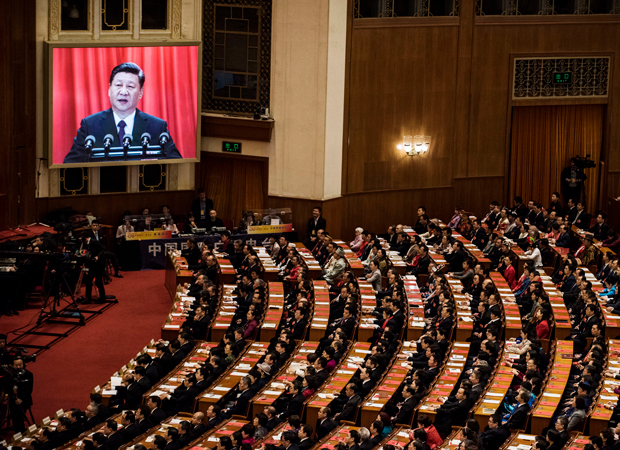
For nearly sixty years since it opened in 1959, the Great Hall of the People has been the public focus of Chinese politics, a monumental granite block that extends 1,200 feet along the west side of Tiananmen Square. It is where the country’s leaders appear in public to display their power: a platform for state banquets, receptions of foreign dignitaries, and symbolic political meetings. It is their throne room, their sacred space. It is the outward manifestation of decisions made in other, darker realms.

When American Pilots Fell out of the Chinese Sky

A Sinica Podcast

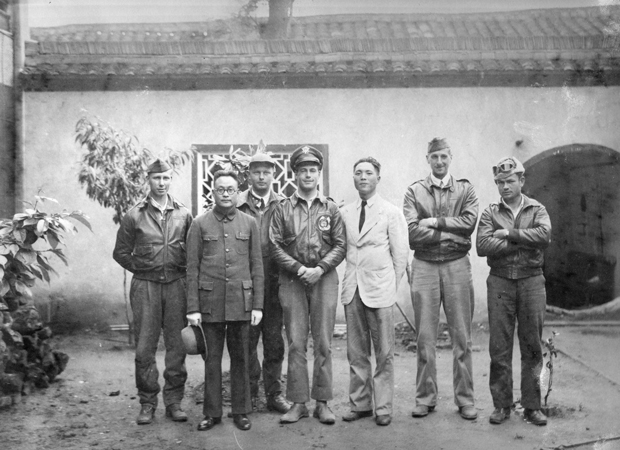
The distinctive shark-toothed fighter planes of the Flying Tigers streaked across the skies of China from 1941 to 1942, as American airmen racked up an impressive string of successes in defending China from Japanese forces. They are so recognizable that their story has obscured the equally fascinating stories of other American pilots who landed in China—or, in the case of the two stories on this podcast, crash-landed.

When Trump and Kim Meet, What Will Xi Do?

A ChinaFile Conversation

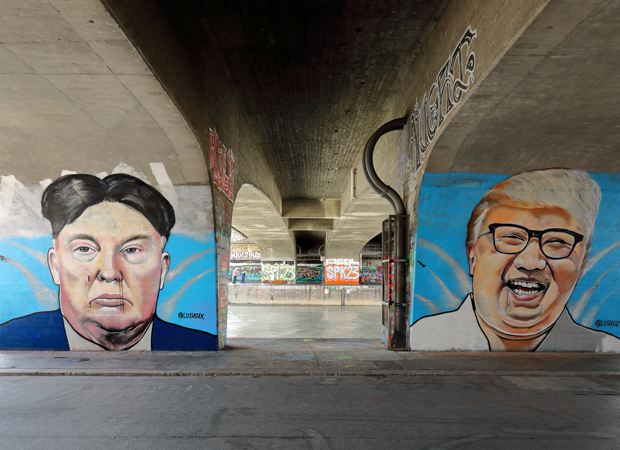
On March 8, South Korea’s National Security Advisor announced that Donald Trump had agreed to meet with North Korean leader Kim Jong-un by May. Although now-ousted Secretary of State Rex Tillerson previously downplayed the announcement, a summit between the two men could drastically change U.S. policy in Asia. How does this affect China’s interests in the region? And how would Beijing feel about a Trump-Kim summit?

Clayton Dube

Clayton Dube has headed the University of Santa Cruz (USC) U.S.-China Institute (USCI) since it was established by USC President C.L. Nikias in 2006 to focus on the multidimensional U.S.-China relationship. USCI enhances understanding of complex and evolving U.S.-China ties through cutting-edge social science research, innovative graduate and undergraduate training, extensive and influential public events, and professional development efforts.

Dube previously managed the University of California, Los Angeles’ Asia Institute, part of a U.S. Department of Education designated National Resource Center. He also headed the Asian studies teacher training program and oversaw a variety of instructional, research, and outreach initiatives. Among the projects he directed there were two student-driven web publications, AsiaMedia and Asia Pacific Arts, each of which had more than one million readers annually. At USC he created another successful publication, US-China Today, and relaunched Asia Pacific Arts. Dube has won teaching awards at three universities.

Dube headed the team producing the 12-part Assignment: China documentary series on American media coverage of China since the 1940s. He writes USCI’s popular Talking Points newsletter. He is frequently called upon by American and Chinese broadcast and print media to comment on current affairs.

Dube’s work has been supported by grants from the U.S. Department of Education and the Committee for Scholarly Communication with China. His research focuses on how economic and political change in China since 1900 affected the lives of people in small towns, on how Americans and Chinese see each other, and how governments work to influence those views. He’s written teaching guides on Chinese history, many reviews, and served as associate editor for Modern China, an academic quarterly published by Sage Publications, from 1998 to 2002. Dube received the 2012 Perryman Fund Social Studies Educator of the Year award. He serves as a Director of the National Consortium for Teaching about Asia. He is also a Center on Public Diplomacy Fellow and is on the executive committees of the Center for International Studies and the Center for International Business Education and Research. He serves on the Education about Asia editorial board and the LinkAsia (LinkTV) advisory board. Since 2012, he has been the co-moderator of Chinapol, a private discussion list for China specialists in academia, media, government, and research units.