Paul Triolo

Paul Triolo is a Partner at DGA-Albright Stonebridge Group, a founding member of DGA Group, and is based in Washington, D.C. As a member of the firm’s China practice and Technology Policy Lead, he advises clients in technology, financial services, and other sectors as they navigate complex political and regulatory matters in China and around the world.

An expert in global technology policy, Triolo has worked closely with some of the world’s leading companies on AI, helping them track regulatory issues globally, develop long-term strategies on thought leadership, and engage with regulators. Most recently, he was founder, Practice Head, and Managing Director of the Geo-Technology practice at Eurasia Group. He spent more than 25 years in senior positions in the U.S. government, analyzing China’s rise as a technology power and advising senior policymakers on technology-related issues. Prior to his government work, he worked as an engineer for a semiconductor testing firm in Silicon Valley.

Triolo is frequently quoted on technology policy issues in media outlets including The New York Times, The Wall Street Journal, The Economist, and the South China Morning Post, among others. He speaks regularly at conferences and has authored many journal articles and book chapters on global technology policy and China-related issues. He also serves as a Senior Advisor at the Paulson Institute and is a life member of the Council on Foreign Relations.

Triolo received an M.A. in International Relations from the Catholic University and a B.A. in Electrical Engineering from Pennsylvania State University.

One Decent Man

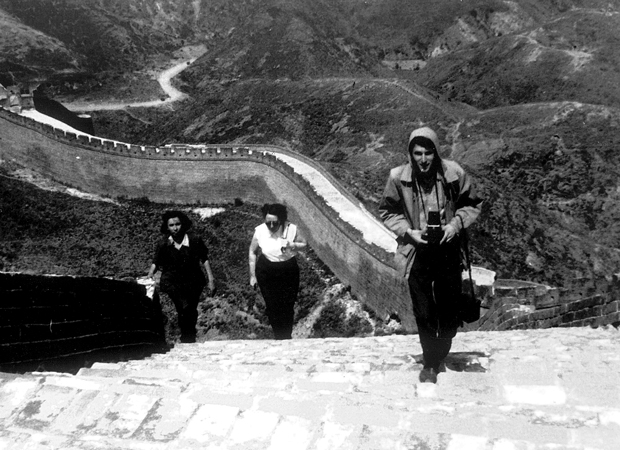
The thought of hearing back from Simon Leys filled me with dread. It was late 1976 and I was an exchange student at a university in Shenyang, in northeast China. I’d only recently learned that Pierre Ryckmans, the man who had taught me Chinese, was none other than Simon Leys, a writer both celebrated and reviled in the French-speaking world.

Recommended Reading: China-Focused Special Issue of Nonprofit Policy Forum

Nonprofit Policy Forum, an international journal focused on public policy as it relates to the work of non-profit organizations, recently released a Special Issue on Nonprofit Policymaking in China. The issue delves into the policy styles, goals, and drivers of non-profit policy-making in China as a means to explain China’s recent non-profit policy-making momentum, power reconfiguration, and organizational developments.

Square Dancing | NetEase “Onlooker”

Yang Zhazha has photographed more than 200 square dances in Beijing. This form of recreation is practiced mostly by retirees and has become popular across China in recent years. The dances—which are unrelated to American square dances— take their name not from the arrangement of dancers but because they take place in public squares, people gather at sunset and the often loud music plays well into the night.

Living Large in Huzhou | Sina “Witness”

Today, more than 300 million people in mainland China are considered to be middle class, and the number is fast growing. Photographer Zhao Caixia made portraits of dozens of people in their homes in Huzhou, Zhejiang Province, the richest province in China after the municipalities of Beijing and Shanghai. In the picture above, Wei Sanshu sits in an egg chair in his home, which he decorated in a mixture of European styles.

The Party Faithful of Shanghai’s Mansion | Sixth Tone

The Shanghai’s Mansion nightclub is a popular party scene during the weekend and a hostel where tenants can stay for free year round. The Mansion’s founder, 54-year-old Rainbow Gao, who also founded Beijing’s first live-music bar and China’s first international modeling agency, says she wants to give people “an idea that money is not important.” Residents must sign a tenancy agreement, which requires them to commit to a minimum stay of three months stay, maintenance and upkeep, compliance with house rules, and a deposit of $160.

Tilling the Data Farms of Guizhou | Sixth Tone

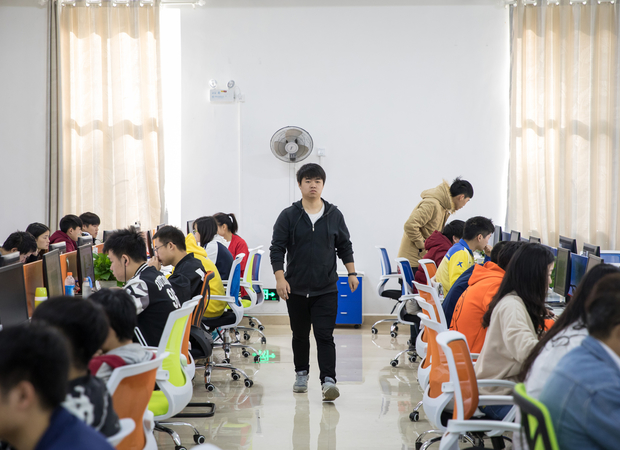
The once impoverished province of Guizhou recently became wealthy in data farms and vocational schools. China’s “big three” telecom companies, as well as Apple and Foxconn, lured by cheap labor and abundant hydropower all have data centers. Workers, some of them students, identify objects in still images taken from street camera footage, providing the tech companies troves of test data for their artificial intelligence and machine learning systems. 

Until the Moss Grows—A Remembrance of the Sichuan Earthquake | Sohu

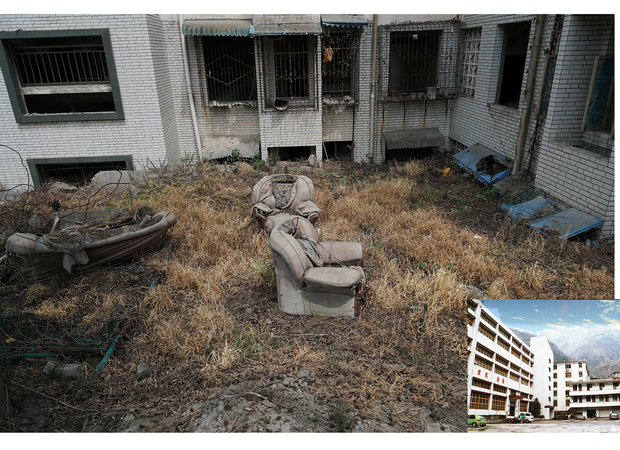
On May 12, China commemorated the 10th anniversary of the Sichuan Earthquake, one of the worst natural disasters in the country’s history, which claimed more than 80,000 lives. This story by photographer Sun Junbin stood out from the numerous photo essays commemorating the earthquake and its victims. Sun not only took pictures himself, but also collected old photographs and artifacts, which he stitched together to construct a moving story about the victims, the survivors, what the places the earthquake destroyed look like today.