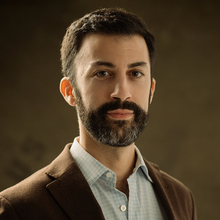
Julian Gewirtz served in multiple roles over four years in the Biden administration, including leading the White House team responsible for coordinating U.S. policy on China as Senior Director for China and Taiwan Affairs at the National Security Council, counseling senior White House leadership on the full range of national security and foreign policy matters as Senior Advisor to the Principal Deputy National Security Advisor, and managing a global team of diplomats and analysts as Deputy China Coordinator at the State Department. The Washington Post recently named him one of "50 people shaping our society in 2025."

He is the author of several books, most recently Never Turn Back: China and the Forbidden History of the 1980s, which was named a best book of the year by Foreign Affairs and BBC History, and a collection of poems, Your Face My Flag. He was previously the senior fellow for China studies at the Council on Foreign Relations, a lecturer in history at Harvard and Columbia, and a special advisor at the Department of Energy in the Obama administration. He received his doctoral degree in modern Chinese history from Oxford University, where he was a Rhodes Scholar, and his undergraduate degree from Harvard College.

Last Updated: April 8, 2025

Media

04.07.25

ChinaFile Presents: Shifting Terrain in U.S.-China Relations, Xi Jinping’s Vision for China’s Future

Julian B. Gewirtz & Susan Jakes
On March 11, ChinaFile and the Center for China Analysis (CCA) hosted a conversation between Julian Gewirtz, a historian, China expert, and former senior director for China and Taiwan Affairs at the National Security Council under President Joe...

Conversation

03.28.20

Is U.S.-China Cooperation on COVID-19 Still Possible?

Julian B. Gewirtz, Deborah Seligsohn & more
Over the past two weeks, as the outbreak of the virus known has COVID-19 has accelerated its deadly spread around the world, an already collapsing U.S.-China relationship appears to be entering a period of free fall. This is happening at a moment...

Viewpoint

03.12.18

Chinese History Isn’t Over

Julian B. Gewirtz
One of the simplest and least useful ways to understand the future is to take exactly what’s happening today and project it forward, rigidly and predictably, into tomorrow. This view is more than just a form of mental inertia; it is a breed of...

Viewpoint

10.19.17

Could Xi Jinping Stay in Power After He Retires? Here’s How Deng Xiaoping Did It

Julian B. Gewirtz
It was the worst kept secret in Chinese politics. From 1978 until his death in 1997, Deng Xiaoping was Beijing’s ultimate decider, even though he never held any of the top official titles in this period: not general secretary of the Chinese...

Books

02.01.17

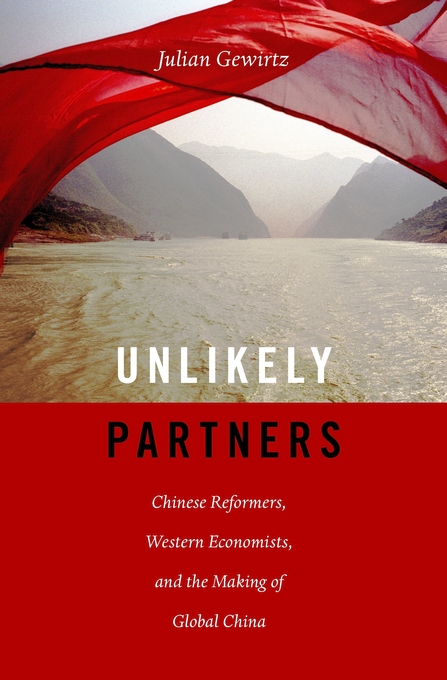
Unlikely Partners

Julian Gewirtz
Unlikely Partners recounts the story of how Chinese politicians and intellectuals looked beyond their country’s borders for economic guidance at a key crossroads in the nation’s tumultuous 20th century. Julian Gewirtz offers a dramatic tale of competition for influence between reformers and hardline conservatives during the Deng Xiaoping era, bringing to light China’s productive exchanges with the West.When Mao Zedong died in 1976, his successors seized the opportunity to reassess the wisdom of China’s rigid commitment to Marxist doctrine. With Deng Xiaoping’s blessing, China’s economic gurus scoured the globe for fresh ideas that would put China on the path to domestic prosperity and ultimately global economic power. Leading foreign economists accepted invitations to visit China to share their expertise, while Chinese delegations traveled to the United States, Hungary, Great Britain, West Germany, Brazil, and other countries to examine new ideas. Chinese economists partnered with an array of brilliant thinkers, including Nobel Prize winners, World Bank officials, battle-scarred veterans of Eastern Europe’s economic struggles, and blunt-speaking free-market fundamentalists.Nevertheless, the push from China’s senior leadership to implement economic reforms did not go unchallenged, nor has the Chinese government been eager to publicize its engagement with Western-style innovations. Even today, Chinese Communists decry dangerous Western influences and officially maintain that China’s economic reinvention was the Chinese Communist Party’s achievement alone. Unlikely Partners sets forth the truer story, which has continuing relevance for China’s complex and far-reaching relationship with the West. —Harvard University Press{chop}

Conversation

08.18.16

What Would China Look Like Today Had Zhao Ziyang Survived?

Julian B. Gewirtz, David Shambaugh & more
Almost 500 previously unpublished documents about Zhao Ziyang, the bold reformer who served as China’s premier (1980-1987) and Communist Party general secretary (1987-1989), were smuggled out of China and published in late July by the Chinese...

Viewpoint

04.10.15

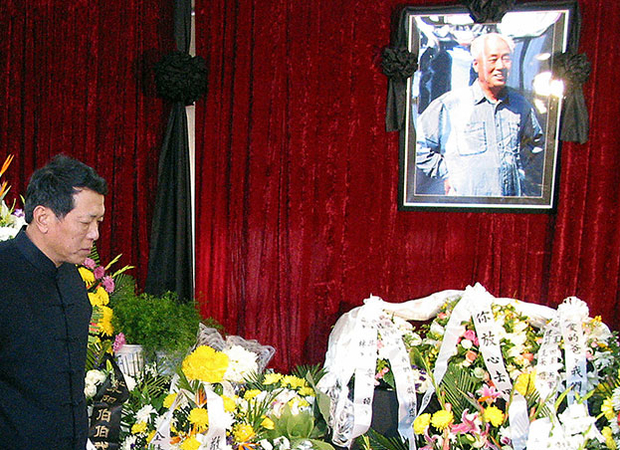
Bury Zhao Ziyang, and Praise Him

Julian B. Gewirtz
Zhao Ziyang, the premier and general secretary of the ruling Chinese Communist Party (CCP) in the 1980s, died on January 17, 2005. At a tightly controlled ceremony designed to avoid the kind of instability that the deaths of other controversial...