Chips and Soybeans

A ChinaFile Conversation

American and Chinese officials announced on September 15 that they had reached a “framework agreement” on the future of TikTok. On September 25, Trump signed an executive order approving the framework agreement for the TikTok deal, although Chinese communications on it have been much more vague. And whatever happens with TikTok, there are many other tensions that remain unresolved.

Emma Belmonte

Emma Belmonte is a freelance journalist and a China Research Fellow for the Association for International Affairs (AMO). After gaining expertise in Chinese-speaking regions at the University of Oxford, she won the GEO magazine Young Reporter Grant (2024) launching her work as a reporter for media outlets such as GEO, Asialyst, Figaro Magazine, and the Green European Journal. She has conducted on-the-ground reporting in both Taiwan and China, namely covering daily life in Taiwan’s Matsu Islands amidst cross-strait tensions, and the contrasting realities behind China’s manufacturing industry. She is also the co-creator and co-host of the podcast Parlons du Congo which explores the depths of the war in the eastern Democratic Republic of Congo.

Belmonte holds a Master’s degree in Modern Chinese Studies from the University of Oxford and a Bachelor’s degree in Philosophy from the Ecole Normale Supérieure de Lyon.

Fred Gao

Fred Gao (Yingshi) is a Reporter at CGTN Radio and the founder of Inside China, a newsletter offering in-depth analysis of the latest developments within the country. Prior to joining CGTN in December 2022, he served as a Government Affairs Manager at Bilibili’s Public Policy Research Institute, where he produced government-facing reports and conducted youth culture research. He holds a Master’s degree in International Communication from the Elliott School of International Affairs at George Washington University.

China’s Birth Crisis Is a Crisis of Faith in the Future

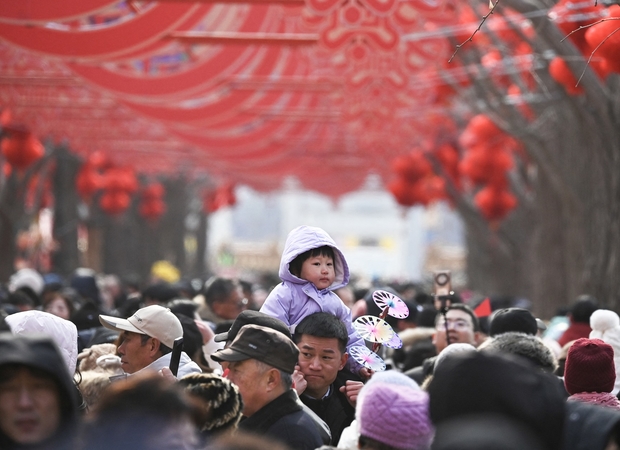
In recent years, the government has offered tax breaks, housing incentives, and fertility treatment coverage to encourage family formation. But these measures are unlikely to work. China’s birth rate has fallen from 2.5 births per woman in 1990 to just 1 birth per woman in 2023. The country’s declining birth rate is not only an economic problem but a cultural one. For many young people, the real barrier is not the cost of raising children. Rather, it is the conviction that parenthood no longer makes sense in a future that feels uncertain and unworthy of investment. Unless policies address this deeper malaise, subsidies and bonuses will do little to stem the decline.

Tina Kanagaratnam

Tina Kanagaratnam is a co-founder of Historic Shanghai, established in 1998 with the goal of raising awareness of Shanghai’s unique history through research, city walks, and events.

She is the author and editor of several books and numerous articles on Shanghai, her home for the past 28 years. Her work includes in-depth guidebooks (Insight Guides, Luxe Guides), books on architectural history (Hudec, among others), restaurant guides (Zagat and others), and Shanghai city walks books.

In 2003, she co-founded the Shanghai International Literary Festival, and later, the Capital Literary Festival, which she managed for over a decade. The festivals attracted an international roster of world-famous writers and were one of the region’s major literary events for over a decade.

Kanagaratnam holds a Master’s degree in International Affairs from Columbia University, and is a principal of PR agency AsiaMedia. A native of Singapore raised in Washington, D.C., she has lived in China since 1995, and Shanghai since 1997.

Emma Zang

Emma Zang is a Non-Resident Fellow on Chinese Society at the Asia Society Policy Institute’s Center for China Analysis (CCA) and an Associate Professor of Sociology, Biostatistics, and Global Affairs at Yale University. She is also a Faculty Fellow at Yale’s Institution for Social and Policy Studies, the Council on East Asian Studies, and the Wu Tsai Institute.

Her research examines how public policies, demographic shifts, and technological transformations shape inequality across the life course, with a focus on family, fertility, aging, and health in both China and the United States. She has conducted extensive research on China’s declining fertility rates, shifting family structures, and the social and economic forces shaping childbearing and caregiving decisions.

Her work has appeared in the American Journal of Sociology, Demography, PNAS, and Nature Human Behaviour and has been featured in The New York Times Magazine, CNN, BBC, NBC, and The Washington Post.

Remembering Tess Johnston, Chronicler of ‘Old Shanghai’

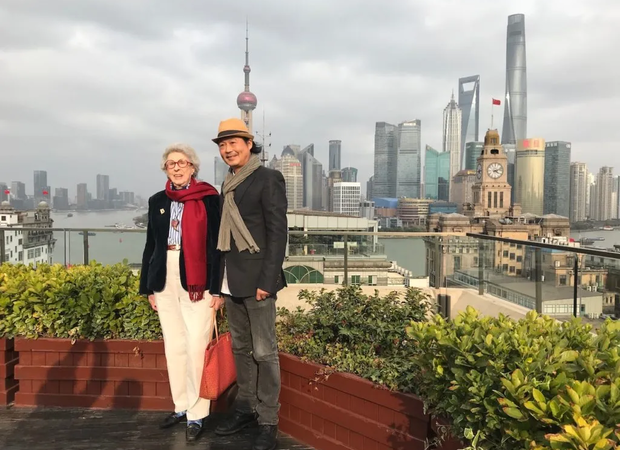
“I had never seen anything like Shanghai in 1981,” said Tess Johnston, describing her impression of the city when she first arrived. “I had never been to a foreign country that looked so utterly and completely Western. It was perfectly preserved, a cross between Warsaw in 1938 and Calcutta, a totally Western city with an Asian population. It was a scruffy showcase of Western architecture—and it was absolutely wonderful.” Tess, who died this week at 93, had arrived in September 1981 with the U.S. Foreign Service to work at the U.S. Consulate.

Is This a New World Order?

A ChinaFile Conversation

From August 31 to September 1, China hosted twenty foreign leaders in Tianjin for a Shanghai Cooperation Organization (SCO) summit, the biggest meeting since the formation of the security group in 2002. Group photos of all the attendees and video and photos of Xi Jinping enjoying moments of bonhomie with Russian President Vladimir Putin and Indian Prime Minister Narendra Modi “were not accidental but deliberate diplomatic theatre, a spectacle that will make Trump squirm” according to India’s Economic Times. Then, on September 3, Putin, Kim Jong-un, and leaders from 24 other countries, mostly Asian, joined Xi Jinping to watch the 80th anniversary Victory Day parade commemorating the end of World War II, or what Beijing calls “the Victory in the Chinese People’s War of Resistance Against Japanese Aggression and the World Anti-Fascist War.” What was the significance of these encounters in Beijing and Tianjin? Was it mainly about optics, a reminder that China has friends and advanced weapons? Or did it signal a more substantive shift in geopolitical alignment or strategy?