Are There Any Good Ideas for AI Governance?

A ChinaFile Conversation

Aside from the nationalistic debates, are there any good ideas for AI governance and regulation emerging from the noise? What are the positive developments, if any, in China and in the U.S. when it comes to giving citizens the tools to help shape the future development of AI? Are there good examples of lawmaking or other government activity in either country?

Emmie Hine

Emmie Hine is a researcher at the Safe AI Forum (SAIF) focusing on the Chinese AI governance ecosystem. Previously, she was a researcher at the Yale Digital Ethics Center and now serves as a Policy Fellow. She is an International Governance affiliate of Concordia AI and writes the China AI Bulletin, a fortnightly breakdown of Chinese AI governance, safety, and development.

Emmie completed her Ph.D. in Law, Science, and Technology at the University of Bologna and KU Leuven. Her doctoral research portfolio included work assessing AI governance approaches across jurisdictions. She earned an M.Sc. at the Oxford Internet Institute as a Shirley Scholar, where her thesis compared American and Chinese AI governance policies, and she completed her B.A. in Computer Science and Chinese at Williams College. Her work has appeared at ACM FAccT, NeurIPS, and AIES, and in journals including Nature Machine Intelligence, Lancet Planetary Health, and Science Robotics. She was also part of a winning team of the EU AI Act Grand Challenge. Before returning to AI governance research, she was a full-stack software engineer at an enterprise data management software company in Boston.

My Grandmother’s Hens

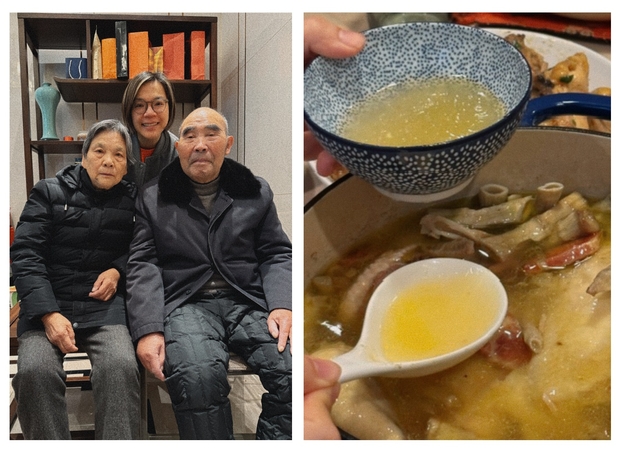
When I visited home in January, my grandmother showed love the way she always has, by offering to cook for me. I didn’t fully understand the amount of work that went into preparing and cooking eight dishes at once until I started my monthly supper club. My grandmother did it every day for our big family when I was young. I took her labor entirely for granted. As a token of appreciation that came decades too late, I told her, “I can cook now, Ng-niang. Let me cook for you.” I knew she’d truly accepted the offer when she asked if I wanted a chicken. “I could kill one,” she told me matter-of-factly. The next day, she delivered a whole cleaned bird she’d spent four months raising to my parents’ house, two doors from hers.

Chris Li

Chris Li is a Technology and Geopolitics Fellow at Harvard University’s Belfer Center for Science and International Affairs, where his research and teaching cover U.S.-China relations, the geopolitics of Asia, and technology competition, particularly in emerging biotech. Previously, Li served as Director of Research for the Asia-Pacific Initiative at the Belfer Center, where he led projects examining Chinese politics and foreign policy, Taiwan and cross-strait relations, and U.S. strategy in the Indo-Pacific.

A proud native of New Jersey, Li received his B.A. in Biology from Harvard University, an M.A. in Global Affairs from Tsinghua University as a Schwarzman Scholar, and his Ph.D. in Biological and Biomedical Sciences from Harvard University. Li is also an Honorary Fellow on Public and Technology at the Asia Society Policy Institute’s Center for China Analysis and Jeane Kirkpatrick Fellow in Foreign and Defense Policy at the American Enterprise Institute.

ASEAN’s U.S.-China Balancing Act Is Getting Much Harder

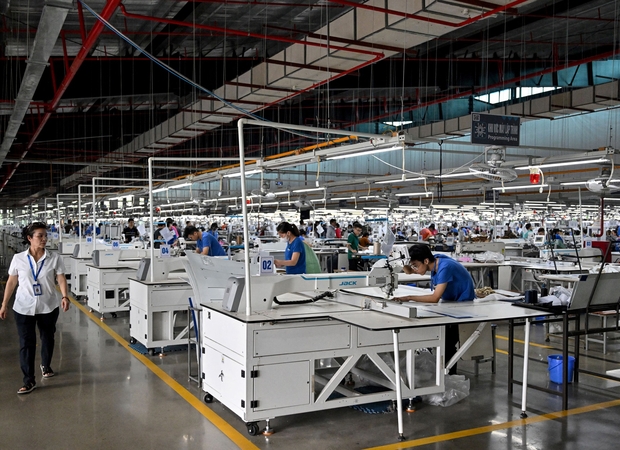
This balancing act is becoming substantially harder, as two opposing forces, which have hardened over the past year, are reshaping Asia’s economic landscape. The first is the Trump administration’s tariff and economic security agenda, which has become a central instrument of its foreign policy. For Southeast Asian economies that spent the past decade positioning themselves as alternatives to China in global supply chains, the message has been stark: Their very success as export platforms had made them targets. The United States remains the region’s indispensable strategic anchor and a critical market, but it is now also a major source of policy volatility. The second development is China’s industrial overcapacity and surging exports of everything from steel and petrochemicals to electronics and clean technologies, which have accelerated and been redirected away from the U.S. ASEAN has absorbed a disproportionate share, as China’s largest export market and still one of its fastest growing. The region now accounts for 18 percent of China’s goods exports, while the U.S. share has shrunk to 11 percent.

Leaked Documents Show the Success of China’s VPN Crackdown

As long as Beijing has been censoring content online, people in China have been finding ways around that censorship. Such “wall-jumpers” used to have a relatively easy time getting their hands on the necessary digital tools. Often, this was in the form of a VPN, or virtual private network, which disguises a user’s ultimate online destination to any censor who might be snooping in. In recent years, however, Beijing has cracked down on VPNs, making them less readily accessible to average internet users. At the same time, it’s become harder for outside observers to estimate the number of wall-jumpers in the country. This leaves us largely in the dark if we want to understand how many people in China are accessing information outside of Beijing’s censorship bubble. Should we assume that half the country is getting contraband content, or that almost no one is? Understanding VPN usage in China can tell us a lot about the efficacy of the online censorship system.