


When Southeast Asian leaders convened in Cebu in May for the first summit of the Philippines’ year as ASEAN chair, the meeting was overshadowed by war in the Middle East and the closure of the Strait of Hormuz. For a region whose economies are, with few exceptions, heavy energy importers, the shock was severe, raising energy and food prices, increasing shipping and insurance costs, and disrupting supply chains for fertilizer, medical goods, and other critical products. As Philippine President Ferdinand Marcos Jr. put it, “ASEAN should not just react to crises.” In Cebu, ASEAN’s centrality was being tested by shocks it cannot control, as governments sought to contain the fallout and keep essential flows moving.
Yet the Iran war is only the newest shock to hit the region. The forces that will more durably shape Southeast Asia’s economic future were already grinding on in the background, and they pull in opposite directions. Earlier in the year, Indonesian President Prabowo Subianto and Vietnamese General Secretary To Lam both traveled to Washington to advance their trade agendas with the United States. Indonesia finalized a reciprocal trade agreement, while Vietnam sought to break an impasse in negotiations, especially over tariffs on “transshipped” goods.
Those pressures have only intensified. U.S. tariff policy has moved into a new legal and administrative phase, China’s exports to Southeast Asia continue to surge in 2026, and ASEAN governments are trying to preserve openness while managing the risks of deeper dependence on China and greater scrutiny from Washington. In the first four months of 2026, China’s exports to ASEAN rose 19 percent from the same period a year earlier, while its exports to the United States fell 10 percent. ASEAN economies are at the forefront of adapting to a more fragmented and unpredictable global trading system, one in which they must manage both a surge of Chinese production and a disruptive Trump administration wary of smaller countries’ being used as proxies for the shipment of Chinese goods. If Washington wants partners in its efforts to reshape global trade, it needs to offer these countries carrots as well as sticks.
The Supreme Court’s decision striking down International Emergency Economic Powers Act (IEEPA) tariffs added greater uncertainty to ongoing trade negotiations. The administration has moved to rebuild its tariff architecture through other tools, including temporary Section 122 duties and Section 301 investigations on excess capacity and forced labor enforcement that target major ASEAN economies, and, most recently, Vietnam’s intellectual property practices. Faced with so much unpredictability, ASEAN economies are pursuing a multifaceted approach—cutting deals where they can, hedging across partners, and building resilience at home. They defied expectations last year by deepening trade linkages with both the U.S. and China while also gaining export market share in third countries.
This balancing act is becoming substantially harder, as two opposing forces, which have hardened over the past year, are reshaping Asia’s economic landscape.
The first is the Trump administration’s tariff and economic security agenda, which has become a central instrument of its foreign policy. The “Liberation Day” duties announced last April initially hit ASEAN countries with some of the highest rates globally, pushing them into bilateral deals and linking market access to stricter enforcement of rules of origin and other economic security commitments.
Across the region, governments have scrambled to strike arrangements that reduce tariff exposure: Malaysia and Cambodia concluded agreements in October 2025, while others—including Thailand and the Philippines—remain stuck with vague framework understandings.
For Southeast Asian economies that spent the past decade positioning themselves as alternatives to China in global supply chains, the message was stark: Their very success as export platforms had made them targets. The United States remains the region’s indispensable strategic anchor and a critical market, but it is now also a major source of policy volatility.
The second development is China’s industrial overcapacity and surging exports of everything from steel and petrochemicals to electronics and clean technologies, which have accelerated and been redirected away from the U.S. Despite a 20 percent decline in exports to the United States, China’s global trade surplus rose to a record $1.2 trillion in 2025 by flooding other markets, as imports remained weak. International Monetary Fund Managing Director Kristalina Georgieva put the matter bluntly: “As the second largest economy in the world, China is simply too big to generate much growth from exports, and continuing to depend on export-led growth risks furthering global trade tensions.” With domestic demand still weak and Beijing doubling down on industrial policies and technological self-reliance, its unprecedented trade surpluses look set to persist. Early 2026 data point in the same direction, with China’s exports still rising even as domestic consumption remains weak.
ASEAN has absorbed a disproportionate share, as China’s largest export market and still one of its fastest growing. Chinese exports to the bloc rose 13 percent in 2025, driving a record $276 billion surplus—up 45 percent from 2024. This momentum has continued in 2026. In the first four months of the year, China’s exports to ASEAN reached $245 billion, while its surplus with the region reached nearly $97 billion. The region now accounts for 18 percent of China’s goods exports, while the U.S. share has shrunk to 11 percent. Remarkably, China’s imports from ASEAN fell 1.6 percent, and are down on an absolute basis from 2022, indicating that this integration is largely running in one direction.
At the same time, Southeast Asia defied expectations last year that it would be hard hit by U.S. tariffs. Exports to the United States surged by more than $100 billion to reach $454 billion, even as Washington threatened and imposed significant tariffs. In 2025, the region’s total merchandise exports grew by nearly 15 percent. Foreign direct investment in the region held broadly steady in 2025 at $228 billion. The region remained the Asia-Pacific’s largest investment destination, but fewer new projects in the pipeline suggest inflows could slow in 2026.
The stakes extend well beyond Southeast Asia. In 2025, U.S. goods trade with ASEAN reached $580 billion—just over 10 percent of total U.S. goods trade—underscoring an economic relationship that is both deep and two-way. ASEAN has become a critical link in U.S. supply chains, providing a growing share of the electronics, machinery, and other manufactured goods that American firms rely on as they reduce reliance on China. At the same time, ASEAN is now America’s fourth-largest export market and a major destination for U.S. services and investment, supporting American manufacturers, farmers, and jobs. Southeast Asia also sits at the center of the strategic competition between the United States and China, making the region essential not just for supply-chain resilience but for America’s long-term standing in the Indo-Pacific.
But the very supply chains that underpin this deepening U.S.-ASEAN economic relationship rest on a precarious foundation. Cheap inputs from China are a key reason that ASEAN’s manufacturing exports have been so competitive. Yet they are also what Washington is now scrutinizing as it seeks to tighten rules of origin and expand enforcement around transshipment.
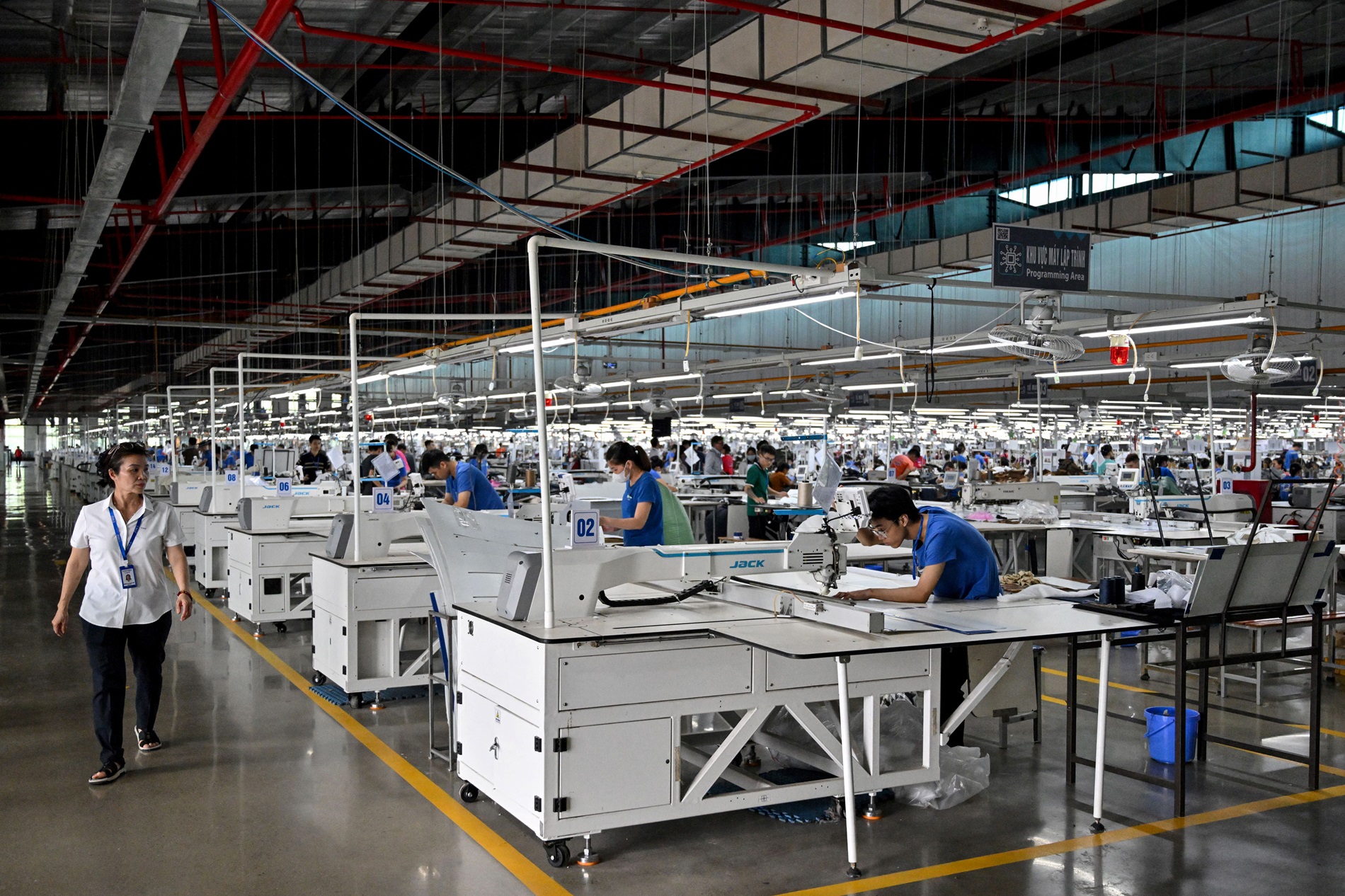
ASEAN’s import growth from China has overwhelmingly been in intermediate goods—the machinery and components used as manufacturing inputs. Nowhere is that dependency clearer than in semiconductors and related electronics. In 2025, Vietnam’s imports of electrical machinery and electronics from China rose 43 percent to $84 billion, while Thailand’s climbed 52 percent to $31 billion. Vietnam, Malaysia, and Thailand together imported $40 billion of Chinese semiconductors in 2025. These products are also in the crosshairs of U.S. policy actions, with proposed new tariffs on Chinese semiconductors and a separate investigation into global semiconductor supply chains that could result in duties on other countries as well. Vietnam and Thailand also saw rapid growth in industrial machinery imports from China reflecting everything from factory machinery and HVAC systems to pumps, valves, and conveyor equipment. The early 2026 data show the same broader pattern continuing: In the first four months of the year, China’s exports to Vietnam rose 22 percent, to Thailand 25 percent, and to Malaysia 23 percent from a year earlier.
Key will be how the U.S. seeks to define and counter transshipment. Traditionally, the term refers to relabeling goods to disguise their origin and evade tariffs. Trump administration officials, however, have suggested a far broader interpretation, potentially targeting goods assembled in third countries using Chinese components. In July 2025, the administration established a 40 percent tariff on transshipped goods, and Commerce Secretary Howard Lutnick indicated the penalty could apply to products containing more than 30 percent foreign content. Yet Washington has not issued a formal definition or rule. Reciprocal trade agreements with Malaysia, Cambodia, and Indonesia require partners to combat transshipment and duty evasion, while allowing the United States to tighten rules of origin if benefits flow to third countries. If the definition extends beyond fraudulent relabeling to encompass assembly that relies heavily on Chinese inputs, this important driver of the region’s export success is at risk.
Two forces are pulling in opposite directions. ASEAN’s manufacturing base is becoming more dependent on Chinese inputs just as its largest export market is making access conditional on reducing that dependence. The bilateral deals reached thus far with Washington illustrate the tension: by accepting U.S. requests on economic security, ASEAN countries are signaling a willingness to limit their integration with China. But the flood of Chinese intermediate goods makes any meaningful separation very challenging in the near term.
Meanwhile, Chinese overcapacity in steel, petrochemicals, textiles, and clean technologies is increasing pressure across sectors central to the region’s growth. And as Chinese firms face mounting trade restrictions globally, including growing momentum in the EU for tougher trade restrictions with China, they are increasingly looking to ASEAN not just as an assembly base but as an important market for finished goods.
The clean energy sector captures this dynamic. Chinese exports of EVs, batteries, and solar panels to ASEAN totaled nearly $22 billion in 2025, up from $14 billion the year before—an increase of more than 50 percent across all three categories. EV exports nearly doubled to $8.2 billion, with the Philippines, Indonesia, and Thailand all among China’s top 10 EV export markets globally, and Malaysia rapidly growing as well. Battery exports reached almost $9 billion—dominated by Vietnam—while solar panel shipments climbed 46 percent to $4.7 billion, led by Indonesia and the Philippines. This trend continued in the first four months of 2026, with Chinese exports in these three categories reaching $9 billion, up 50 percent from the same period in 2025, with solar panel exports more than doubling.
ASEAN pushback on the surging imports from China has been subdued but is building incrementally and across multiple fronts. Indonesia has introduced safeguard duties and tightened import controls on textiles and begun requiring EVs to be assembled locally to qualify for duty exemptions. Vietnam has imposed new anti-dumping duties on Chinese hot-rolled steel and introduced incentives to localize production and diversify inputs. Thailand, facing an EV supply glut, has tightened its incentive scheme to encourage more domestic production. Governments have also responded to an influx of low-value e-commerce goods from platforms like Shein and Temu, with Vietnam and Thailand eliminating de minimis tax exemptions, Malaysia introducing a tax on low-value goods, and Indonesia blocking downloads of Temu’s app outright.
Several ASEAN members have also tightened rules of origin and customs enforcement in response to U.S. transshipment concerns. Vietnam has strengthened customs procedures and origin-related enforcement, while Malaysia centralized control over origin certification for exports to the United States.
Yet these defensive measures sit alongside deepening economic engagement with Beijing. In October 2025, ASEAN and China signed an upgraded free trade agreement expanding cooperation in the digital economy, green development, and supply chain connectivity.
At the same time, ASEAN governments have actively pursued new trade openings. Indonesia reached deals with the EU and Canada in 2025 and, along with the Philippines, moved to join the Comprehensive and Progressive Agreement for Trans-Pacific Partnership (CPTPP). Malaysia signed a free trade agreement with South Korea, the Philippines concluded an agreement with the United Arab Emirates, and Thailand is pursuing new agreements with South Korea, the EU, and Canada this year. ASEAN as a bloc aims to finalize a free trade pact with Canada by the end of 2026. ASEAN economies have also continued to modernize regional rules, including updating the bloc’s internal trade framework and concluding negotiations on the world’s first region-wide, binding digital economy pact, the Digital Economy Framework Agreement (DEFA), which is expected to be signed in November.
DBS, Southeast Asia’s largest bank, has even coined the term TOTUS—trade outside of the United States—to capture how ASEAN, Canada, India, and others are widening trade options amid unpredictable U.S. tariffs and policy shifts. Yet in truth, the U.S. market remains centrally important for ASEAN economies, evidenced by their efforts, including leadership visits to Washington, to address U.S. trade and economic security concerns.
ASEAN’s launch of a Geoeconomics Task Force in 2025 reflected a recognition that the region now faces a more demanding external environment than at any point in recent years. Its first assessment, published in late 2025, was candid in acknowledging that the region’s “dependence on Chinese inputs and its limited regional self-sufficiency” raise vulnerability, and that “one of the largest trade diversion risks is likely to be . . . from China.” The report noted that ASEAN countries would benefit from boosting domestic demand, improving their trade defense tools, and building regional supply chains that reduce dependence on any single partner.
But ASEAN cannot do this alone. If Washington wants Southeast Asia to remain a viable partner in its de-risking strategy, it needs to offer more than tariff reductions. That means ending blanket tariff threats, providing more precise definitions around transshipment, and clarifying other ambiguous trade rules that currently leave businesses guessing. It also means offering capacity-building on customs modernization, digital traceability, and enforcement cooperation that can address concerns before legitimate trade is disrupted.
Beyond clearer rules, Washington needs a positive forward-looking economic agenda focused on deeper cooperation on strategic sectors, as well as those where China’s overcapacity poses the greatest risks. Although the Indo-Pacific Economic Framework is defunct, the supply chain work it began remains a useful foundation. The U.S. and other regional partners could build on that groundwork to support ASEAN’s role in supply chain diversification, strengthen investment and standards cooperation, and align external initiatives with ASEAN’s own modernization efforts. In parallel, closer coordination on trade-diversion monitoring and transparency would help governments manage import surges.
Until Beijing shifts in a meaningful way toward boosting domestic consumption, China’s manufactured goods exports will keep growing, resulting in mounting pressure on Southeast Asian countries. Meanwhile, Washington’s tariff regime, even with domestic legal challenges and lower reciprocal rates than announced on Liberation Day, has fundamentally altered the risk calculus for manufacturers in the region. The export-led growth model that has powered Southeast Asia’s rise is under serious challenge from both directions. The coming year will test whether the region can move beyond crisis management toward the kind of deft strategic economic statecraft the moment requires.